
Location Based Marketing
Benefits & Types of Location Based Marketing in 2026
Thu, 27 Oct 2022 06:02:56 GMT
Speak to our Hyperlocal Expert
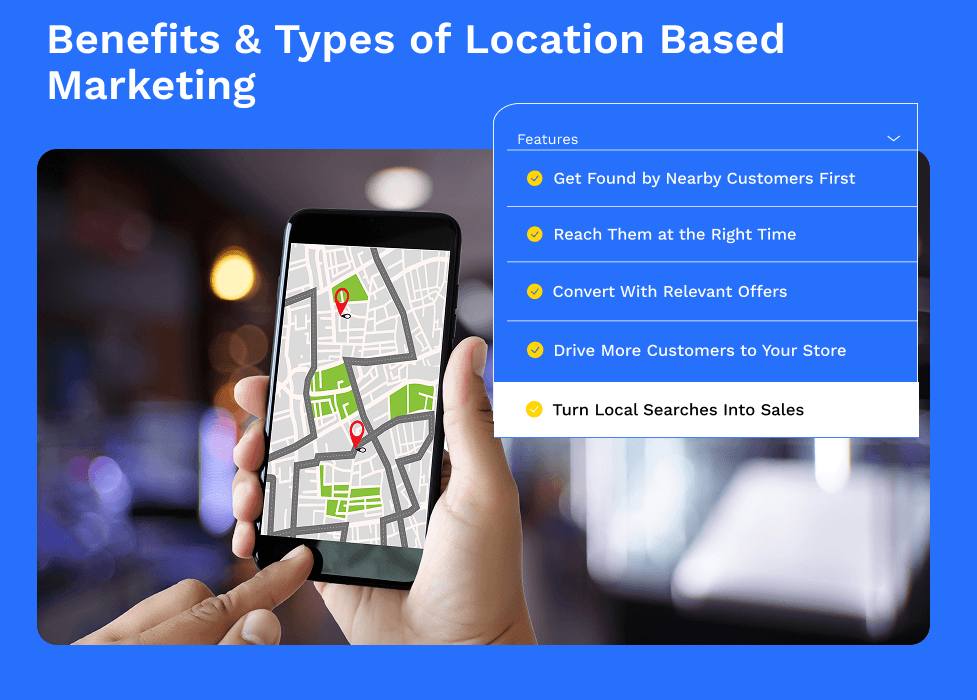
Editor’s Note: This post was originally published in Oct 2022 and was updated in June 2026 for accuracy and comprehensiveness.
Types of location based marketing include geofencing, beacon marketing, geotargeting, and Geo-Conquesting. These methods use a consumer's location to provide targeted and personalised marketing messages, promotions, deals, and offers.
In the current digital age, location-based marketing has become an essential strategy for businesses to reach their target audience effectively. This type of marketing involves using a user's geographical location to deliver relevant and personalised advertising messages.
The rise of mobile devices and internet technology has made location-based marketing more accessible and effective than ever before. By leveraging geolocation data, businesses can target customers in specific locations and offer them customised promotions, deals, and other incentives.
In a world where instant gratification is increasingly valued, location-based marketing should be understood by all marketers. Just by analyzing a consumer's physical location, businesses can target them on a more personal, granular level. A types of location based marketing strategy helps marketing teams reach their target customers. Additionally, it supports the buyer's journey from discovery to purchase, as well as engagement and retention.
In this blog, we'll explore the various types of location based marketing, including geofencing, beacon marketing, Geotargeting, and Geo-Conquesting. We'll also examine the benefits of location based marketing strategy. So if you're interested in exploring the world of location-based marketing and learning how it can benefit your business in 2026, keep reading!
What Is Location-Based Marketing?
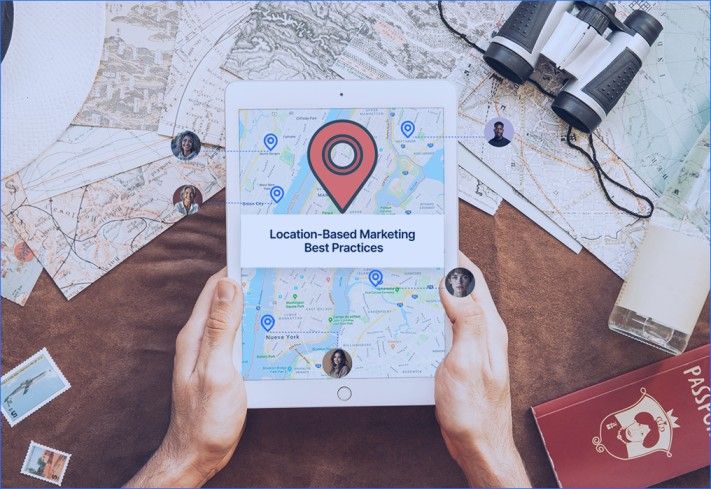
Location-based marketing sends targeted messages to customers based on their physical location. Instead of broadcasting ads to millions, you reach people at the right place, right time with relevant offers. A customer near your coffee shop at 7 AM gets a coffee discount. Someone 10 km away doesn't see it. That's precision marketing.
Smartphones know location through GPS, WiFi, and cellular data. Businesses set up geographic boundaries (geofences) around their stores. When a customer enters that zone, they automatically receive a personalized offer via push notification, SMS, or email. According to Statista research on location-based marketing adoption, 72% of businesses now use this strategy because it's accessible, affordable, and drives real results 3-5x better conversion than traditional ads.
Traditional marketing (billboards, TV, radio) treats all customers the same. Location-based marketing knows WHERE your customer is and WHEN they're there. A gym sends fitness offers in January when prospects are nearby. A retail store sends winter coat discounts when temperature drops. The relevance is what makes people respond. It's not interrupting; it's helping.
Get a comprehensive overview of location-based marketing fundamentals:
Location-Based Marketing vs. Proximity Marketing
Location-based marketing targets customers across a wider area (city or neighborhood) using GPS and IP addresses. When someone searches "coffee shops in Pune," they see results based on their location. Proximity marketing is much more precise - it targets customers within 50-200 meters using Bluetooth beacons, triggering messages instantly when they enter or pass a store.
Think of it this way: Location-based marketing reaches customers in your area. Proximity marketing reaches customers right outside your door.
- Key Differences Table
Aspect | Location-Based | Proximity |
| Range | City/neighborhood | 50-200 meters |
| Technology | GPS, IP addresses, geofencing | Beacons, WiFi, Bluetooth |
| Accuracy | General location | Highly precise |
| Best For | Drive store visits | In-store engagement |
| Speed | Minutes | Instant |
| Example | "Coffee near me" search results | "10% off at checkout" push notification |
- Real-World Scenarios
Location-Based Example: Starbucks geofences its stores in a 1 km radius. When you're within that area, the app shows "Visit Starbucks" with a 15% discount offer. You get the message while commuting, at home, or nearby.
Proximity Example: You walk into a Starbucks store. A beacon detects your phone within 50 meters and sends "Flash sale: Free pastry with any drink - next 2 hours." You get this message only when physically near or inside the store.
- Why The Confusion?
Proximity marketing IS a type of location-based marketing. But not all location-based marketing is proximity marketing. Location-based is the broader category; proximity is a specific, highly-targeted subset using beacon technology.
Analogy: All dogs are animals, but not all animals are dogs. Similarly, all proximity marketing is location-based, but not all location-based marketing is proximity.
- Which Should You Use?
- Want to drive foot traffic across your city? Use location-based marketing
- Want to engage customers already in your store? Use proximity marketing
- Want both? Combine them for maximum impact
Read Also - Importance of Location-Based Marketing: Power of Geolocation
Types of Location-Based Marketing
The growth of connected devices has largely enabled location-based marketing over the past few years. It seems that everything has been connected to the internet, whether it is phones, cars, watches, or anything else.
These devices are often tracking their owners’ location, so location and spatial data are abundant. Using this data, marketing teams can gain a deeper understanding of how to reach customers and improve their experience.
Here are some types of location-based marketing:
#1 Geofencing Marketing - Types of Location-Based Marketing
As part of location-based marketing, geofencing marketing creates a virtual boundary around a predefined location using the Global Positioning System (GPS). Geofencing, location targeting, or Geotargeting is a virtual boundary that can be entered or left by a smartphone. The use of GPS marketing can also be applied to location-based marketing. By registering addresses into search engines, businesses can attract customers to their nearby locations. GPS-enabled devices, especially smartphones, are typically used in this type of location-based marketing.
When target audiences enter a geofenced region, they become an active target of the marketing strategy, as they will be able to receive content, offers, or some other form of messaging from the brand. Geofencing is the creation of a boundary within a specific region. For example, a boundary would encompass a popular shopping center where the company has a store. Using geofencing, marketers can divert consumers away from competing products by using real-time location data.
Read Also - Geofencing Technology: How It Works & Boosts Local Outreach
#2 Beacon Marketing - Types of Location-Based Marketing
Businesses use beacon marketing as a form of proximity marketing to engage and interact with consumers at strategic locations. This communication is triggered by a tiny device known as a Bluetooth beacon. Bluetooth or WiFi beacons are used primarily to target existing customers within a small geographical area by transmitting location-triggered rich notifications to smartphones nearby. Users can be tracked indoors more precisely, which allows marketers to target customers more specifically and get a deeper understanding of their behavior.
By using proximity marketing, businesses can connect directly with their customers via mobile devices using several location technologies. Proximity marketing distributes advertising content associated with a specific location. Businesses will send local promotions to consumers using Bluetooth-enabled devices or mobile apps in that area.
#3 Geotargeting - Types of Location-Based Marketing
It is a type of advertising that uses location data to reach consumers with messages suited to their locality and behavior and uses location data to reach them. With this advertising technology, consumers’ location is automatically or assumed to be known. Using geotargeting, a user’s location is determined, and then personalized messages are displayed according to their location. A consumer may receive push notifications or messages in the app based on their region or proximity to a store if they have opted in to allow an app to access their location. Among the key benefits of location-based marketing of geotargeting is that it enables marketers to target users based on their location, such as weather or local news and events, to personalize customer experiences.
It works by using IP addresses to identify connected devices. IP addresses can then be matched to countries, zip codes, etc. To determine where users are located. Using IP addresses, online advertisers market to household and business devices. IP addresses can be used to display relevant advertisements on websites that users tend to visit by matching up IP addresses with lists of names and street addresses.
#4 Proximity Marketing - Types of Location-Based Marketing
Proximity marketing triggers instant messages when customers are extremely close to your location (50-200 meters). Using Bluetooth beacons or WiFi, the system detects when someone's phone enters your zone and automatically sends a personalized offer, notification, or message. Unlike geofencing which works at 500+ meters, proximity marketing is hyperlocal - it reaches people right outside your door or inside your store. The speed is instant, making it perfect for impulse purchases and time-sensitive offers.
Proximity marketing works best for retail stores, restaurants, shopping malls, and any business wanting to capture walk-by traffic. The classic example is Burger King: when you walk past a Burger King restaurant, their app detects your phone within range and sends a push notification offering a 1-cent Whopper. You're already nearby, the offer is timely, and conversion happens immediately.
#5 Geo-Conquesting - Types of Location-Based Marketing
In geo-conquesting, customers are diverted from the competition through location data. For example, car dealerships might construct a boundary around the lot of a competitor. Users will receive offers encouraging them to visit the other dealer when they reach that boundary. By targeting users who are already shopping for a product in the space, companies can win market share and gain new customers by encouraging them to purchase from them rather than a competitor.
Burger King is a common example of this. The Burger King app was used to divert McDonald’s customers to their restaurants using geo-conquesting. Consumers were urged to download the Burger King app in exchange for a 1-cent whopper. In the vicinity of McDonald’s, the Burger King app sent customers a 1-cent whopper promotion and directed them to their nearest location.
- Comparison Table: All 5 Types
Type | Technology | Range | Speed | Cost | Best For |
| Geofencing | GPS | 500m-2km | Minutes | Low | Driving foot traffic |
| Beacon | Bluetooth | 50-200m | Instant | Medium | In-store engagement |
| Geotargeting | IP/cookies | City-level | Minutes | Low | Online ads |
| Proximity | Beacon/WiFi | 50-100m | Instant | Medium | Impulse purchases |
| Geo-Conquesting | GPS | Custom | Instant | Medium | Competitive advantage |
Explore all five types of location-based marketing strategies:
Benefits of Location Based Marketing in 2026
Location-based marketing helps your business to grow in many ways. Here are a few benefits of location-based marketing.
1. Enhance Revenue with Relevant and Personalized Marketing
The use of location-based marketing can be a game-changer for businesses because 40% of customers find messages they receive from businesses to be irrelevant and unhelpful. By using location data collected from customers, marketing efforts can be amplified by ensuring only relevant information is sent to them. Location-based marketing in e-commerce is best known through Google Local Inventory Ads, but there are other options as well. For example, a customer visits a cafe and receives an exciting offer.
The cafe owner can also create dynamic QR Codes with an online QR Code generator in seconds if they want to credit an extra discount, such as 15% off later after scanning. Offers that are relevant, timely, and offer an incentive are much more likely to be considered by customers. When these two features are included in your location-based marketing campaigns, you can increase sales for your business.
2. Connect Better with Your Audience
The benefit of location-based targeting is that you can engage people who are interested in your product or service. By getting your message to the right people at the right time, you can avoid spending money convincing people to purchase your product. As a result, the ROI will be higher. The idea of location-based marketing can benefit marketers by allowing them to better connect with their audience. Businesses can use the established locations of where their audience is to better serve their customers and build stronger business relationships.
3. Search Engine Rankings will Improve
In digital marketing, the number one goal is to have your business ranked highly on search engines. Businesses benefit from this because when people are on the go, they tend to find the first businesses that have access to their location data. This is why it improves search engine rankings, especially for marketers who invest in location-based marketing.
4. Ensure More Relevant Ads are Delivered
Location data can be used by marketers to create more relevant, personalized ads. This is not limited to where a person is physically located. It can also be used for timing and messaging. An analysis may reveal that a consumer is more likely to engage with an ad while on the train or commuting, which can help marketers decide when to serve an ad. The location of the advertisement can also influence copy and creativity. Marketing teams may choose to use images of the city where the target consumer lives rather than generic images. Relevance and context have become essential components of messaging that are engaging, rather than ignored. Utilizing these real-time insights ensures that these criteria are met.
5. Engage your Audience and Increase Immediate Foot Traffic
In addition to increasing engagement. Advertising will become easier with segmentation and location targeting. Consumers will also become more aware of brands with segmentation and location targeting. By informing users in their market of proximity and enticing them with an offer, location-based marketing can drive foot traffic for local businesses such as retail stores or food services.
Read Also - How Effectiveness of Location-Based Marketing Improves O2O?
Best Practices for Location-Based Marketing
1. Get Explicit User Consent
Always ask permission before accessing location data. Be transparent about how you'll use it. Clear consent builds trust and leads to higher opt-in rates. Users who willingly share location are 3x more likely to engage with your offers.
2. Respect Privacy Boundaries
Stop tracking users who opt-out immediately. Be clear about how long you retain data. Comply with GDPR and CCPA regulations. Privacy violations destroy trust faster than anything else.
3. Make Messages Timely and Relevant
Don't bombard users with constant notifications. Send coffee shop offers during the morning commute, not at midnight. Relevance beats frequency every time. One timely offer converts better than five irrelevant ones.
4. Test and Optimize Continuously
A/B test different offers. Measure what works (clicks, conversions, store visits). Iterate based on data. What works for one location might fail at another - test to find what resonates.
5. Use Multiple Channels
Combine geofencing + email + SMS + social media. Different customers prefer different channels. Send consistent messages across all platforms so your brand feels unified.
6. Geo-Target Competitors Strategically
Don't be aggressive. Offer genuine value, not just cheaper prices. Say "Try our better service" instead of "We're cheaper." This builds loyalty, not resentment.
7. Integrate Online and Offline Data
Connect website browsing to store visits. See the full customer journey. Understand: Did they research online then visit? Buy online then pick up? Use this insight to optimize both channels.
8. Monitor and Report Results
Track impressions, clicks, visits, and conversions. Measure ROI vs. traditional marketing. Share results with your team quarterly to prove impact and improve strategy.
Watch the video to discover how geofencing drives foot traffic to physical stores
Real-World Location-Based Marketing Examples
1. GROHE increased their Foot Traffic with Location-based Marketing
A push message may appear for app users within a certain radius of a nearby GROHE store. Ex. Buy the best product at the best prices, especially from a store like GROHE. In addition to being concise, this offer emphasizes multiple ways an in-person experience adds value. By offering this incentive, the store hopes not only to drive in-store traffic but also to fill shopping carts.

Highlight the convenience and offer of an in-store visit in a compelling, engaging manner to demonstrate the added value of an in-store visit.
2. COLIVE Last-minute Upsells
COLIVE’s example below does two things well: it acknowledges an immediate need for its service and it reminds customers that hesitating could lead to price increases. COLIVE engages app users with custom offers and messaging based on the fact that no one likes to pay more than necessary.

COLIVE responds immediately to user needs. COLIVE ensures users have all the information they need to make an informed decision, including relevant, urgent, and location-based information.
3. VLCC Steers Users in the Right Direction
Through location intelligence, VLCC brands connect with local foot traffic and encourage crowds to navigate directly to a store. Through a data exchange approach, VLCC provides value to its users. As a result, VLCC reveals stores with better deals nearby. In geofencing, VLCC steers people to the right place at the right time, based on their location.

VLCC provides its customers with a valuable exchange and makes good use of location-based data. VLCC identifies the real-time needs of your customers and provides them with relevant solutions that save them time and money.
4. Haldiram’s Builds Momentum through Online and Offline Interactions
Haldiram’s is a great example of a brand bridging offline and online moments. In India, Haldiram’s is the place to go for festive sweets and snacks. However, festivals should be celebrated with friends and family to create lasting memories. Every festival or event was started or enjoyed with sweets among Indian people. Haldiram’s is a good choice in this situation. It reminds them of their festival experience (online & offline) by providing them with valuable online information. Haldiram provides sweets and snacks to users online and offline.

The key takeaway is to identify ways in which online and offline experiences can be connected. Remind users of the importance of both past and present moments.
5. Kalyan Jewellers is a Popular Example of Geotargeting
Among the most popular examples of geotargeting are Kalyan Jeweller’s Google search results. if a user searches “Jewellery shops in Hadapsar Pune,” Google will return information on Jewellery shops in the Hadapsar area based on the IP address of the device conducting the search.

Read Also - Best Location-based Mobile Marketing Examples That Worked
Top Location-Based Marketing Trends for 2026
1.Proximity Marketing / Beacon Technology
In order to share information with users' phones, beacon technology uses Bluetooth technology. Marketers are increasingly leveraging beacons for location-based marketing - specifically proximity marketing. Users within a very small range can receive highly-targeted messages through proximity marketing. With iBeacon and Eddystone-EID, Apple and Google have made significant advances in beacon technology.
2. Hyperlocal Marketing
The use of hyperlocal marketing tactics involves leveraging location data and time-sensitive insights to engage customers. Marketing can be targeted at a smaller number of consumers in a certain town, or even on a specific block. In this way, campaigns can be customized and measured more easily. Furthermore, hyperlocal campaigns are easier to customize to niche audiences than large, national campaigns today, as personalization plays such an important role in marketing. Hyperlocal marketing was a staple before mass commutations. Using the internet and television, marketers could spread their messages beyond their immediate surroundings. Incorporating new digital advances into this strategy has led marketing teams to revert to this strategy.
3. Future Excited
Overall, marketing is known for its ability to adapt to new technologies. Marketing strategies are increasingly using immersive VR experiences to engage with target audiences. With virtual reality becoming more intertwined with our everyday lives, it seems like more businesses are going to implement augmented reality and virtual reality. This helps to make campaigns more engaging. One example is Ikea Palace, Ikea's AR furniture mockup app. Virtual reality marketing has revolutionized marketing at Ikea Palace, which lets users test furniture, cuddle simulated pandas, and have virtual pillow fights with virtual pets.
4. AI-Driven Marketing
By using artificial intelligence, marketing companies can make automated decisions based on analysis of data and additional observations of audience or economic patterns that may impact their marketing efforts. Computer algorithms can solve problems and create efficiencies that are especially valuable to marketers. Using this method, advertisers can develop real-time ads and report on complex analytics.
5. Augmented Analytics
Measurement of historical data and campaign performance is a fundamental element of any digital marketing campaign. The process assists in establishing key performance indicators (KPIs) and executing against them. With enhanced analytics, machine learning algorithms (ML) are used to analyze raw, unstructured data at a rate that is unmatched by humans. Marketing experts can make actionable inferences based on current trends, past transactional patterns, and business KPIs. As a result of this "speed to insights" strategy, brands are able to pivot when required.
6. Privacy-First Location Marketing
Apple and Android privacy changes are limiting silent tracking. First-party data (customers who willingly share location) is becoming crucial. The shift is away from aggressive tracking toward permission-based marketing. Businesses asking "Can we send you offers?" convert better than those tracking silently. Privacy isn't a barrier - it's a competitive advantage. Build trust, get permission, get results.
7. Voice Commerce & Location
"Hey Siri, show nearby restaurants." Voice assistants now understand location context. Customers ask Alexa for coffee shops while driving, and get instant recommendations with directions. Voice-triggered location offers are hands-free and seamless. Example: A user says "Find pizza near me," gets restaurant options ranked by location and reviews, and can order without touching their phone. This trend is still early but growing fast.
8. Omnichannel Integration
Seamless online-to-offline journeys are now expected. Customer browses shoes online, clicks "Pick up in-store," location data routes them to the nearest store with inventory in stock. Location data flows across all channels - website, app, social, in-store. Businesses tracking this full journey understand which locations drive the most traffic, which customers shop both online and offline, and how to optimize both channels together.
9. AI-Driven Location Personalization
Machine learning analyzes location patterns to predict what customers want. System learns: This customer visits coffee shops at 7 AM on weekdays, buys fitness gear on Sundays, and shops for clothes monthly. AI automatically sends relevant offers at the right time based on these patterns. No manual campaign setup needed.
10. Hyperlocal Hyper-Personalization
Marketing is zooming in to block-level or even building-level targeting. Instead of "Offer valid in Bangalore," it's "Offer valid on MG Road between 8-9 AM." This extreme precision matches modern expectations for relevance. Customers don't want city-wide offers; they want offers relevant to where they are right now.
How to Get Started with Location-Based Marketing
- Step 1: Understand Your Goal
What's your primary objective? Drive foot traffic to stores? Increase in-store conversions? Build customer loyalty? Your goal determines which technology and tactics you'll use.
- Step 2: Choose Location Technology
Geofencing works best for wide-area targeting (500m-2km). Beacons are ideal for in-store engagement. Geotargeting suits online ads. Pick the technology matching your goal.
- Step 3: Define Your Audience
Identify your target customers, set geographic boundaries where you want to reach them, and understand their buying behaviors so you can create relevant offers.
- Step 4: Create Compelling Offers
Decide what incentive drives action: discount, free item, or exclusive deal? Make it time-sensitive (urgency works) or ongoing. Test single offers vs. personalized ones to see what resonates.
- Step 5: Pick Your Delivery Channel
Push notifications reach app users instantly. SMS has broader reach (no app needed). Social ads drive discovery. Email works for existing customers. Use multiple channels for maximum reach.
- Step 6: Set Up Tracking & Measurement
Define what success looks like: clicks, store visits, conversions? Install analytics tools. Plan how often you'll review results (weekly, monthly).
- Step 7: Launch Small & Test
Start with 1-2 locations, not your entire network. Run for 2-4 weeks minimum. Measure results before rolling out to more locations.
- Step 8: Optimize Based on Data
Analyze: Which offers got clicks? When did people engage? Which channels worked best? Use these insights to improve future campaigns.
Read Also - How Geo-Location-Based Marketing Can Boost Business Sales
Frequently Asked Questions (FAQs)
1. How can small businesses start with location-based marketing?
Small businesses can start by choosing geofencing for foot traffic or beacons for in-store engagement. Select a location technology platform, define your target area and offer, set up tracking, launch a pilot at one location for 2-4 weeks, measure results, then scale based on what worked.
2. Is location-based marketing a privacy concern?
Location-based marketing raises privacy concerns if users' locations are tracked without consent or data is shared without transparency. Best practices: get explicit opt-in permission, clearly explain how location data is used, allow easy opt-out, delete data on request, and comply with GDPR/CCPA.
3. Which industries benefit most from location-based marketing?
All industries with physical locations benefit, especially: retail (drive store visits), food & beverage (time-based promotions), real estate (property open houses), healthcare (appointment reminders), fitness (class notifications), and automotive (dealership geo-conquesting). Any business with foot traffic can benefit.
4. What's the difference between location-based marketing and geofencing?
Geofencing is one specific type of location-based marketing. Location-based marketing is the broader umbrella term covering all methods of targeting customers by location (geofencing, beacons, geotargeting, proximity marketing). Geofencing uses GPS to create virtual boundaries. Not all location-based marketing uses geofencing - some use beacons or IP addresses instead.
5. How long does it take to see results from location-based marketing?
Results appear quickly with location-based marketing. Push notifications and geofencing campaigns typically show clicks and store visits within 3-7 days. Conversions (actual purchases) usually appear within 2-4 weeks. Beacon campaigns inside stores show immediate engagement. The key is tracking correctly from day one so you can measure impact. Most businesses see positive ROI within 4-6 weeks if offers are relevant and targeting is accurate.
Conclusion
Benefits of location based marketing include increased customer engagement, improved conversion rates, and better customer retention. There are several types of location based marketing strategies available to businesses, such as geo-targeting, geo-fencing, and beacons. Overall, location-based marketing is a powerful tool for businesses looking to boost their marketing efforts and improve customer engagement. As technology continues to evolve, it is likely that we will see even more sophisticated and innovative location-based marketing strategies emerge in the future.
Take Advantage of Sekel Tech’s Location Based Marketing
Marketing is changing constantly due to the diversity of channels and formats. In the past, static banner ads were the only option available for businesses, but now many options work wonders for many companies.
Sekel Tech’s location-based marketing is an effective tool within this ecosystem for building awareness and trust with customers, as well as increasing conversions and revenues. You can not only deliver personalized messages to your potential customers, but you can also create effective location-based marketing campaigns to compete with your competitors. By bringing customers to your store physically, Sekel Tech’s platform helps you turn impulses into sales.
With Sekel Tech’s location-based marketing platform, you can listen to your customers, and interact with them across all channels: email, social, web, and mobile. It automates and manages every campaign, publishes content, analyzes results, and optimizes as you go.
Share


Similar Blogs
Loved this content?
Sign up for our newsletter and get the latest tips & updates directly in your inbox.
There’s more where that came from!
 Connect with us