
Ecommerce
10 Best Grocery Ecommerce Platforms for FMCG Brands in 2026
Mon, 30 Oct 2023 06:57:29 GMT
Speak to our Hyperlocal Expert
This post was originally published in Oct 2023 and was updated in July 2026 for accuracy and comprehensiveness.
Grocery eCommerce platform is a digital solution for FMCG brands and retailers to sell groceries online. It boosts sales, streamlines operations, and offers convenient shopping. It includes features like same-day delivery and dynamic hyperlocal maps.
Selling groceries online is fundamentally different from selling any other product category. Freshness windows, complex inventory across hundreds of SKUs, delivery slot coordination, and customer expectations shaped by quick commerce platforms make grocery ecommerce one of the most operationally demanding retail categories to get right.
For FMCG brands the challenge is more specific. You need a platform handling not just consumer-facing grocery sales but also retailer ordering, distributor catalogue management, local store availability, and real-time inventory visibility simultaneously.
This guide covers the 10 best grocery ecommerce platforms for FMCG brands in 2026, a practical evaluation checklist, cost breakdown, fulfilment models, and key trends reshaping online grocery retail this year.
What Is a Grocery Ecommerce Platform and How Does It Help FMCG Brands?
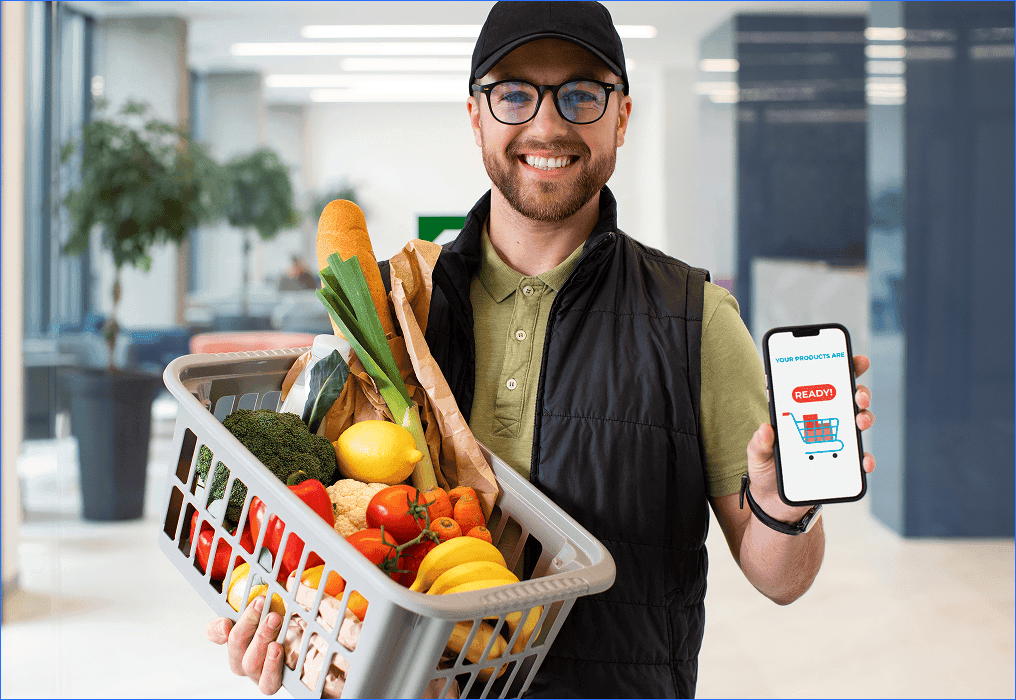
A grocery ecommerce platform is a digital tool that helps businesses set up and run ecommerce grocery stores by managing product catalogues, inventory, orders, payments, and fulfilment in one connected system. For FMCG brands specifically it goes beyond basic online selling to cover retailer ordering, distributor management, local store availability, and customer engagement across every channel simultaneously.
- Manage grocery product catalogues online
FMCG brands typically manage hundreds or thousands of SKUs across multiple categories. A grocery ecommerce platform keeps product information, pricing, images, and availability accurate and consistent across every digital touchpoint without requiring manual updates for each channel.
- Support retailer and customer ordering
The best grocery ecommerce platforms handle both B2C consumer orders and B2B retailer ordering from the same system. Distributors and retailers can place orders, track availability, and manage their accounts without requiring separate tools or manual processing.
- Track inventory, pricing, and availability
Real-time inventory visibility prevents overselling, reduces stockouts, and ensures customers only see products that are actually available in their area. For perishable categories this accuracy is not a nice-to-have feature. It is an operational requirement.
- Coordinate delivery, fulfilment, and returns
Grocery ecommerce platforms manage delivery slot booking, order routing to the nearest fulfilment point, substitution workflows for out-of-stock items, and returns processing for damaged or incorrect products.
- Improve FMCG sales visibility and customer engagement
Analytics, loyalty programmes, personalised promotions, and review management built into the platform help FMCG brands understand what is selling, where demand is growing, and how to retain customers between purchases.
Grocery Ecommerce Platform Checklist for FMCG Brands
Before committing to any grocery ecommerce platform evaluate it against these specific requirements. Generic ecommerce platforms often fail FMCG brands on the grocery-specific items further down this list.
1. Product Catalogue and Category Management
Can the platform handle hundreds of SKUs across multiple categories with variant management, expiry date tracking, and bulk upload capabilities? Grocery catalogue management is significantly more complex than general retail.
2. Real-Time Inventory and Stock Visibility
Does inventory update automatically across every channel when a sale occurs? Can customers see local store availability rather than just a generic in-stock status?
3. Delivery Slots, Quick Commerce, and Fulfilment Support
Does the platform support scheduled delivery slots, express delivery windows, and quick commerce fulfilment from dark stores or local outlets?
4. Retailer Ordering and B2B Order Workflows
Can distributors and retailers place B2B orders through the same platform? Does it support trade pricing, minimum order quantities, and credit terms for channel partners?
5. Payment Options, Offers, and Loyalty
Does the platform support UPI, cards, cash on delivery, and digital wallets? Can it run category-specific promotions and loyalty programmes that drive repeat purchase behaviour?
6. Reviews, Ratings, and Customer Engagement
Does the platform capture and display product reviews? Can it manage customer communications across WhatsApp, email, and app notifications from one place?
7. Analytics, Reporting, and Sales Attribution
Can you track which channels drive sales, which products are trending, and which locations underperform? Real-time analytics are essential for FMCG brands managing large SKU counts across multiple geographies.
Factors to Consider When Choosing a Grocery Ecommerce Platform
When choosing a grocery eCommerce platform, consider these vital factors:
1. User-Friendly Interface and Customization
It should be easy for both customers and administrators to use. You can customise it to match your brand.
2. Inventory Management and Order Fulfilment
The grocery ecommerce platform should handle inventory well, keep track of stock, and process orders efficiently. Features like batch processing help with large order volumes.
3. Payment Gateways and Security
Ensure secure payment options and data protection to build customer trust.
4. Mobile Responsiveness and App Integration
The platform should work well on mobile devices, and if it integrates with mobile apps, it can enhance the user experience.
Benefits of Ecommerce Platform for Grocery Stores
Benefits of Using eCommerce Platform for Grocery Stores:
1. Expanded Customer Reach
Grocery eCommerce platforms enable stores to reach a wider customer base, including those who prefer online shopping for convenience.
2. Increased Sales
Online platforms provide additional sales channels, contributing to revenue growth.
3. Convenience for Shoppers
Customers can shop from the comfort of their homes, saving time and effort.
4. Detailed Product Listings
Grocers can showcase a wide range of products with detailed descriptions, aiding customers in making informed choices.
5. Inventory Management
Efficient inventory tracking prevents overstocking or understocking, optimising supply chain management.
6. Order Accuracy
Automation reduces order processing errors, enhancing customer satisfaction.
7. Flexible Payment Options
Multiple payment gateways offer convenience and security for customers.
8. Data Insights
Grocery ecommerce platforms offer data analytics to understand customer preferences, aiding in targeted marketing efforts.
9. Customer Loyalty
Loyalty programs and promotions can be integrated to reward repeat customers.
10. Competitive Advantage
Embracing eCommerce keeps grocery stores competitive in the digital age.
Gain insights on “Top 10 Food Retail Management & Marketing Strategies in 2025” with this short and informative video.
FMCG Retailer Ordering App vs Grocery Ecommerce Platform
Many FMCG brands confuse these two tools or assume one replaces the other. They serve fundamentally different purposes and the most effective FMCG brands use both simultaneously.
Feature | Retailer Ordering App | Grocery Ecommerce Platform | Best Use Case |
| Primary Audience | Distributors, dealers, and retailers | End consumers and B2C shoppers | Retailer app for B2B, ecommerce platform for B2C |
| Order Type | Bulk B2B trade orders | Individual consumer purchases | Different order volumes and pricing structures |
| Catalogue Visibility | Trade catalogue with wholesale pricing | Consumer catalogue with retail pricing | Separate pricing tiers for each audience |
| Inventory Management | Stock allocation across distributor network | Real-time consumer-facing availability | Both need real-time data from same inventory source |
| Delivery Model | Scheduled trade deliveries to retail outlets | Consumer delivery slots or click and collect | Different fulfilment timelines and logistics |
| Payments | Credit terms, purchase orders, invoicing | UPI, cards, cash on delivery, wallets | Trade credit vs consumer payment flexibility |
| Offers and Promotions | Trade schemes, volume discounts, dealer incentives | Consumer promotions, loyalty programmes, coupons | Different incentive structures for each tier |
| Sales Tracking | Distributor performance, sell-through rates | Consumer conversion, basket size, repeat purchase | Different KPIs for each channel |
| Customer Engagement | Dealer relationship management | Consumer reviews, ratings, personalisation | B2B relationship vs B2C experience focus |
The key insight for FMCG brands is that a grocery ecommerce platform without retailer ordering capability leaves significant B2B revenue unaddressed. And a retailer ordering app without consumer-facing ecommerce leaves the direct-to-consumer channel entirely in the hands of third-party marketplaces.
Learn how omnichannel commerce connects retailer ordering, inventory, fulfilment, and customer experiences to drive growth. "How Can Your Store Drive More Sales Through Omni Commerce Integration"
Top 10 Food Retail Management & Marketing Strategies in 2025
Top 10 Grocery Ecommerce Platforms for FMCG Brands:
1. Sekel Tech
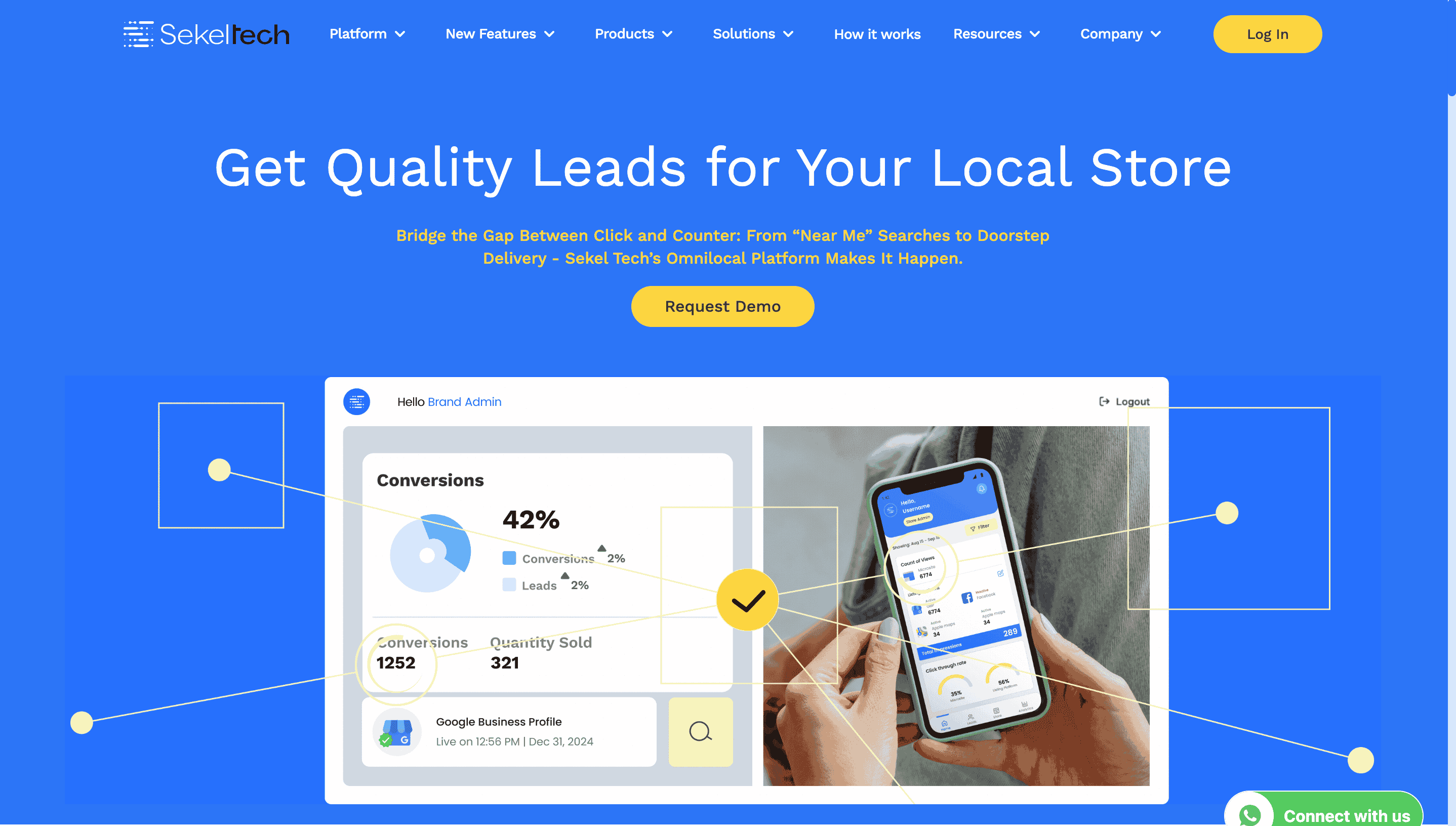
Sekel Tech is a niche eCommerce platform specialising in FMCG brands, offering a range of features like inventory management, order tracking, and personalised customer experiences.
a. Overview and Key Features
Sekel Tech offers a comprehensive grocery eCommerce solution with a focus on user-friendly interfaces, robust inventory management, secure payment gateways, and mobile responsiveness. It's tailored for FMCG brands.
b. User Interface and Design
Its interface is intuitive for both customers and administrators, with customization options for branding.
c. Inventory Management Capabilities
Efficient inventory management and real-time tracking capabilities ensure smooth operations.
d. Payment and Security Features
Sekel Tech prioritises secure payment gateways and data security for customer trust.
e. Mobile Responsiveness
It's mobile-responsive, catering to users on various devices.
f. Integration with Mobile Apps
While it offers mobile integration options, they could be more robust.
g. Customer Support
Customer support is responsive and helpful.
2. BigCommerce

BigCommerce is a versatile eCommerce platform that allows FMCG brands to create and manage online stores with ease, providing features for scalability and customization.
a. Overview and Key Features
BigCommerce is known for its scalability, making it suitable for larger operations. It offers advanced eCommerce features.
b. User Interface and Design
It provides customization options, but the learning curve can be steep.
c. Inventory Management Capabilities
Strong inventory management features are available.
d. Payment and Security Features
It offers various payment gateways and emphasises security.
e. Mobile Responsiveness
Designs are responsive and adaptable to mobile devices.
f. Integration with Mobile Apps
Integrates with mobile apps effectively.
g. Customer Support
Customer support is generally good.
3. Shopify

Shopify is a popular eCommerce platform known for its user-friendly interface and extensive app ecosystem, making it suitable for FMCG brands looking to sell groceries online.
a. Overview and Key Features
Shopify is known for its ease of use and extensive app store, making it adaptable for various businesses.
b. User Interface and Design
User-friendly interface with customizable themes.
c. Inventory Management Capabilities
Inventory management is well-handled.
d. Payment and Security Features
Offers multiple payment gateways and robust security features.
e. Mobile Responsiveness
Designs are mobile-responsive.
f. Integration with Mobile Apps
Integrates well with mobile apps.
g. Customer Support
Shopify provides 24/7 customer support.
4. Amazon
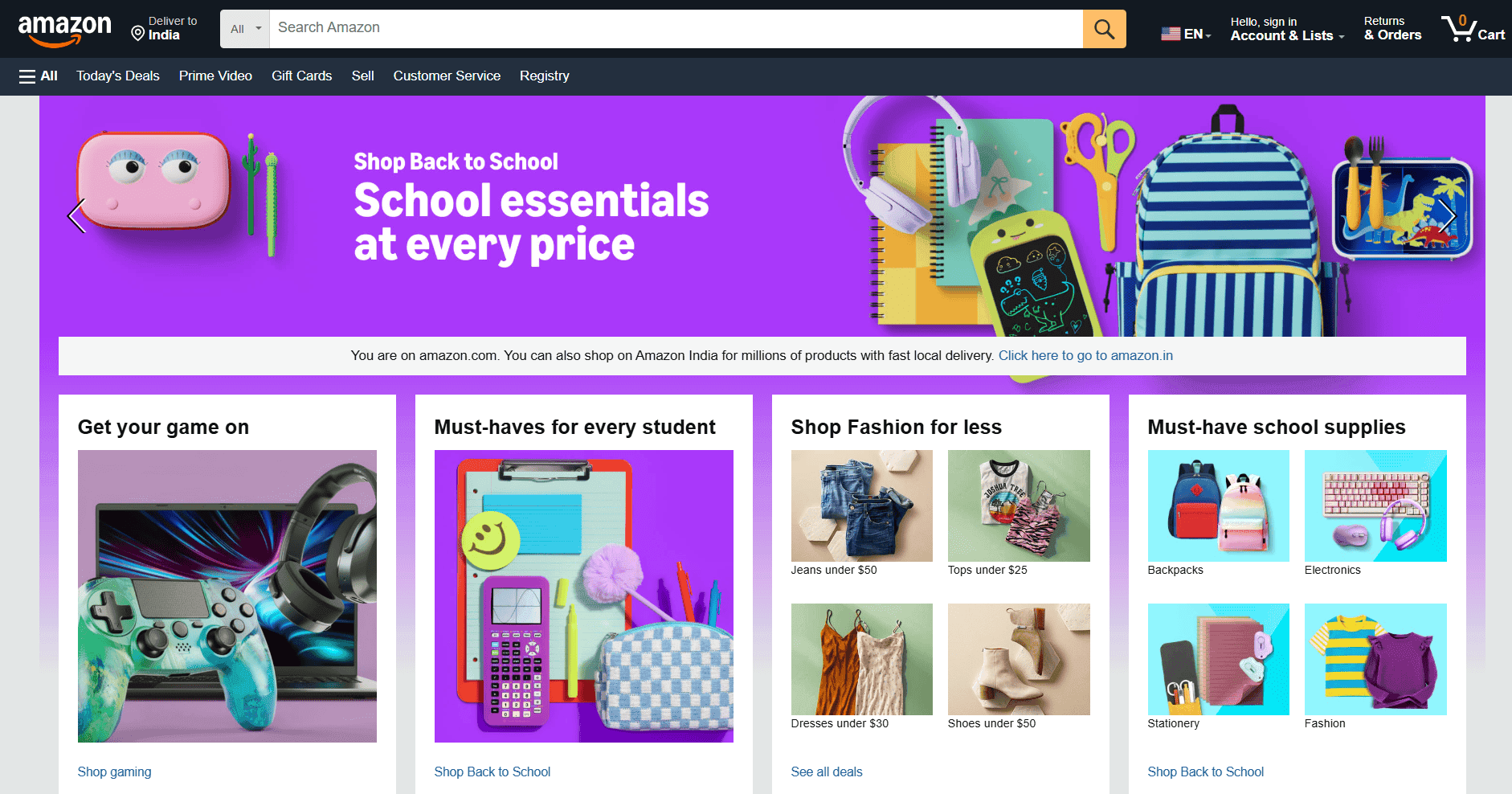
Amazon is a global eCommerce giant that provides FMCG brands with a vast customer base and fulfilment services, making it a lucrative platform for grocery sales.
a. Overview and Key Features
Amazon is a global eCommerce giant, known for its vast product catalogue and efficient order fulfilment.
b. User Interface and Design
User-friendly interface, but limited customization for branding.
c. Inventory Management Capabilities
Robust inventory management and automated order processing.
d. Payment and Security Features
Secure payment options and data protection are top priorities.
e. Mobile Responsiveness
Mobile-responsive, accommodating various devices.
f. Integration with Mobile Apps
Offers mobile app integration for a seamless shopping experience.
g. Customer Support
Provides customer support, but it varies depending on the seller.
5. BigBasket
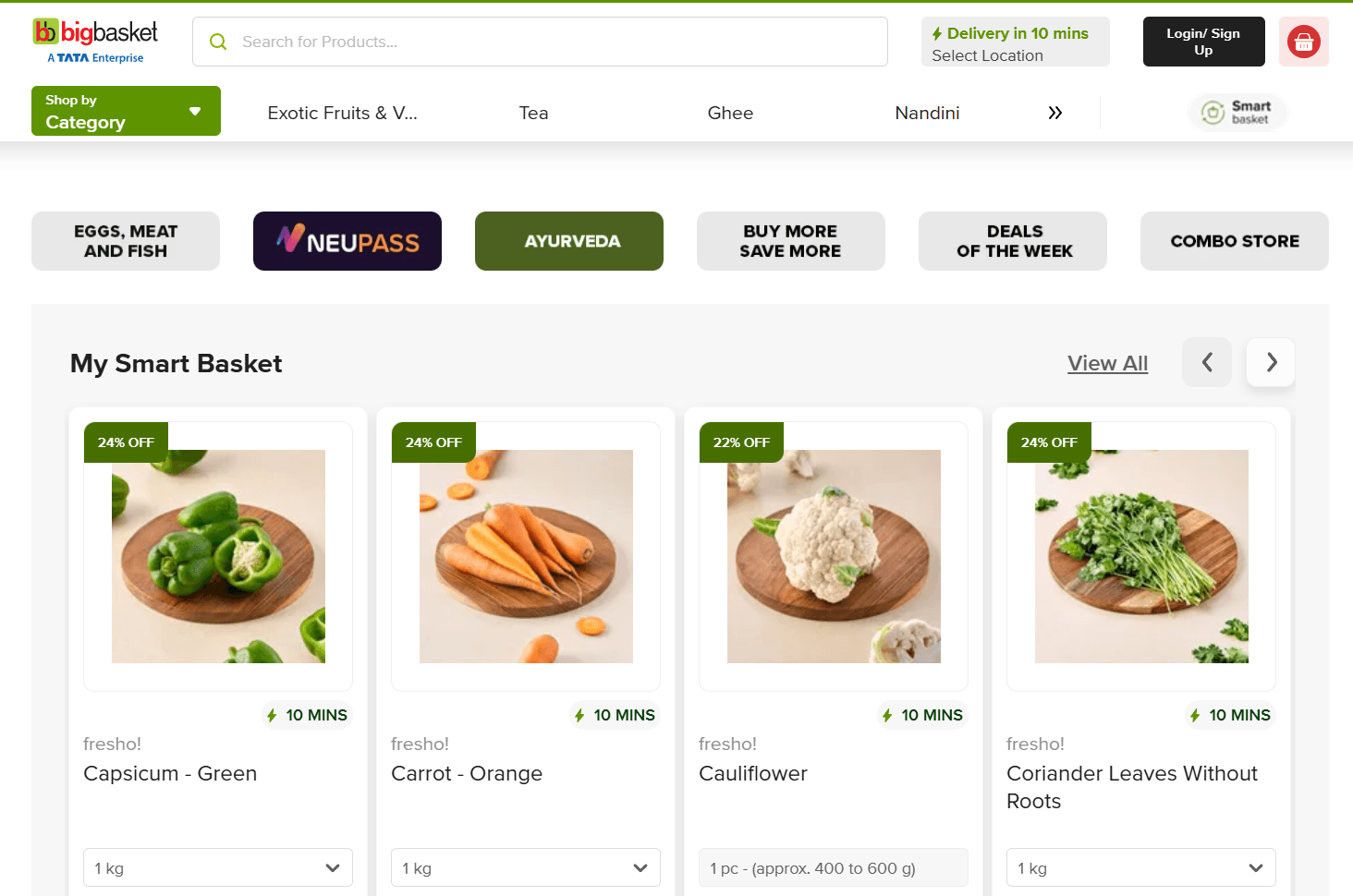
BigBasket is an India-based grocery ecommerce platform that caters specifically to FMCG brands, offering a dedicated marketplace for grocery products.
a. Overview and Key Features
BigBasket is a popular grocery ecommerce platform known for its extensive product range and delivery services.
b. User Interface and Design
User-friendly interface with a focus on grocery shopping.
c. Inventory Management Capabilities
Efficient inventory tracking and order fulfilment.
d. Payment and Security Features
Secure payment options and data security measures.
e. Mobile Responsiveness
Mobile-responsive for on-the-go shopping.
f. Integration with Mobile Apps
Offers mobile apps for enhanced convenience.
g. Customer Support
Customer support is available but may vary regionally.
6. Walmart
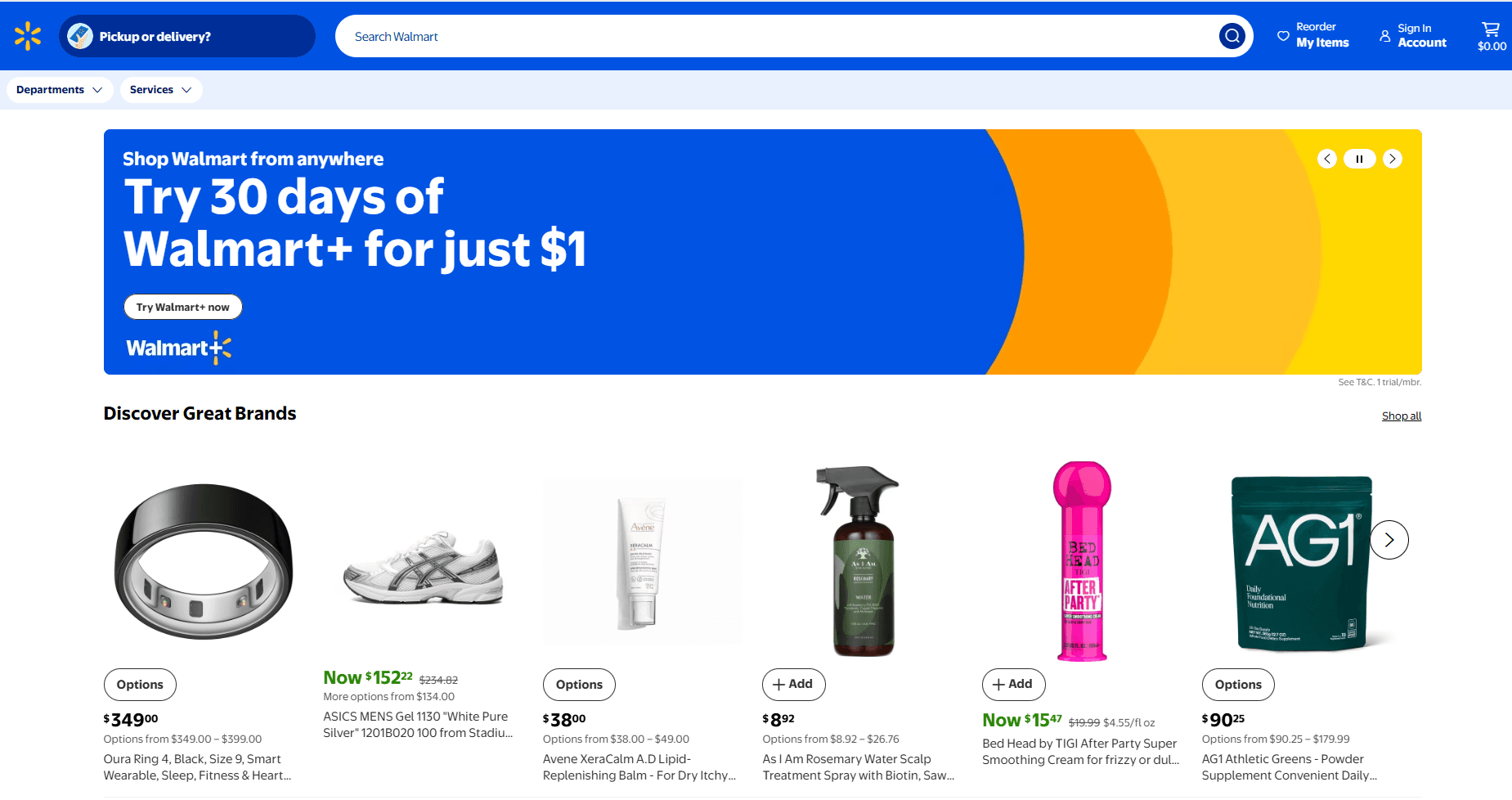
Walmart's eCommerce platform offers FMCG brands the opportunity to reach a wide audience, both online and offline, through its extensive network of stores and digital presence.
a. Overview and Key Features
Walmart's grocery eCommerce platform offers a wide range of products, including groceries, with an emphasis on affordability.
b. User Interface and Design
User-friendly design with a focus on easy navigation.
c. Inventory Management Capabilities
Strong inventory management features.
d. Payment and Security Features
Secure payment options and compliance with industry standards.
e. Mobile Responsiveness
Mobile-responsive for shopping on smartphones and tablets.
f. Integration with Mobile Apps
Integrates with mobile apps for a seamless shopping experience.
g. Customer Support
Offers customer support services.
7. Apple
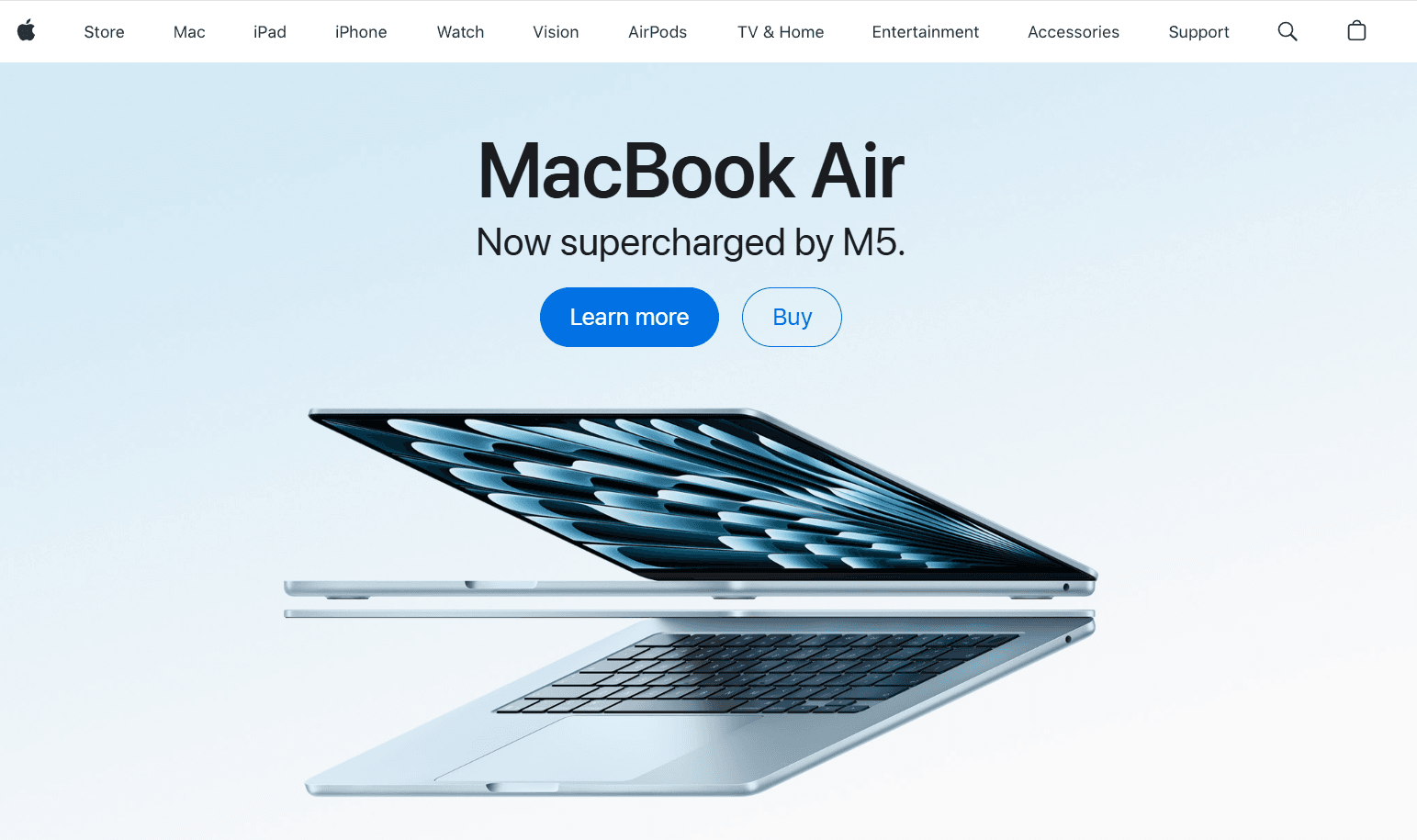
While Apple primarily focuses on technology products, its App Store and Apple Pay services can be utilised by FMCG brands to create mobile shopping apps and facilitate online grocery transactions.
a. Overview and Key Features
Apple's eCommerce platform primarily focuses on technology products but also includes apps and services.
b. User Interface and Design
Known for its sleek and user-friendly design.
c. Inventory Management Capabilities
Efficient inventory management for digital products.
d. Payment and Security Features
Offers secure payment options and priorities data security.
e. Mobile Responsiveness
Designed for mobile users with responsive layouts.
f. Integration with Mobile Apps
Seamless integration with iOS apps.
g. Customer Support
Apple provides customer support for its products and services.
8. Blinkit
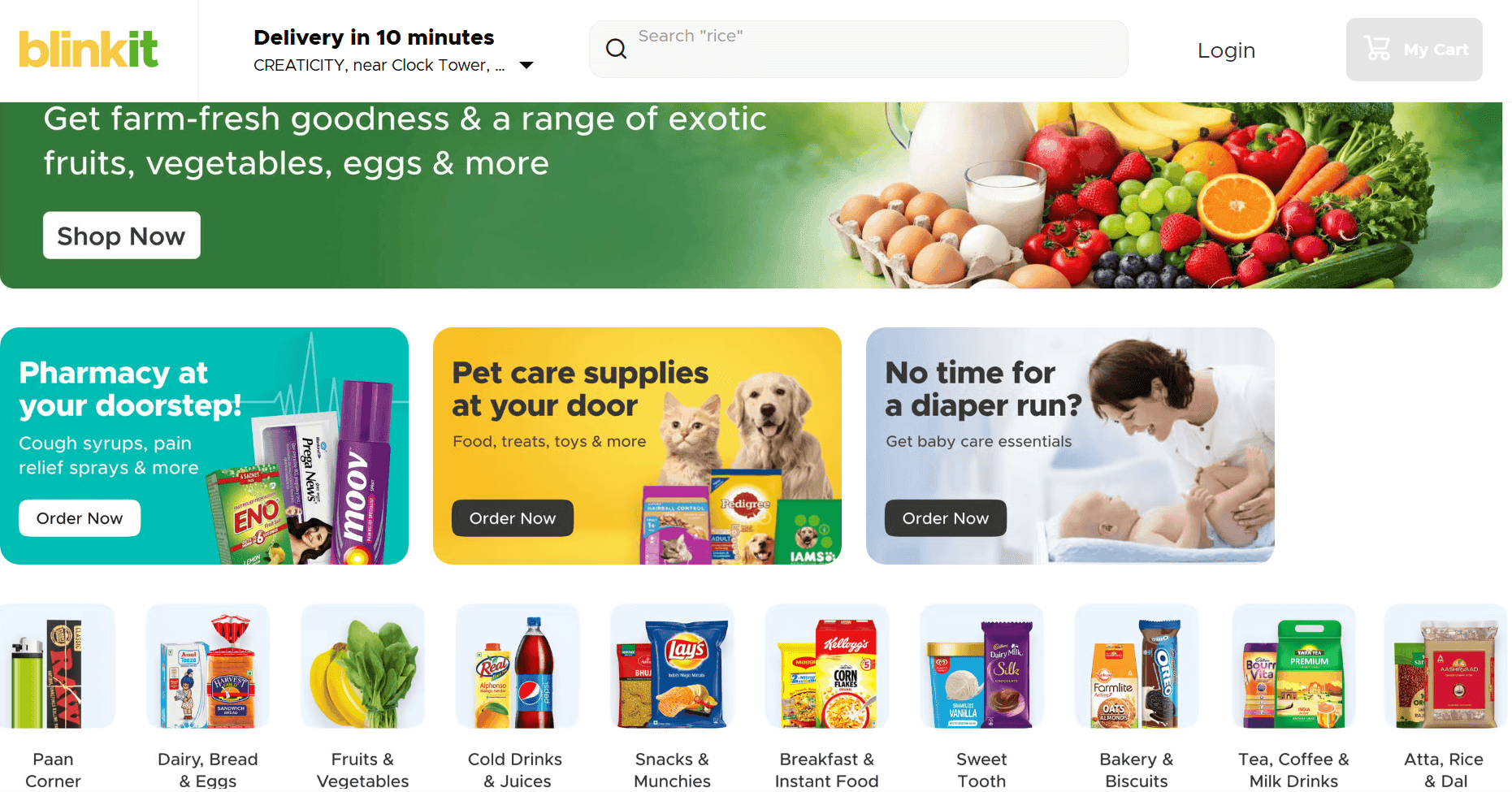
Blinkit is an Indian grocery eCommerce platform that specialises in quick and reliable delivery of FMCG and grocery products, making it an attractive option for brands in this sector.
a. Overview and Key Features
Blinkit specialises in hyperlocal delivery of groceries and essentials, focusing on quick delivery times.
b. User Interface and Design
User-friendly interface tailored for quick ordering.
c. Inventory Management Capabilities
Efficient inventory management for rapid deliveries.
d. Payment and Security Features
Secure payment options and data protection.
e. Mobile Responsiveness
Designed for mobile users with a focus on quick ordering.
f. Integration with Mobile Apps
Offers a mobile app for speedy ordering.
g. Customer Support
Customer support is available for order-related inquiries.
9. WooCommerce
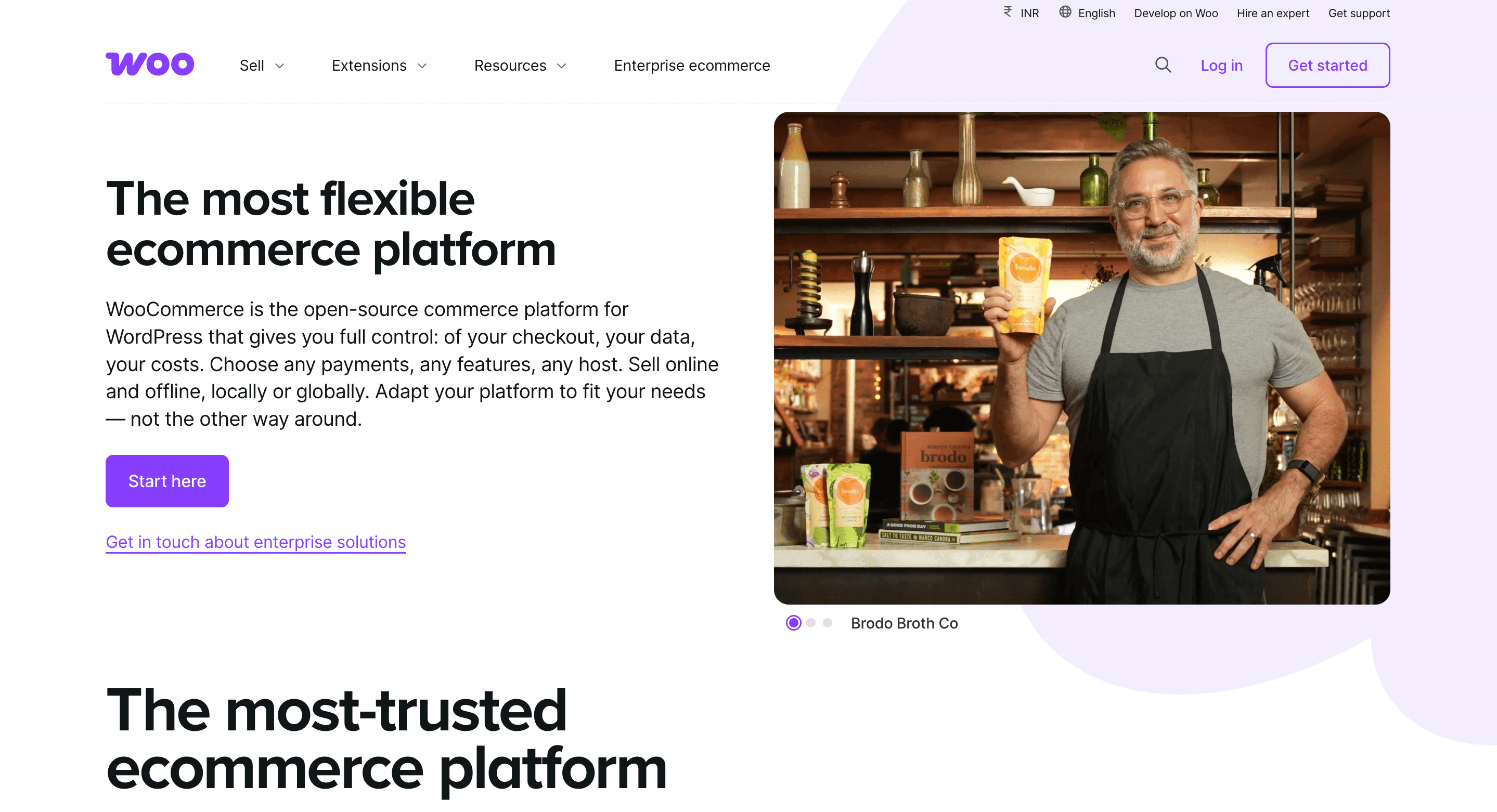
WooCommerce is a WordPress plugin that enables FMCG brands to create customised online stores, providing flexibility and integration options for eCommerce businesses.
a. Overview and Key Features
WooCommerce is a plugin for WordPress that offers flexibility and customization for eCommerce websites.
b. User Interface and Design
Customizable design and user interface based on the WordPress theme used.
c. Inventory Management Capabilities
Inventory management features depend on the WooCommerce extensions used.
d. Payment and Security Features
Offers various payment gateway options, and security depends on the hosting environment.
e. Mobile Responsiveness
Mobile responsiveness is based on the website's theme.
f. Integration with Mobile Apps
Mobile app integration depends on additional plugins or extensions.
g. Customer Support
Support varies depending on the hosting provider and plugins/extensions used.
10. eBay
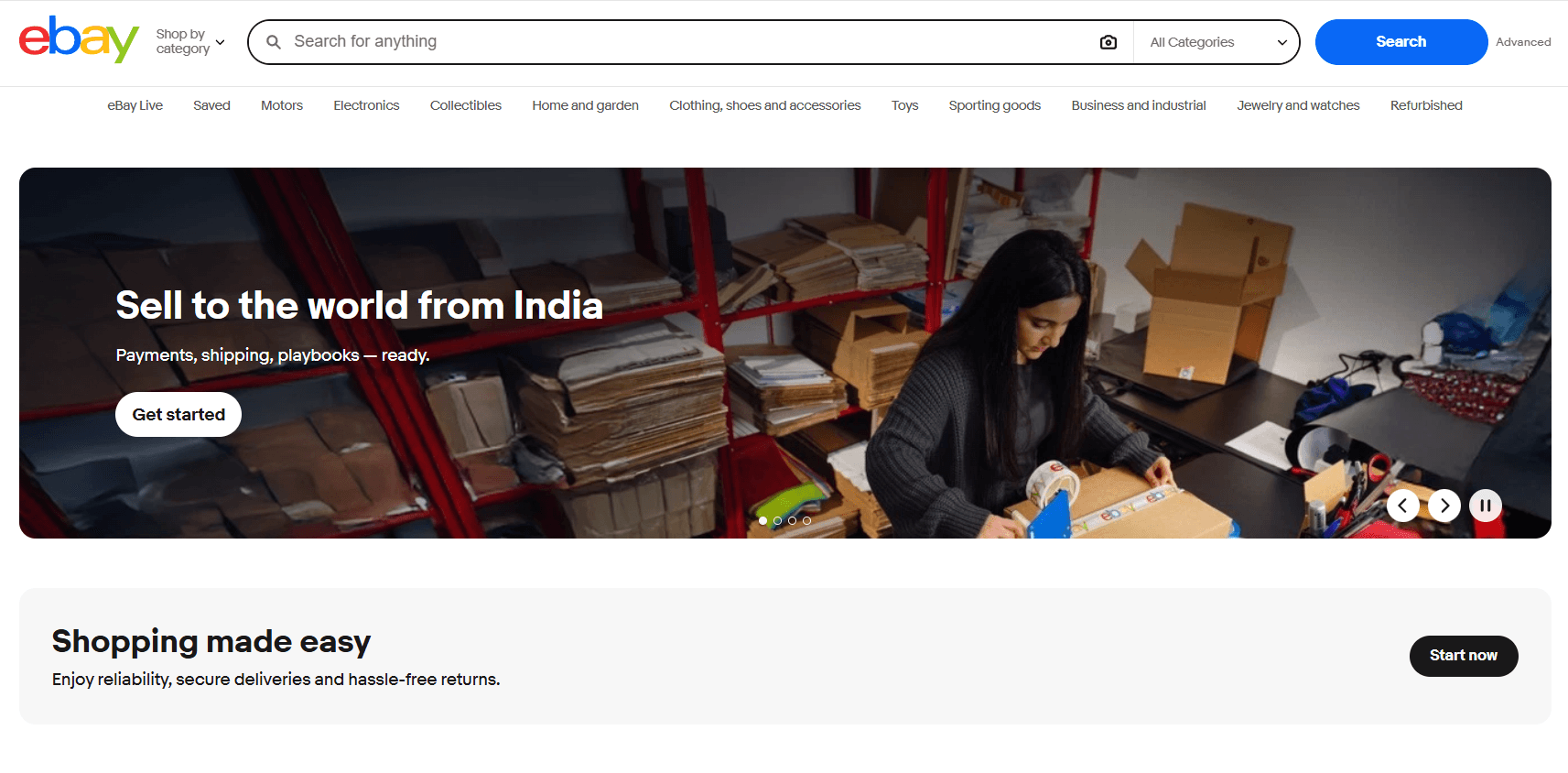
eBay is a well-established online marketplace where FMCG brands can list their products for sale, reaching a diverse customer base through auction-style or fixed-price listings.
a. Overview and Key Features
eBay is a global marketplace known for its diverse range of products, including groceries from various sellers.
b. User Interface and Design
User-friendly interface, but design varies based on seller listings.
c. Inventory Management Capabilities
Inventory management depends on individual sellers.
d. Payment and Security Features
Payment options and security vary based on sellers and listings.
e. Mobile Responsiveness
Mobile-responsive for browsing listings and making purchases.
f. Integration with Mobile Apps
eBay offers mobile apps for buying and selling.
g. Customer Support
Support depends on individual sellers and their policies.
Each of these grocery ecommerce platforms caters to different business needs and customer preferences, so choosing the right one should be based on the specific requirements of your FMCG brand.
Here is a table comparing the reviewed grocery eCommerce platforms:
| Platform | User Interface and Design | Inventory Management | Payment and Security | Mobile Responsiveness | Integration with Mobile Apps | Customer Support |
| Sekel Tech | User-friendly, customizable | Efficient | Secure | Mobile-responsive | Integration options | Responsive |
| BigCommerce | Robust, scalable | Strong | Secure | Mobile-responsive | Effective integration | Generally good |
| Shopify | User-friendly, customizable | Well-handled | Secure | Mobile-responsive | Seamless integration | 24/7 support |
| Amazon | User-friendly | Efficient | Secure | Mobile-responsive | Effective integration | Varies |
| BigBasket | User-friendly | Efficient | Secure | Mobile-responsive | Offers mobile apps | Varies regionally |
| Walmart | User-friendly | Strong | Secure | Mobile-responsive | Integrates with mobile apps | Available |
| Apple | Sleek, user-friendly | Efficient | Secure | Mobile-responsive | Seamless integration | Available |
| Blinkit | Quick and simple | Efficient | Secure | Mobile-responsive | Offers a mobile app | Available |
| WooCommerce | Customizable | Varies (plugin-based) | Varies (hosting-based) | Varies (theme-based) | Dependent on plugins | Varies |
| eBay | User-friendly | Varies (seller-based) | Varies (seller-based) | Mobile-responsive | Offers mobile apps | Varies (seller-based) |
Explore how Sekel Tech helps FMCG brands manage catalogue, ordering, fulfilment, and digital commerce across channels. "What is Sekel Tech and How Does It Empower Brands & Retailers?"
Ecommerce Platform for Food Brands: 5 Ways They Simplify Online Operations
Ecommerce platforms help food brands in five important ways:
1. Easy Ordering
They make it simple for customers to order food online with easy-to-use shopping carts and secure payment options.
2. Showcasing Products
These platforms let food brands display their products with appealing images and details so customers can make informed choices.
3. Managing Inventory
Grocery ecommerce platforms help brands keep track of their food stock, preventing overselling and ensuring products stay fresh.
4. Shipping and Delivery
They offer flexible shipping and delivery options to ensure food arrives on time and in good condition.
5. Marketing
These platforms provide tools for engaging customers and marketing products, helping brands grow their online presence.
Using these features, the ecommerce platform for Food assists food brands in building a strong online presence, managing products and inventory efficiently, offering a convenient shopping experience, and executing targeted marketing strategies. This comprehensive support boosts their competitiveness and growth in online food retail."
Expand your knowledge with the informative article "How Quick Commerce is running India’s & ‘Just-In-Time’ audience demand?" featured in the Times of India. This insightful piece provides valuable insights to navigate the dynamic world of the Indian retail industry in 2025.
2026 Grocery Ecommerce Trends: Quick Commerce, AI Shopping Assistants, and Unified Commerce
The grocery ecommerce landscape is changing faster than most FMCG brands can adapt. According to Grocery Dive's 2026 industry trends, these are the shifts that will define which grocery and FMCG brands win over the next few years.
- Quick Commerce and Faster Grocery Fulfilment
Customer expectations around delivery speed have been permanently reset by quick commerce platforms. 10 to 30 minute delivery is now the benchmark in dense urban markets. FMCG brands without a quick commerce strategy are losing impulse and emergency purchase occasions to competitors who have one.
- AI Shopping Assistants and Personalised Recommendations
AI-powered shopping assistants are beginning to manage grocery replenishment autonomously, reordering staples before customers run out and suggesting complementary products based on purchase history. FMCG brands that optimise product data for AI discovery will have a significant advantage over those still relying on search-only visibility.
- Unified Commerce Across Apps, Stores, and Marketplaces
The most effective FMCG brands are moving from managing separate online and offline channels to unified commerce where one backend system handles inventory, orders, and customer data across every touchpoint simultaneously.
- Retail Media and First-Party Data
With third-party cookies declining and India's DPDP Act in full effect, FMCG brands are investing in first-party data strategies through loyalty programmes and direct consumer relationships. Retail media on grocery platforms is becoming a primary performance marketing channel.
- Better Inventory Visibility and Local Availability
Customers increasingly expect to see local store availability before purchasing. FMCG brands connecting their product catalogue to hyperlocal inventory data are seeing significantly higher conversion from digital discovery to physical store purchase.
Expand your knowledge with the informative article How Quick Commerce is running India’s & ‘Just-In-Time’ audience demand? featured in the Times of India. This insightful piece provides valuable insights to navigate the dynamic world of the Indian retail industry in 2023.
Frequently Asked Questions (FAQs)
1. What features should a grocery ecommerce platform have?
A grocery ecommerce platform should offer product catalogue management, real-time inventory updates, delivery scheduling, secure payments, order tracking, promotions, loyalty features, customer reviews, analytics, and integration with fulfilment and retailer ordering systems.
2. What is the difference between a grocery ecommerce platform and a retailer ordering app?
A grocery ecommerce platform supports customer-facing online sales and shopping experiences, while a retailer ordering app helps FMCG brands manage B2B ordering from distributors, retailers, dealers, and field sales teams.
3. Which grocery ecommerce platform is best for FMCG brands?
The best platform depends on business goals, catalogue complexity, fulfilment model, retailer network, integrations, and whether the brand needs B2C grocery sales, B2B retailer ordering, or an omnichannel approach.
4. How can FMCG brands sell grocery products online?
FMCG brands can sell through their own ecommerce website, grocery marketplaces, quick commerce platforms, retailer ordering apps, or omnichannel solutions that connect inventory, catalogues, fulfilment, and customer engagement.
5. What are the five pillars of grocery ecommerce?
The five key pillars of grocery ecommerce are product catalogue management, inventory visibility, order and fulfilment operations, customer engagement, and analytics to improve sales, efficiency, and customer experience.
Conclusion
In conclusion, the right choice depends on the FMCG brand's size and needs. Picking the correct grocery eCommerce platform is crucial for success online, as it tailors the shopping experience to customers. Technology is the driving force, shaping the growth of online grocery sales for FMCG brands, ensuring a future where convenience and innovation go hand in hand.
Take Advantages of Sekel Tech’s Ecommerce Platform
Maximise your online grocery sales and streamline operations with Sekel Tech's Grocery eCommerce Platform. Our cutting-edge solution is designed to not only boost your sales but also enhance the overall customer experience and drive your FMCG brand to new heights. Don't miss out on an opportunity to revolutionise your FMCG business and thrive in the world of online retail. Get started with a grocery ecommerce platform today and enjoy the benefits.
Share


Similar Blogs
Loved this content?
Sign up for our newsletter and get the latest tips & updates directly in your inbox.
There’s more where that came from!
 Connect with us