
Artificial Intelligence
AI-Powered Online Reputation Management: Protect Your Brand
Mon, 07 Apr 2025 11:14:05 GMT
Speak to our Hyperlocal Expert
Editor’s Note: This post was originally published in Apr 2025 and was updated in Apr 2026 for accuracy and comprehensiveness.
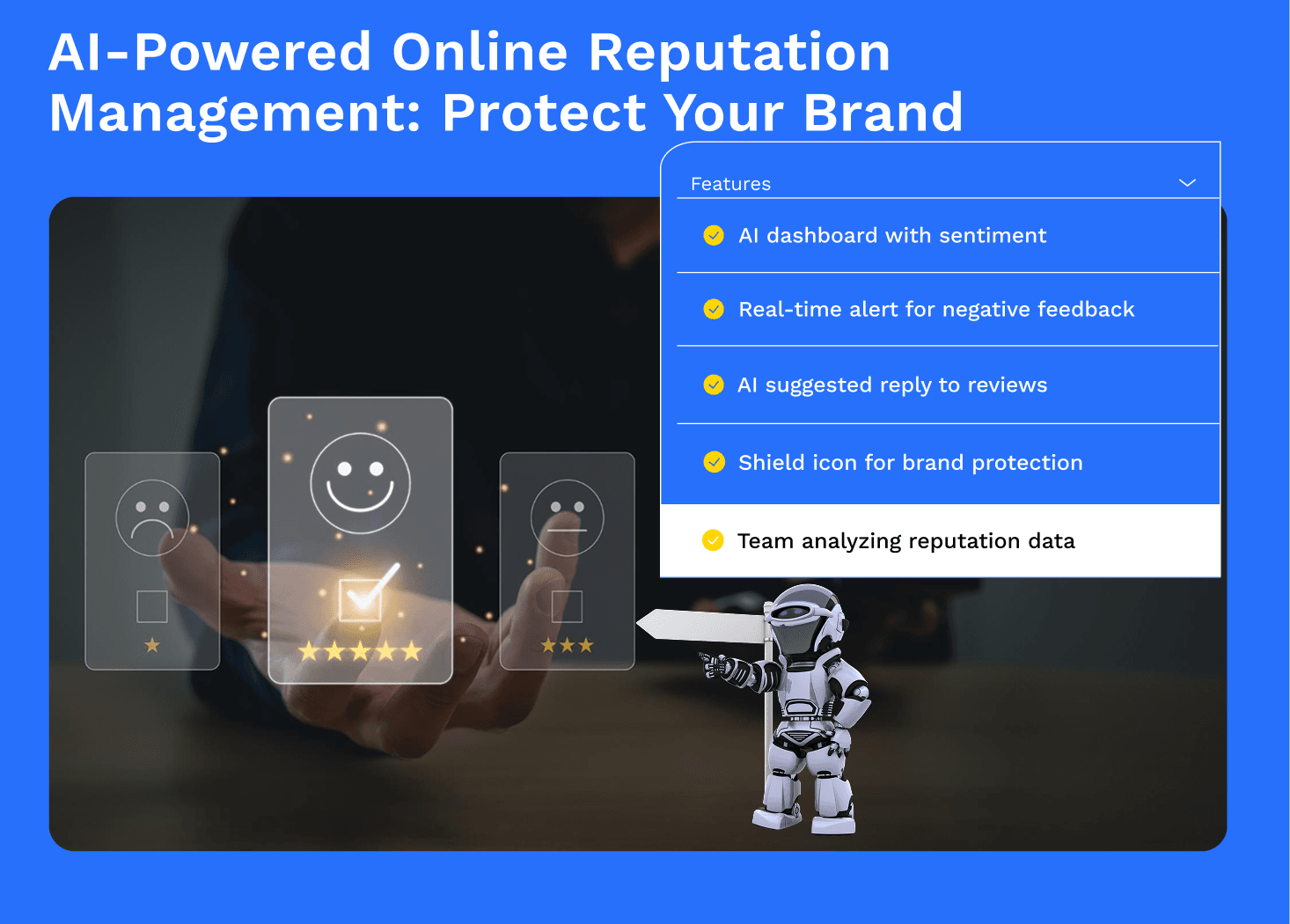
AI-powered online reputation management uses artificial intelligence to monitor brand mentions, analyze sentiment, automate responses, and prevent crises in real-time. It helps businesses maintain trust, improve customer engagement, and protect brand reputation.
Is your brand reputation safe online? In today’s fast-paced digital world, a single negative review or viral complaint can impact customer trust and business growth. Managing your reputation proactively is no longer optional-it’s essential.
AI is revolutionizing reputation management by offering real-time insights, sentiment analysis, and automated responses. It ensures businesses can address concerns instantly, preventing small issues from becoming global crises.
In this article, we explore the importance of ORM, the role of AI in reputation management, and how innovative solutions help businesses stay ahead.
What is Online Reputation Management (ORM)?

Online Reputation Management (ORM) refers to the process of monitoring, influencing, and maintaining a brand's or individual’s online presence. It involves managing online reviews, social media conversations, search engine results, and other digital content that affects public perception.
Key ORM strategies include
- Tracking brand mentions across platforms
- Responding to customer reviews and feedback
- Addressing negative comments proactively
- Enhancing positive content visibility
- Using AI-powered tools for sentiment analysis
Effective ORM helps businesses build trust, improve customer engagement, and maintain a strong digital presence.
The Key Pillars of Online Reputation Management
A strong online reputation relies on four fundamental pillars: Expertise, Empathy, Commitment, and Transparency. These elements shape how a brand is perceived and how effectively it can manage customer interactions.
1. Expertise – Building Authority and Credibility
Brands that showcase deep industry knowledge gain trust and recognition. Sharing valuable insights, accurate information, and timely responses strengthens credibility. AI-powered ORM tools help businesses track industry trends, correct misinformation, and position themselves as thought leaders.
2. Empathy – Addressing Customer Concerns with Care
Effective reputation management isn’t just about speed-it’s about understanding. Customers appreciate brands that acknowledge their concerns and provide thoughtful solutions. AI-driven sentiment analysis helps businesses interpret customer emotions and craft personalized, meaningful responses.
3. Commitment – Upholding Brand Integrity Over Time
Maintaining a positive reputation requires consistent engagement. Brands must actively monitor, respond, and adapt to customer feedback. AI-driven tools streamline this process, ensuring businesses stay proactive in maintaining a strong, reliable brand image.
4. Transparency – Earning Trust Through Honest Communication
Open and honest communication fosters customer confidence. Addressing negative feedback, clarifying misunderstandings, and sharing updates openly build long-term trust. AI-powered ORM solutions help brands deliver clear, fact-based messaging across all digital platforms.
By prioritizing these four pillars, businesses can strengthen their online reputation, enhance customer trust, and drive long-term success.
Managing online reputation is crucial in the era of digital and physical retail integration. Watch how Sekel Tech’s hyperlocal solutions help brands navigate online-to-offline challenges effectively.
Challenges in Managing Online Reputation
In today’s fast-paced digital world, maintaining a strong online reputation comes with several challenges. Without the right tools and strategies, brands risk losing customer trust and market credibility.
1. Rapid Spread of Negative Reviews and Misinformation
A single negative review or false claim can go viral within minutes, damaging a brand’s reputation. Social media, review sites, and forums amplify these issues, making it crucial to monitor and address them in real time before they escalate.
2. Lack of Real-Time Response Mechanisms
Customers expect immediate responses to their concerns. Delayed replies or ignored feedback can worsen the situation, leading to lost trust and revenue. Without an AI-powered system, brands struggle to keep up with the volume of online conversations.
3. Managing Multi-Channel Brand Perception
Consumers interact with brands across multiple channels-Google, social media, review platforms, and business listings. Keeping track of customer feedback and ensuring a consistent brand image across all platforms can be overwhelming without automation.
4. Ensuring Consistency Across Local and Global Platforms
For brands with multiple locations or international reach, maintaining a unified reputation is a challenge. Localized issues can quickly impact global perception, making it essential to have an AI-driven system that provides insights and ensures uniform messaging.
To overcome these challenges, businesses need an AI-powered Online Reputation Management tool that offers real-time monitoring, instant response mechanisms, and centralized reputation control across all platforms.
How AI and ML Enhance Reputation Management

Artificial Intelligence (AI) and Machine Learning (ML) are transforming Online Reputation Management (ORM) by enabling brands to track, analyze, and respond to feedback at scale. These technologies help businesses stay proactive, ensuring that a minor issue doesn’t spiral into a full-blown crisis.
1. Real-Time Monitoring – Tracking Mentions and Customer Feedback
AI-powered ORM tools continuously scan social media, review sites, forums, and blogs to detect brand mentions. This helps businesses stay aware of customer sentiments, identify emerging trends, and respond swiftly to maintain a positive brand image.
2. Sentiment Analysis – Understanding Brand Perception
ML-driven sentiment analysis evaluates customer feedback, reviews, and comments to determine whether they are positive, neutral, or negative. This allows brands to measure overall reputation trends and address concerns with the right tone and approach.
3. Automated Response Suggestions – Ensuring Quick and Empathetic Replies
AI-driven Online Reputation Management tools suggest context-aware responses, ensuring that businesses reply to customer concerns promptly and empathetically. This STP automation saves time while maintaining a human touch in interactions.
4. Crisis Prevention & Management – Addressing Negative Trends Proactively
By identifying patterns in negative feedback, AI helps businesses spot potential crises before they escalate. Early detection allows brands to take corrective action, engage with affected customers, and prevent reputational damage.
With AI and ML, businesses can enhance customer trust, streamline reputation management, and maintain a strong brand presence across all digital platforms.
How AI-Powered ORM Platforms Work
AI-powered ORM platforms are not just dashboards that collect reviews. They act like a central command center for your brand’s digital reputation, pulling data from every touchpoint and turning it into clear, actionable insights. If you’ve ever struggled to track reviews across platforms or missed a critical customer complaint, this is exactly what these systems are built to solve.
- Architecture Overview
At the core, most AI reputation management tools follow a simple but powerful structure:
- Data collection layer: pulls reviews, mentions, comments from Google, social media, forums, and search results
- Processing layer: uses AI models to analyze sentiment, intent, and urgency
- Action layer: triggers alerts, suggestions, or automated responses
This setup ensures nothing slips through the cracks, even when you’re managing hundreds of locations or thousands of daily interactions.
- Core AI Capabilities (What Actually Powers It)
Modern AI-driven reputation management platforms rely on a mix of technologies that go far beyond basic monitoring:
- Natural Language Processing (NLP): Understands what customers are really saying, not just keywords
- Machine Learning (ML): Learns from past interactions to improve response quality over time
- Sentiment Analysis: Identifies whether feedback is positive, negative, or neutral and flags risk areas
- Intent Detection: Spots complaints, purchase intent, or urgent queries instantly
This is why brands can now respond faster and more accurately without sounding robotic.
- Integration Across Channels
A strong AI-powered ORM service connects seamlessly with:
- Google reviews and business listings
- Social media platforms (Instagram, Facebook, LinkedIn, X)
- Third-party review sites and forums
- Search engine results and brand mentions
Instead of checking multiple platforms manually, everything is visible in one place.
- Automated Workflows & Real-Time Alerts
Speed matters. That’s why automation plays a key role:
- Negative review → instant alert to the team
- High-risk keyword (e.g., “bad service”) → priority escalation
- Positive feedback → prompt to request a review or testimonial
- Repetitive queries → AI-suggested responses
These workflow triggers reduce response time from hours to minutes, which directly impacts trust and retention.
- Analytics Dashboard & Insights
Beyond responses, the real value lies in decision-making:
- Sentiment trends over time
- Location-wise reputation performance
- Response time tracking
- Customer experience gaps
This helps brands move from reactive to proactive reputation building. Instead of fixing issues after damage, you start predicting them.
In simple terms, it turns reputation management from a manual task into a scalable growth engine.
Benefits of an AI-Powered Online Reputation Management Tool
Leveraging AI for Online Reputation Management (ORM) offers brands a competitive edge by enhancing responsiveness, trust, and customer engagement. Here’s how an AI-powered ORM tool can transform brand reputation
1. Faster Response Time for Customer Concerns
AI-driven tools enable businesses to detect, analyze, and respond to customer feedback in real time. By automating responses and prioritizing urgent issues, brands can resolve complaints quickly, preventing negative experiences from escalating.
2. Improved Brand Trust and Credibility
Consistency in responding to customer concerns builds trust and credibility. AI helps ensure that all interactions are timely, accurate, and empathetic, reinforcing a brand’s commitment to customer satisfaction and transparency.
3. Seamless Integration Across Sales Channels and Digital Platforms
An AI-powered ORM tool consolidates customer feedback from social media, review sites, business listings, and direct messages into a single dashboard. This ensures consistent messaging and brand perception across all touchpoints, whether local or global.
4. Enhanced Customer Experience Through Personalized Interactions
AI-driven sentiment analysis helps brands tailor responses based on customer emotions and preferences. This personalized approach makes customers feel heard and valued, leading to higher engagement and long-term loyalty.
By integrating AI into reputation management, businesses can strengthen customer relationships, safeguard their brand image, and drive sustainable growth in the digital landscape.
Industry experts like Rakesh Raghuvanshi emphasize the role of hyperlocal engagements in building trust and strengthening a brand’s online presence. In the article on MediaBrief, he discusses how businesses can leverage hyperlocal strategies to enhance their online reputation. Read the full article here.
How to Manage Your Online Reputation: A Step-by-Step Approach
Managing your online reputation is an ongoing effort that directly impacts trust and growth. A structured online reputation management approach helps you stay proactive instead of reacting too late.
Step 1: Audit Your Current Online Presence
Search your brand on Google and review ratings, comments, and mentions. This gives you a clear starting point for your digital reputation management efforts.
Step 2: Set Up Monitoring Across Channels
Track reviews, social media, and brand mentions in one place. Consistent brand reputation monitoring ensures you don’t miss important feedback.
Step 3: Establish Response Protocols
Define how to respond to negative, positive, and neutral feedback. Quick, clear, and empathetic replies build trust.
Step 4: Create Positive Content
Publish blogs, posts, and customer stories to strengthen your brand image and push positive content in search results.
Step 5: Use AI-Powered Tools
AI tools help monitor, analyze sentiment, and respond faster at scale, making online reputation management more efficient.
Step 6: Train Your Team
Ensure your team knows how to handle reviews and escalate issues properly. Consistency matters.
Step 7: Measure and Improve
Track response time, ratings, and sentiment trends. Use these insights to refine your digital reputation management strategy.
A simple, consistent process like this helps you protect your brand and build long-term credibility.
Online Reputation Management Strategy Framework

A strong online reputation management strategy works in four clear layers. This helps you stay proactive, respond faster, and build long-term trust.
1. Prevention Layer
Start with proactive brand monitoring to track mentions early. Build a consistent content strategy with blogs, social posts, and customer stories. Use SEO to rank positive content higher so your brand appears trustworthy in search results.
2. Detection Layer
Set up real-time alerts to catch reviews and mentions instantly. Use sentiment tracking to understand customer feedback. Early crisis identification helps you act before issues grow.
3. Response Layer
Create clear response protocols for handling feedback. Reply quickly with empathy and solutions. Keep communication consistent across teams and customers to manage the situation effectively.
4. Recovery Layer
Focus on reputation repair by encouraging positive reviews and improving customer experience. Build trust over time through consistent engagement. Track performance like ratings and response time to improve your proactive reputation management strategy.
How to Choose the Right AI-Powered ORM Tool: Key Features to Look For
Selecting the right AI reputation management tools is not just about features. It’s about finding a solution that fits your business scale, response speed, and long-term goals. Here’s a simple way to evaluate AI-powered ORM services.
- Essential Features Checklist
Feature | What to Look For | Why It Matters |
| Multi-platform Monitoring | Tracks Google, social media, review sites | Centralised brand reputation monitoring |
| Real-time Alerts | Custom triggers for reviews and mentions | Faster response to issues |
| Sentiment Analysis | AI and ML-based accuracy | Understand customer emotions clearly |
| Response Automation | Smart reply suggestions, templates | Saves time and ensures consistency |
| Analytics & Reporting | Clear dashboards, actionable insights | Better decision-making |
| Scalability | Handles increasing reviews and mentions | Supports business growth |
| Integration Capabilities | CRM, marketing tools, listings | Smooth workflow across systems |
| Crisis Detection | Predictive risk alerts | Prevents reputation damage early |
| Team Collaboration | Role-based access, task assignment | Improves team efficiency |
| ROI Tracking | Measurable metrics and reports | Proves impact of ai orm services |
- Evaluation Criteria
Criteria | What to Check | Impact |
| Pricing Model | Per location, per user, or flat pricing | Budget planning and scalability |
| Support Quality | 24/7 support, dedicated manager | Faster issue resolution |
| Implementation Time | Setup speed and onboarding | Quick adoption across teams |
| User Interface | Simple, easy-to-use dashboard | Saves time and reduces training |
| Data Security | Compliance and data protection | Builds trust and ensures safety |
Choosing the right AI-powered ORM services comes down to usability, speed, and insights. A tool that is easy to use, integrates well, and gives clear data will always deliver better long-term results.
Why Speed Matters in Online Reputation Management
In the digital world, brand reputation can change within minutes. A single negative review or social media post can escalate quickly, making real-time response crucial. AI-powered reputation management tools ensure brands act fast to maintain trust and credibility.
1. Preventing Local Incidents from Becoming Global Crises
A minor issue at a single store or location can gain viral attention, damaging a brand’s reputation worldwide. AI-powered monitoring detects negative feedback early, allowing businesses to address concerns before they spiral into a crisis.
2. AI-Driven Insights for Immediate Action
AI tools provide real-time alerts and sentiment analysis, helping brands prioritize urgent issues. By leveraging data-driven insights, businesses can proactively resolve complaints, engage with customers, and improve public perception.
3. Real-Time Engagement to Boost Brand Discovery and Visibility
Engaging with customers promptly enhances brand visibility and customer loyalty. Quick responses show that a business is active, attentive, and customer-centric, improving online discovery and encouraging positive reviews.
Speed is the key to effective reputation management. With AI-driven solutions, brands can stay ahead of crises, build stronger customer relationships, and maintain a positive online presence effortlessly.
Looking for a powerful Online Reputation Management solution that integrates hyperlocal engagement? Discover what sets Sekel Tech apart in the hyperlocal marketing landscape.
The Future of AI in Online Reputation Management
AI will continue to revolutionize ORM by enabling predictive analytics, personalized customer interactions, and automated crisis management. Businesses that leverage AI-driven tools will be able to proactively shape their brand perception rather than just reacting to feedback.
Why Brands Need AI-Powered Solutions to Stay Competitive
Speed, accuracy, and scalability are the key advantages of AI in reputation management. With an AI-driven ORM tool, brands can protect their credibility, engage customers more effectively, and ensure consistent messaging across all digital platforms.
Frequently Asked Questions (FAQs)
1. What is AI reputation management?
AI reputation management is the use of artificial intelligence to monitor, analyze, and manage a brand’s online presence. It tracks reviews, social mentions, and customer feedback in real time, uses sentiment analysis to understand perception, and helps businesses respond faster to protect and improve their reputation.
2. How can AI help with online reputation management?
AI helps by automating monitoring, detecting negative feedback instantly, and analyzing customer sentiment across platforms. It suggests quick, relevant responses and identifies trends or risks early. This allows businesses to act faster, improve engagement, and prevent small issues from becoming major reputation problems.
3. What are AI reputation management tools?
AI reputation management tools are software platforms that use AI and machine learning to track brand mentions, analyze sentiment, and manage reviews across channels. They provide dashboards, alerts, and response suggestions, helping businesses handle large volumes of feedback efficiently and consistently.
4. What are AI ORM services?
AI ORM services are managed solutions where experts use AI-powered tools to monitor, analyze, and improve a brand’s online reputation. These services include review management, sentiment tracking, crisis handling, and strategy planning, making them ideal for businesses that want expert support instead of managing everything in-house.
5. What is the difference between AI ORM tools and services?
AI ORM tools are software platforms that businesses use themselves to manage reputation, while AI ORM services are handled by experts who manage the entire process for you. Tools offer control and flexibility, while services provide strategic support, execution, and ongoing reputation management.
Conclusion
In today’s fast-paced digital landscape, AI-powered Online Reputation Management (ORM) is no longer optional-it’s essential. As consumer expectations rise and online conversations move faster than ever, brands need real-time monitoring, sentiment analysis, and automated engagement to stay ahead.
Leverage Sekel Tech’s AI-Powered Online Reputation Management Tool Today!
Don’t wait for a reputation crisis to occur. Sekel Tech’s AI-powered Online Reputation Management tool empowers brands with real-time insights, intelligent response automation, and seamless reputation management across all channels.
👉 Take control of your brand’s online reputation today-discover how Sekel Tech can help you stay ahead.
Share


Similar Blogs
Loved this content?
Sign up for our newsletter and get the latest tips & updates directly in your inbox.
There’s more where that came from!
 Connect with us