
Retail Brand
What is an Online Retail Business? Strategies & Services
Thu, 19 Sep 2024 09:55:00 GMT
Speak to our Hyperlocal Expert
Editors Note - This post was originally published in Sep 2024 and was updated in April 2026 for accuracy and comprehensiveness.
Online retail is the process of selling goods directly to consumers through digital platforms like websites and mobile apps. Biggest online stores use it to reach millions of customers with convenience, wider product range and seamless shopping experiences.
An online retail business is a commercial enterprise that sells products or services via the internet. This model contrasts with traditional brick-and-mortar stores, focusing on digital transactions through websites, mobile apps, or social media.
The growth of online retail has been remarkable, driven by the convenience of shopping from anywhere and advancements in technology. Today, online retail stores are a major component of global retail sales, reflecting a shift in consumer behaviour towards digital shopping.
For success in the online retail business, implementing effective strategies and utilising essential services are crucial. This article explores the key strategies and services that can help online retailers enhance their operations and achieve growth.
What is an Online Retail Business?

An online retail business is a commercial operation that sells products or services directly to consumers via the internet. Unlike traditional brick-and-mortar stores, these businesses conduct transactions through digital platforms. The focus is on providing a seamless shopping experience without the need for physical storefronts.
Online Retail vs. eCommerce
While often used interchangeably, online retail and eCommerce have distinct meanings:
1. Online Retail
Specifically refers to the sale of goods and services directly to consumers through online platforms. It encompasses various retail models such as direct-to-consumer (DTC) sales and subscription services.
2. eCommerce
A broader term that includes all forms of commercial transactions conducted electronically. This encompasses online retail but also includes other types of transactions such as B2B (business-to-business) sales, online auctions, and digital products.
In essence, online retail is a subset of eCommerce, focused on consumer sales through digital means.
How Online Retail Works
Online retailing works by connecting sellers and buyers through digital platforms without requiring a physical store. Here is the basic flow every online retail business follows.
A customer searches for a product on Google, visits a website or opens a shopping app. They browse the catalogue, select a product, add it to cart, and complete payment through an integrated payment gateway. The retailer receives the order, picks and packs the item from warehouse or store inventory, and dispatches it through a logistics partner. The customer receives the product and can initiate returns or exchanges if needed through the same platform.
What makes modern online retail different from five years ago is the intelligence built into every step. AI now personalises product recommendations in real time. Inventory updates automatically across every channel when a sale happens. Customer data from every interaction feeds back into marketing campaigns that get smarter with each order.
Types of Online Retail Businesses
Not every online retail business model works the same way. Understanding the different types helps retailers choose the right approach for their specific market.
Type | What It Is | Example |
| Direct to Consumer (D2C) | Brand sells directly to customers without intermediaries | A footwear brand selling through its own website |
| Marketplace Selling | Selling through established platforms that already have traffic | Listing products on Amazon or Flipkart |
| Subscription Retail | Customers pay recurring fees for regular product deliveries | Monthly grooming or wellness boxes |
| Click and Collect | Customers order online and pick up from a physical store | Ordering online and collecting from nearest outlet |
| Social Commerce | Selling directly through social media platforms | Instagram or WhatsApp shop integrated with checkout |
| Dropshipping | Retailer sells without holding inventory, supplier ships directly | Niche product stores with no warehouse |
| Omnichannel Retail | Unified selling across online store, app, marketplace, and physical store simultaneously | Multi-location brands managing all channels from one platform |
Most growing retail businesses in India combine two or three of these models simultaneously rather than choosing just one. A brand might sell D2C through its own website, list on Flipkart and Amazon for reach, and use social commerce to drive discovery among younger audiences.
Benefits of Operating an Online Retail Store
Operating an online retail store offers several advantages:
1. Global Reach
Unlike physical stores limited by geographic location, online retail businesses can reach customers worldwide, expanding market potential.
2. Lower Overhead Costs
Online stores typically have lower operational costs compared to traditional stores, including savings on rent, utilities, and staffing.
3. 24/7 Availability
Online retail stores are accessible at any time, allowing customers to shop whenever they want, which can increase sales opportunities.
4. Data-Driven Insights
Online platforms provide valuable data on customer behaviour, which can be used to personalise marketing efforts and improve inventory management.
5. Scalability
Online retail stores can easily scale their operations to accommodate growing demand, often with fewer logistical constraints than physical stores.
In the following sections, we will explore the strategies and services that can help optimise an online retail business for success.
Challenges of Online Retail
Online retail offers significant opportunities but comes with real challenges that every retailer needs to plan for honestly.
1. Intense Competition
The barrier to entry in online retail is low. Anyone can launch a store in days. That means competing against thousands of sellers offering similar products, often at lower prices, on the same platforms you are trying to grow on.
2. Customer Acquisition Costs
Driving traffic to an online retail store requires consistent investment in SEO, paid advertising, and social media. Customer acquisition costs have risen significantly in recent years as more businesses compete for the same digital attention.
3. Logistics and Returns
Customers expect fast delivery and hassle-free returns. Managing logistics efficiently, especially across multiple locations, and handling returns without eroding margins is one of the most practical challenges growing online retailers face daily.
4. Building Trust Online
Unlike a physical store where customers can see, touch, and try products before buying, online retail requires building trust entirely through product imagery, descriptions, reviews, and brand reputation. One bad review or slow response can cost multiple future sales.
5. Data Privacy and Compliance
Collecting customer data for personalisation and retargeting comes with growing regulatory obligations. India's DPDP Act makes data privacy compliance a business-critical requirement for every online retail operation.
15 Key Strategies for a Successful Online Retail Business
Implementing the right strategies is vital for success in the competitive online retail market. Sekel Tech’s comprehensive suite of tools and services provides powerful solutions to enhance these strategies effectively. Here are 15 essential strategies:
1. Enhance Local Visibility with Dynamic Store Locator
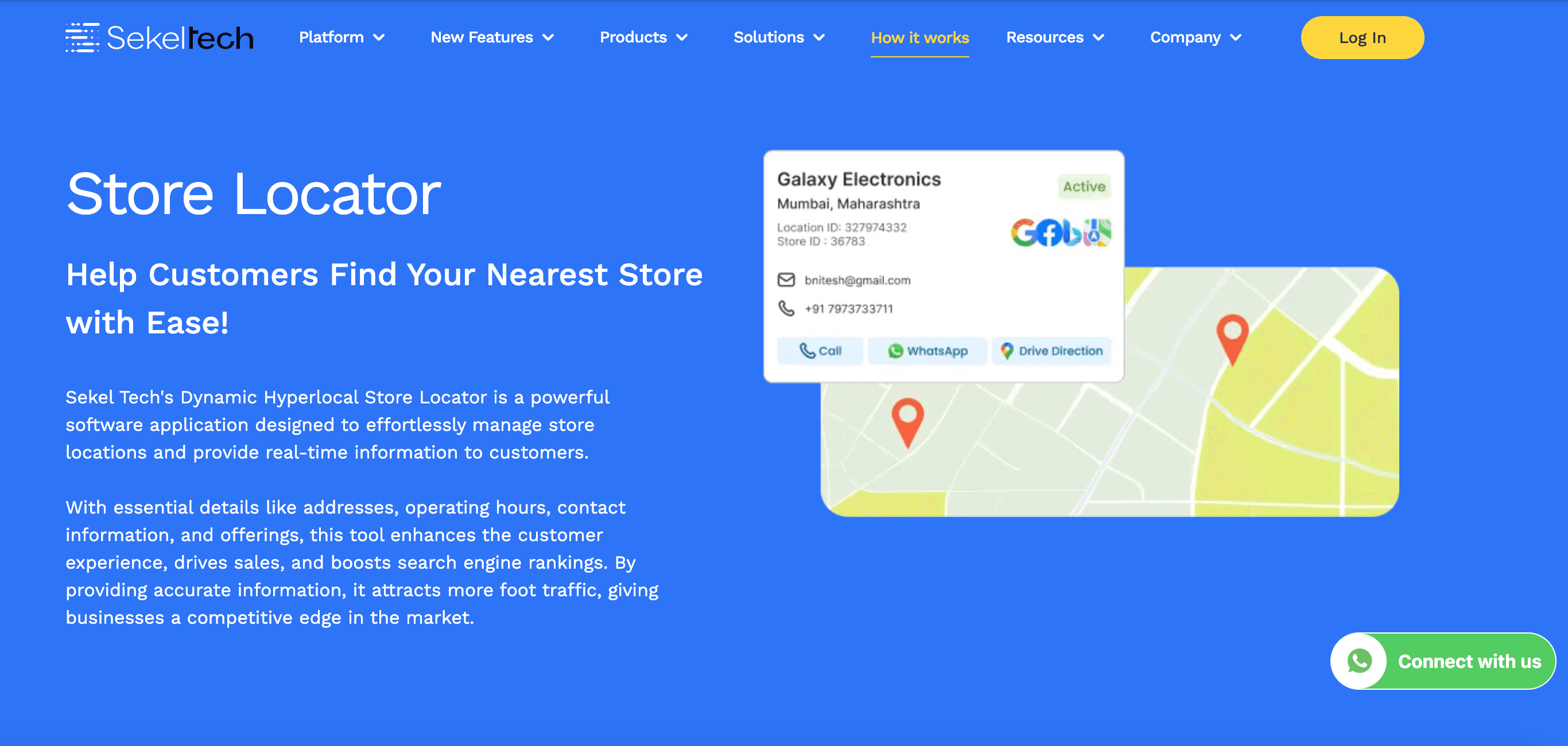
Use a Dynamic Store Locator to display store locations on your website. This boosts local search visibility, making it easier for customers to find your nearest physical stores, which drives both online and offline traffic.
2. Optimise Local Search with Google My Business (GMB) Profiles
Utilise Sekel Tech’s GMB Profiles & Listings services to enhance your business profiles. This improves local SEO and ensures your business appears prominently in local search results, increasing visibility and customer engagement.
Read Also - Boost Your GMB Profiles with GMB Optimization Services
3. Drive Targeted Campaigns with Microsites
Develop specialised Microsites for local campaigns or events. This focuses marketing efforts on specific segments or promotions, increasing relevance and driving targeted traffic to your online store.
Read Also - Importance of Microsites for Store Discovery in 2024
4. Streamline Customer Interactions with IVR Systems
Implement Customer Service with IVR Systems to automate responses and manage reviews. This enhances customer service efficiency and ensures prompt resolution of queries, improving overall customer satisfaction.

5. Utilise Targeted Advertising with Meta Ads & Google Ads
Leverage Meta Ads & Google Ads for precision-targeted advertising. This reaches local customers effectively, increasing ad effectiveness and driving higher conversion rates.
Read Also - Hyperlocal Omni Commerce Local Inventory Ads: How It Works
6. Keep Customers Engaged with Social Feeds
Integrate Social Feeds into your website. This keeps customers updated with promotions, news, and content, fostering continuous engagement and building a stronger audience connection.

7. Personalise Marketing with First-Party Data Cookies
Use First-Party Data Cookies to collect and analyse data from website visitors. This defines marketing strategies and personalised customer interactions based on user behaviour insights, enhancing relevance and boosting conversions.
Explore how Sekel Tech leverages first-party data to revolutionise customer engagement. This video delves into the power of first-party data and how Sekel’s approach can help you tailor your marketing strategies for better results.
8. Showcase Products Effectively with Product Catalogue Feed
Manage and display offerings with a Product Catalogue Feed. This ensures accurate product information across all platforms, improving the shopping experience and reducing cart abandonment.

9. Target Local Audiences with Geo-Fenced Advertising
Reach your local audience by targeting specific geographic areas with geo-fenced advertising. This strategy allows you to deliver personalised ads to users based on their precise location, ensuring your marketing efforts are focused on those who are most likely to visit your store or engage with your services. This enhances the relevance of your campaigns, increases local engagement, and drives more foot traffic to your physical locations.
Read Also - Geofencing Advertising for Retailers: Strategies to Drive Sales
10. Enhance Engagement with AI Agents
Employ AI Agents for Engagement to interact with customers. This provides personalised support and recommendations, improving satisfaction and engagement through intelligent, automated interactions.

11. Ensure Data Compliance and Secure Transactions
Use Sekel Tech’s Consent Management solutions and security tools to handle data and transactions securely. This ensures compliance with data protection regulations, safeguards user data, and maintains customer trust, which is critical for enhancing the overall shopping experience and encouraging repeat purchases.
Navigating data privacy and compliance is crucial for maintaining customer trust. This video provides insights into how Sekel Tech ensures data protection and compliance, helping you build a trustworthy and secure online retail environment.
12. Centralize Operations with Integrated Platforms (CDP, CRM, LMS, PIMS)
Use Sekel Tech’s integrated platforms like CDP, CRM, LMS, and PIMS for comprehensive data management. This streamlines customer relationship management, learning, and product information processes, enhancing operational efficiency and the customer experience.

13. Leverage Multi-Channel Selling
Expand reach by selling across various channels using Sekel Tech’s Marketplace Integration. This maximises reach by allowing sales on multiple platforms simultaneously, increasing visibility and attracting diverse customer segments.
14. Utilise Data and Analytics for Informed Decision-Making
Harness the power of data with Sekel Tech’s Customer Data Platform (CDP) and analytics tools. This provides insights into consumer behaviour, preferences, and trends, allowing for refined marketing strategies and personalised experiences.
As third-party cookies face deprecation, understanding the shift to first-party data is crucial. This video explains the impact of this change and how Sekel Tech’s solutions can help you navigate the evolving landscape of data privacy and marketing.
15. Leverage Hyperlocal Discovery & Omnicommerce Platform
Utilise Sekel Tech’s Hyperlocal Discovery & Omnicommerce Platform to connect with local customers and optimise the omnichannel experience. This enhances local engagement by combining online and offline shopping experiences, ensuring seamless interactions across multiple channels, increasing visibility, customer satisfaction, and driving more foot traffic to physical stores while boosting online sales.
Read Also - Best All-in-One Platform for Hyperlocal Discovery & Omni-Commerce
By implementing these strategies, you can optimise your online retail business to maximise visibility, engagement, and sales while ensuring a seamless customer experience and maintaining trust through secure transactions.
Discover how Sekel Tech stands out in hyperlocal marketing with its unique platform features. This video highlights the key differentiators that set Sekel apart, helping you understand how its solutions can enhance your online retail strategy.
Essential Services for Online Retail Stores
1. Near Me Searches Powered Store Locator
Enhances local search visibility by appearing prominently in "near me" searches, attracting nearby customers, and driving both online and offline sales.
2. Dynamic Content Localization (Multiple Page Types & Automatic Location Detection)
Automatically customises content based on the user's country, state, city, or locality, providing personalised experiences that align with local preferences, increasing engagement, and boosting conversion rates.
3. Product Selector and Catalog Management
Offers tools for customers to easily find and select products while managing a comprehensive product catalogue. Ensures accurate product information, reducing search friction, improving the shopping experience, and decreasing cart abandonment rates.
4. Integrated Reviews and Ratings (Product & Location)
Collects and displays genuine customer feedback for products and store locations, which builds trust, influences purchasing decisions, and enhances brand credibility.
5. Unified Data and Programmatic Schema
Centralises customer and product data with a structured schema to improve SEO, ensuring accurate and consistent information across all platforms, and boosting search engine rankings.
6. Content Management System (CMS) with Analytics
A robust CMS to manage all website content, including discovery pages, blogs, and promotional content, paired with analytics to track performance and gain insights into customer behaviour and preferences.
7. Warranty & Service Integration
Provides seamless integration of warranty and service information directly into product pages, enhancing transparency, boosting customer confidence, and encouraging purchases.
8. Marketplace and EPOS Integration
Seamlessly integrates with various online marketplaces and Electronic Point of Sale (EPOS) systems to expand market reach, streamline multi-channel management, and improve sales tracking and inventory management.
9. Real-time Sales Conversions and Analytics
Monitors real-time sales conversions, providing insights to quickly adjust strategies, optimise performance, and maximise revenue generation.
10. Generative Multiple Language Pages
Creates pages in multiple languages to cater to diverse customer bases, expanding market reach and enhancing the shopping experience for non-native speakers.
11. Programmatic Bidding and Persona Building
Uses first-party data for programmatic bidding on platforms like Meta and Google, combined with persona-building tools to tailor marketing strategies for different customer segments, improving engagement, and increasing ROI.
12. Dealer/Location Level Bidding and Merchant Feed Optimization
Optimises ad spending through location-specific bidding strategies and merchant feed optimization on Google & Meta ads, maximising ad performance and visibility.
13. WhatsApp Catalog Feed for Meta Ads Optimization
Utilises WhatsApp catalogue feeds to enhance ad optimization on Meta platforms, leveraging popular communication tools to directly engage customers and increase conversions.
14. Consent Management for Data Protection
Ensures compliance with data protection regulations by effectively managing user consent and safeguarding customer data, building trust, and enhancing the overall shopping experience.
15. Platform Charges Transparency on Media Spend
Provides clarity on platform charges associated with media spending, helping businesses budget effectively and maximise their marketing return on investment.
Online and Offline Retail Strategy
The most common mistake retailers make is treating online and offline as two separate businesses with two separate strategies. They are not. Customers do not separate them and neither should you.
A customer searches for your product on Google, reads reviews on your store microsite, walks into the nearest outlet, and expects the store staff to know what they browsed online. That entire journey is one customer experience. Whether it feels seamless or fragmented determines whether they buy and whether they return.
Building a unified online and offline retail strategy means connecting every touchpoint into one system where data flows in real time across every channel simultaneously.
What a connected online and offline retail strategy looks like in practice:
1. Discovery and Visibility
Customers find you through local search, Google Maps, and store microsites before they ever visit a physical location. Accurate listing management, location-specific product catalogues, and optimised store locators ensure your nearest outlet appears at exactly the right moment in their search journey.
2. In-Store Operations Connected to Digital
Smart EPOS connects point of sale data directly to your digital channels. Every transaction updates inventory in real time. Every purchase feeds customer data back into your CRM. Staff know what customers browsed online before they walked through the door.
3. Customer Engagement Across Every Channel
Sekel AI ChatBot handles customer queries 24/7 across your store microsites and WhatsApp. Lead management captures every inquiry from every channel and routes it to the right team automatically. Review management monitors and responds to feedback across Google, Facebook, and other platforms in real time.
4. Order and Fulfilment
Order management connects online purchases to the nearest store for BOPIS, ship-from-store, and same-day delivery. Warranty and service management automates post-sale follow-up so customers feel looked after long after the purchase is complete.
5. Data and Compliance
STP automation, data integration, and consent and compliance management ensure customer data collected across every touchpoint is handled securely and in full compliance with India's DPDP Act. Role-based access and cloud-based infrastructure protect sensitive data while keeping it accessible to the right teams in real time.
6. Content and Optimisation
Content management through a unified CMS keeps product information, promotions, and local content consistent across every location. Content optimisation and data activation ensure every piece of content serves a specific conversion purpose rather than simply filling space.
Function | Sekel Tech Capability |
| Store Discovery | Listing Management, Store Locator, Store Microsites |
| Product Information | Product Catalogue, Content Management, Content Optimisation |
| Customer Engagement | Sekel AI ChatBot, Lead Management, Review Management |
| Transactions | Smart EPOS, Order Management, STP Automation |
| Post-Sale | Warranty and Service Management |
| Data and Security | Data Integration, Data Activation, Consent and Compliance, Role-Based Access, Cloud-Based Infrastructure, Security and Compliance |
| Intelligence | Sekel Agentic AI |
Retailers using Sekel Tech's unified platform achieve 18-20% conversion from local search to store visit, 80% faster order-to-cash cycles, and 40-50% year-over-year revenue growth in local markets.
Explore Sekel Tech's Online and Offline Retail Platform
Future Trends in Online Retail for 2026
1. Agentic AI Commerce
AI agents are beginning to shop on behalf of customers autonomously. They research options, compare prices, and complete purchases without the customer visiting a single website. Retailers that optimise product data and pricing for AI-driven discovery will have a significant advantage over those still relying on human-browsed storefronts.
2. Social Commerce Growth
Social platforms are becoming direct transaction environments. US social commerce sales are projected to surpass $100 billion in 2026. Instagram, TikTok, and WhatsApp are no longer just discovery channels. They are complete purchase journeys.
3. Hyper-Personalisation at Scale
According to Think with Google, 73% of shoppers expect brands to understand their unique needs. AI-powered personalisation that tailors product recommendations, pricing, and content to individual behaviour in real time is moving from premium capability to baseline expectation.
4. Unified Commerce Over Omnichannel
The industry is shifting from omnichannel, where channels are connected, to unified commerce, where every channel operates from one single backend system in real time. One source of truth for inventory, orders, and customer data across every touchpoint simultaneously.
5. First-Party Data as Competitive Advantage
With third-party cookies declining and India's DPDP Act in full effect, retailers building strong first-party data strategies through loyalty programmes, consent-driven collection, and direct customer relationships will outperform those still dependent on third-party targeting.
As e-commerce continues to grow, it's reshaping the future of retail spaces. For a deep dive into this transformation and what lies ahead, check out this insightful article from The Times of India: The Rise of E-Commerce and the Future of Retail Spaces
Frequently Asked Questions (FAQs)
1. What is online retailing and how does it work?
Online retailing is the process of selling goods directly to consumers through digital platforms like websites and mobile apps. It works by connecting buyers and sellers digitally where customers browse, select, and pay online while retailers manage orders, inventory, and fulfilment through connected backend systems without needing a physical storefront for every transaction.
2. What is the difference between online retail and ecommerce?
Online retail specifically refers to selling goods and services directly to consumers through digital platforms. Ecommerce is broader and includes all electronic commercial transactions including B2B sales, online auctions, and digital products. Online retail is a subset of ecommerce focused specifically on consumer sales rather than all forms of digital commerce.
3. What is an online retail marketing strategy?
An online retail marketing strategy is a plan connecting all digital channels including SEO, paid advertising, email, social media, and content marketing into one coherent customer journey. The most effective strategies focus on channels where target customers actually spend time rather than spreading budget thinly across every available platform simultaneously.
4. What are the main types of online retail businesses?
The main types are Direct to Consumer where brands sell through their own website, marketplace selling through platforms, subscription retail with recurring deliveries, social commerce through Instagram and WhatsApp, click and collect connecting online orders to physical stores, and omnichannel retail combining all channels simultaneously into one unified customer experience.
5. How do I start an online retail business in India?
Start by choosing a business model that matches your product and audience. Register your business, build or choose an ecommerce platform, set up payment gateways that support UPI and cards, optimise your Google Business Profile for local discovery, and connect your online presence with any physical locations you operate. Ensure DPDP Act compliance for customer data handling from day one.
Conclusion
To thrive in today’s competitive online retail landscape, businesses need more than just a digital presence—they need innovative solutions that enhance visibility, drive engagement, and optimise conversions. Sekel Tech's Hyperlocal Discovery & Omni-Commerce Platform offers a comprehensive suite of services that empower retailers to reach local customers effectively, streamline operations, and grow their business. By leveraging Sekel Tech’s tools and strategies, you can transform your online retail approach, ensuring sustained growth and success in an increasingly dynamic market.
Take Advantage of Sekel Tech's Hyperlocal Discovery & Omni-Commerce Platform
By leveraging Sekel Tech's platform, you can enhance your local visibility, optimise customer engagement, and drive higher conversions through data-driven strategies and personalised marketing efforts. Whether it’s expanding your reach with multi-channel selling, streamlining customer interactions with AI-driven tools, or ensuring compliance with robust data management practices, Sekel Tech provides everything you need to succeed in the competitive online retail landscape.
Ready to elevate your online retail business? Discover how Sekel Tech’s Hyperlocal Discovery & Omni-Commerce Platform can transform your strategy and help you achieve sustained growth and success in today's dynamic market.
Share


Similar Blogs
Loved this content?
Sign up for our newsletter and get the latest tips & updates directly in your inbox.
There’s more where that came from!
 Connect with us