
Organic Marketing
Organic Social Media Marketing: 2026 Guide to Success
Wed, 25 Sep 2024 12:08:29 GMT
Speak to our Hyperlocal Expert
Editor’s Note: This post was originally published in Oct 2024 and is updated in Apr 2026 for accuracy and comprehensiveness.
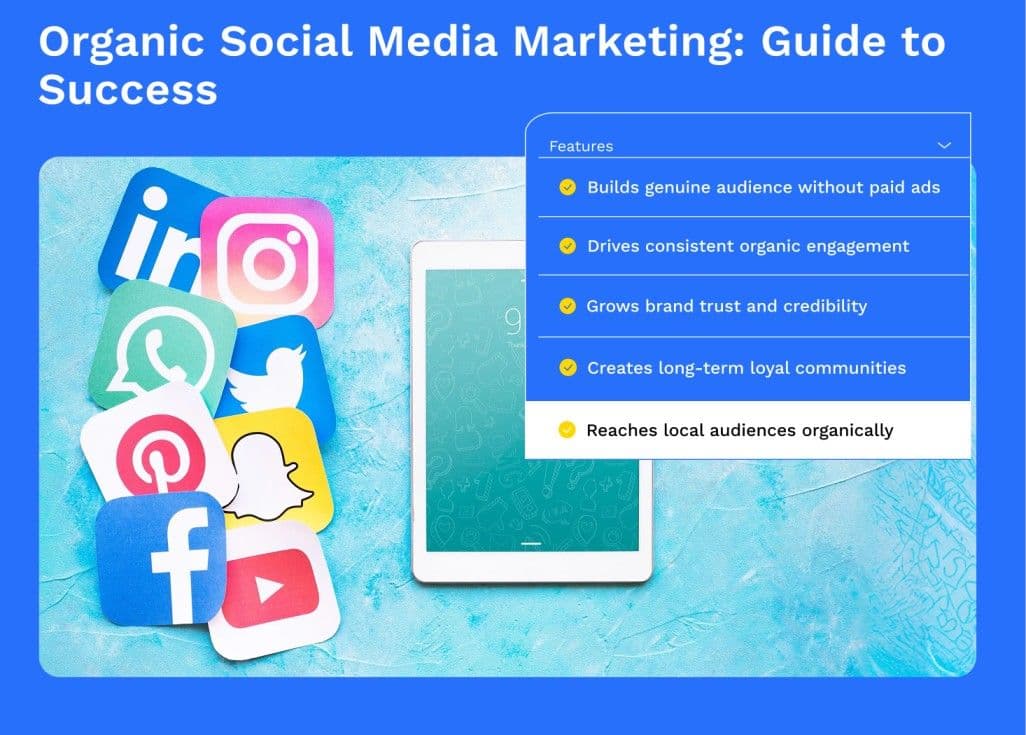
Organic Social Media Marketing builds your audience naturally by focusing on unpaid posts and genuine engagement. Sharing valuable content, engaging with followers, and using hashtags boost brand loyalty and evolve lasting relationships organically.
Organic social media strategy is essential for building authentic connections with your audience. It encourages trust and loyalty through consistent, value-driven content without relying on paid promotions. This approach encourages genuine engagement, enhancing your brand's reputation. Over time, it drives sustainable growth by nurturing long-term relationships.
In this article, we explore Organic Social Media Marketing: a comprehensive 2026 guide to achieving success by leveraging authentic engagement, content strategies, and long-term relationship building to grow your brand without paid advertising.
What is Organic Social Media Marketing and Why is it Important?

Organic social media marketing is the practice of growing your brand using unpaid content, real conversations, and consistent engagement across platforms like Instagram, LinkedIn, and Facebook. Instead of relying on ads, it focuses on building trust, visibility, and long-term relationships with your audience.
At its core, it’s about showing up regularly with content that helps, informs, or entertains your audience. This includes posts, comments, stories, and community interactions that make your brand feel human and relatable.
Why does it matter in 2026? Because users trust content that feels real. With rising ad fatigue and privacy changes, brands that invest in organic social media strategy see stronger engagement, better retention, and more sustainable growth over time.
According to Hootsuite, consistent organic engagement plays a key role in building brand awareness and customer loyalty across social platforms.
What are the Benefits of Organic Social Media?
1. Strengthens Brand Credibility
Sharing quality content and engaging authentically with your audience improves your brand's credibility and authenticity. This method helps create a genuine link between your brand and its followers.
2. Expands Natural Reach
High-quality content and active engagement naturally extend your reach and visibility without relying on paid ads. This method leverages organic growth opportunities available on social media platforms.
3. Promotes Community Interaction
Organic social media marketing encourages meaningful conversations and interactions within your community, resulting in higher engagement rates. This active participation enhances your brand’s presence and rapport with its audience.
4. Fosters Long-Term Relationships
This approach builds enduring connections with your audience through genuine engagement and trust. By consistently delivering valuable content, it strengthens these long-lasting bonds.
5. No Cost Involved
Organic social media marketing eliminates the need for paid promotions, making it a cost-effective way to boost brand visibility. It utilises existing platforms and content to connect with your audience without extra expenses.
6. Supports Long-Term Growth
By maintaining consistent, organic social media marketing drives steady, sustainable growth. This strategy provides a strong foundation for expanding your audience and advancing your brand over time.
Read Also - The Complete Guide To Hyperlocal Social Media Marketing
Paid vs Organic Social Media Marketing : Key Differences
Feature | Paid Social Media Marketing | Organic Social Media Marketing |
Cost | Requires a budget for ad placements | Free to use |
Reach | Can reach a wider audience quickly | Reach is limited by organic growth |
Control | High control over targeting and messaging | Less control over audience reach and engagement |
Time | Immediate results possible | Takes time to build a following |
Engagement | Can drive immediate engagement | Engagement is earned over time |
Measurability | Highly measurable with analytics | Can be difficult to measure ROI |
Consistency | Requires consistent ad spending | Can be less consistent due to resource constraints |
Strategy | Focuses on short-term campaigns | Focuses on long-term brand building |
Algorithm | Prioritises paid ads in search results | Prioritises organic content based on engagement |
Sustainability | Can be expensive to maintain long-term | Can be more sustainable over time |
Read Also - Organic and Inorganic Marketing 2025: Difference & Strategies
15 Essential Tips for Effective Organic Social Media Marketing in 2026
1. Integrate Advanced Analytics
Track what is actually working. Monitor engagement rates, audience demographics, and content performance regularly. According to Sprinklr, brands that consistently analyse their organic social media performance and adjust content based on data see significantly stronger audience growth than those posting without measurement. Without this data, you are guessing rather than improving.
2. Maximise Google Business Profile
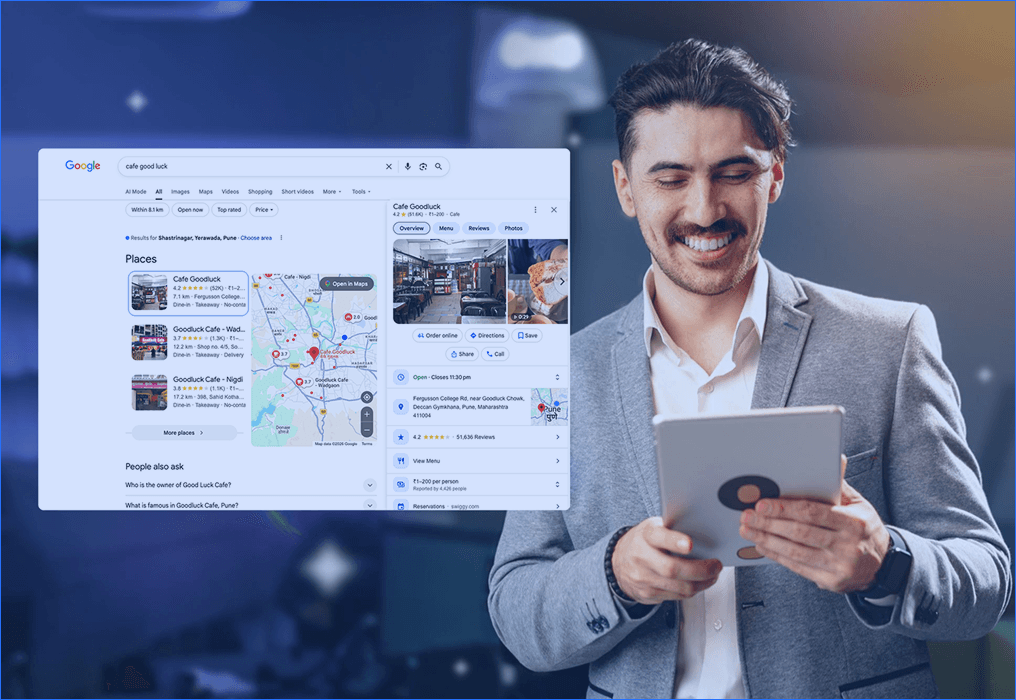
Keep your GBP accurate, updated, and active with fresh posts and photos. Local customers searching for your business on Google form their first impression here before they ever visit your website. According to Google, businesses with complete profiles are 2.7 times more likely to be considered reputable by customers.
Read Also - How Does Google Business Profile Management Service Work
3. Enhance Your Facebook Presence
Post content that starts conversations rather than just broadcasting information. Facebook rewards content that generates genuine comments and shares over passive scrolling. Focus on community-building posts, local events, and behind-the-scenes content that your audience cannot get anywhere else.
4. Improve Bing Places Visibility
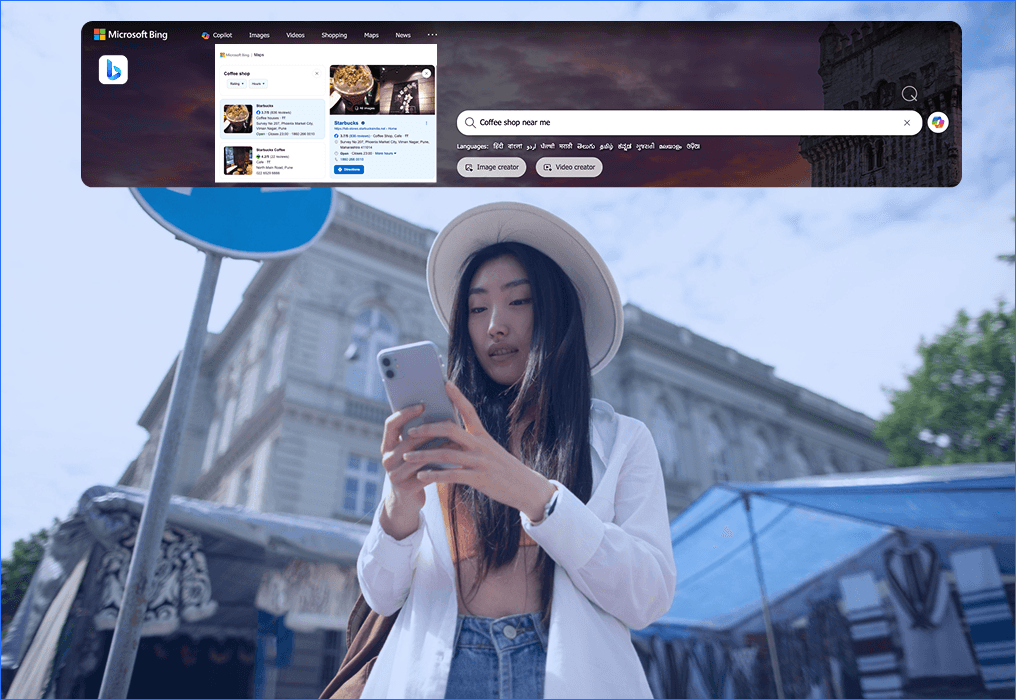
Most businesses ignore Bing entirely. Claiming and optimising your Bing Places listing takes less than an hour and captures a segment of local searchers that your competitors are leaving completely uncontested. It also feeds into Microsoft's AI-powered search results which are growing in usage.
5. Utilise Apple Business Connect

Apple Maps is the default navigation app for every iPhone user. An unclaimed or inaccurate Apple Business Connect listing means millions of iOS users are getting wrong information about your business before they even consider visiting.
6. Focus on Content Optimisation
Every piece of content should have a clear purpose. Use location-specific keywords, structure content for readability, and make sure each post answers a question your audience is actually asking. Optimised content consistently outperforms generic posts in both reach and engagement across every major platform.
Read Also - Multi-Location Content Management Platform: Complete Guide
7. Analyse Real-Time Conversions

Organic social media management without conversion tracking is incomplete. Know which posts are driving website visits, calls, and store visits so you can produce more of what works. According to Hootsuite, brands that track organic social conversions consistently make better content decisions and reduce wasted effort across their social calendars.
8. Create WhatsApp Catalogues
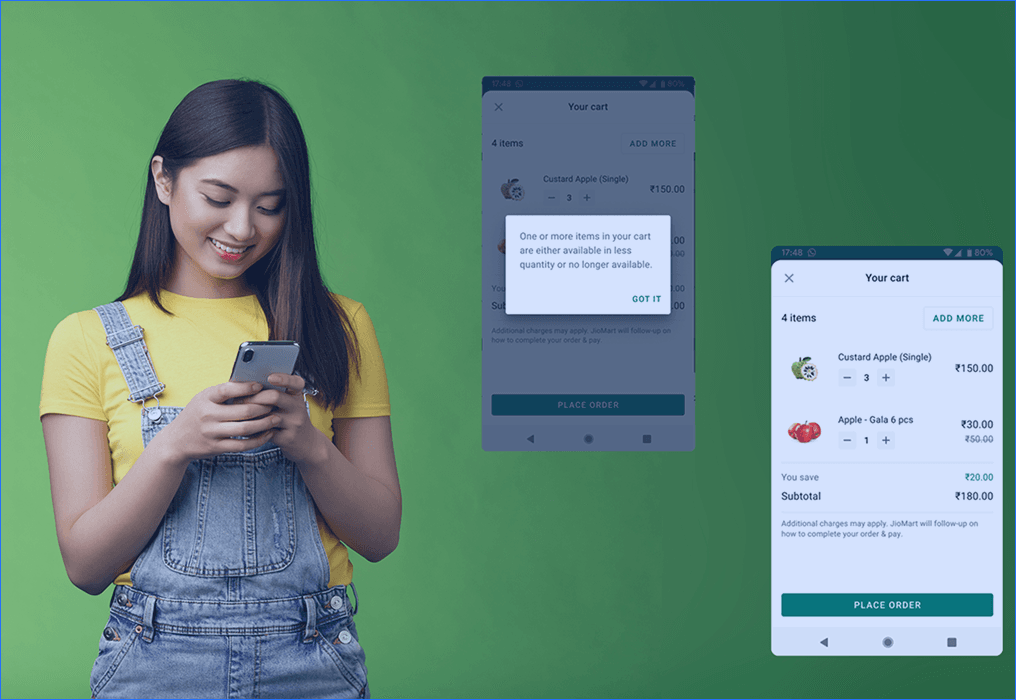
WhatsApp is one of the most used communication apps in India. A well-organised WhatsApp catalogue lets customers browse products, ask questions, and make purchase decisions inside a platform they already use every day - removing friction from the buying journey entirely.
9. Schedule Posts Consistently

Consistency matters more than volume. A predictable posting schedule builds audience habit and keeps your brand visible in feeds without requiring you to create content in real time every day. Most scheduling tools allow you to plan a full month of content in a single session.
10. Develop Comprehensive Marketing Plans
Organic content strategy without a plan is just posting for the sake of posting. Define your goals, map your content to audience needs, and align your social calendar with broader business campaigns and seasonal moments. A structured plan is what separates brands that grow organically from those that plateau.
11. Encourage Engagement
Ask questions. Run polls. Respond to every comment. The organic social media growth algorithm on every major platform rewards content that sparks two-way conversation over content that simply gets views. Engagement signals to the platform that your content is worth showing to more people.
Read Also - Multi-Location Local Engagement Platform: Complete Guide
12. Post Valuable Content
Useful content always outperforms promotional content in organic reach. Teach something, solve a problem, or entertain genuinely. According to TopRankMarketing, the brands seeing the strongest organic social media growth in 2026 are those consistently creating content that serves the audience first and promotes the brand second.
13. Maintain a Content Calendar

Plan at least two to four weeks ahead. A content calendar prevents the last-minute scramble that leads to rushed, low-quality posts. It also helps you maintain a balanced mix of educational, entertaining, and promotional content that keeps your audience engaged without feeling sold to constantly.
14. Increase Brand Awareness Through Community
Organic social media marketing is not just about broadcasting your brand. Participate in relevant conversations, tag local community accounts, and celebrate your customers publicly. Community involvement builds the kind of brand awareness that advertising cannot replicate because it is earned rather than bought.
15. Prioritise Safety and Security

Your social media accounts are business assets. Use two-factor authentication on every account, restrict admin access carefully, and have a clear protocol for handling a compromised account. Losing access to your social profiles can undo months of organic social media growth overnight and damage customer trust significantly.
Top Trends in Organic Social Media Marketing for 2026
Organic social media marketing in 2026 is driven by culture, speed, and authenticity. What works now is not just content, but how well you understand your audience and adapt in real time.
1. Authentic, Human-First Content
Highly polished content is losing impact. Audiences now prefer raw, relatable posts that feel real. Even with AI tools in use, brands that sound human build more trust and engagement.
2. AI-Powered but Human-Led Strategy
AI is now a basic requirement for content creation, analytics, and testing. But brands winning in organic social media marketing are those balancing AI efficiency with human creativity and storytelling.
3. Short-Form Series & Micro-Content
Short-form videos are evolving into “micro-dramas” and content series. Instead of one-off posts, brands are creating episodic content that keeps users coming back and increases retention.
4. Fast Content and Real-Time Marketing
Speed matters more than ever. Brands are reacting to trends instantly, creating “fastvertising” content that aligns with what’s currently viral or culturally relevant.
5. Creator and Employee-Led Content
People trust people more than brands. Businesses are investing in creators, internal teams, and employee advocacy to expand reach and build authenticity.
6. Social as a Search Engine
Social platforms are becoming discovery tools. Users now search directly on Instagram, YouTube, and LinkedIn, making content optimization critical for visibility.
7. Hyper-Personalisation with First-Party Data
With less reliance on third-party data, brands are using social interactions, DMs, and engagement signals to create personalised content and stronger connections.
8. Niche Communities Over Mass Reach
Instead of targeting everyone, brands are focusing on smaller, highly engaged communities. This improves engagement quality and builds stronger brand loyalty.
9. Visual and Voice Discovery Growth
Search is becoming more visual and conversational. Image-based search, voice queries, and short-form video discovery are shaping how users find content.
10. Platform Evolution and New Opportunities
LinkedIn is becoming more creative and content-driven, while platforms like Substack are turning into social ecosystems. Brands exploring these early are gaining an advantage.
In 2026, organic social media marketing is less about posting regularly and more about understanding culture, responding fast, and creating content that truly connects.
Explore the significance of retargeting in your organic social media marketing efforts. Learn more about this crucial strategy in our video 'Why Choose Sekel for Retargeting? Unveiling the Power of Contextual Engage.
Common Mistakes to Avoid in Organic Social Media Marketing
1. Inconsistent Posting
Irregular posting schedules can result in lower engagement and decreased visibility. Keeping a consistent posting routine ensures your audience remains engaged and your brand stays prominent.
2. Ignoring Analytics
Neglecting to track and analyse performance data means missing out on crucial insights. Without this data, it’s difficult to determine what strategies are effective and where improvements are needed.
3. Lack of Engagement
Failing to respond to comments and messages can damage your relationship with your audience. Active participation is essential for building a sense of community and trust.
4. Overlooking Target Audience
Sharing content that doesn’t appeal to your target audience can result in poor engagement and ineffective marketing. Tailoring content to your audience's interests is vital for success.
5. Neglecting Visual Quality
Using low-resolution images or videos can undermine your brand’s professionalism. High-quality visuals are crucial for attracting attention and conveying your message effectively.
6. Deletion of Comments
Removing comments, especially negative ones, can damage credibility and discourage open dialogue. Transparency and addressing feedback constructively are important for maintaining trust and engagement.
7. Not Using Hashtags Strategically
Not utilising relevant and trending hashtags can restrict your content’s reach. Effective hashtags enhance visibility and connect with a larger audience interested in your content.
8. Inconsistent Branding
Discrepancies in brand messaging and visuals across different platforms can confuse your audience. Consistent branding is key to reinforcing your brand identity and creating a unified user experience.
9. Ignoring Trends and Updates
Failing to keep up with social media trends and platform changes can lead to missed opportunities. Staying current with trends and updates ensures your content remains relevant and engaging.
For more valuable insights on Organic Social Media Marketing, be sure to check out this comprehensive article by The Times of India. It delves into essential strategies and tips for creating a powerful social media presence, offering expert advice on how to effectively engage with your audience and enhance your brand's visibility in 202.
What's Next for Your Organic Social Strategy?
Organic social media marketing is not standing still. The platforms are changing, the algorithms are getting smarter, and the audiences are getting harder to impress with generic content. Here is where things are heading and what your strategy needs to account for right now.
- AI Will Shape What Gets Seen
Every major platform is using AI to decide which content reaches which audience. Searches around "organic social media tools" are growing among brands trying to understand how to work with these systems rather than against them. The brands that will win organically in 2026 are the ones creating content that signals genuine expertise, community relevance, and authentic engagement - not the ones gaming posting frequency.
- Short-Form Video is Non-Negotiable
Instagram Reels, YouTube Shorts, and similar formats are consistently getting more organic reach than any other content type right now. If your organic social media strategy does not include short-form video, you are competing with one hand tied behind your back. This does not require a production team - it requires consistency and a genuine point of view.
- Community Will Matter More Than Follower Count
The shift is already happening. Brands with smaller but deeply engaged communities are outperforming those with large passive followings. An organic social media agency worth working with in 2026 will focus on depth of engagement over breadth of reach. Comments, saves, and shares matter far more than likes.
- First-Party Data Will Power Personalisation
As third-party tracking continues to decline, the organic content strategy that wins will be built on first-party data - what your actual audience tells you through their behaviour, comments, and direct messages. Brands that listen to this data and reflect it back in their content will build the kind of loyalty that paid advertising simply cannot buy.
Frequently Asked Questions (FAQs)
1. How to create an organic social media strategy?
Start by defining clear goals and identifying your target audience. Build a content calendar with a mix of educational, entertaining, and promotional content. Post consistently, engage with every comment, and review performance data monthly to refine what is working and drop what is not.
2. What is an example of organic social media marketing?
Zomato India is a strong example. Their team consistently creates witty, culturally relevant content that generates thousands of shares and comments without paid promotion. The result is one of the most recognised brand voices in Indian social media built almost entirely through organic content strategy.
3. Why is organic social media marketing important?
It builds genuine trust with your audience over time. Paid ads create awareness but organic social media marketing creates relationships. Brands that invest in organic consistently report stronger customer loyalty, higher lifetime value, and more resilient brand reputations than those relying solely on paid channels.
4. What is organic and paid marketing?
Organic marketing grows your audience through unpaid content, community engagement, and genuine interactions. Paid marketing uses budget to reach audiences through sponsored posts and ads. The strongest strategies use both together - organic builds trust while paid amplifies reach.
5. How do you grow social media organically in 2026?
Post consistently, engage genuinely, and create content that serves your audience before it promotes your brand. Short-form video, community participation, and responding to every comment are the three activities that drive the most organic social media growth across every major platform right now.
Conclusion
In the ever-evolving landscape of organic social media marketing, leveraging authentic engagement and meaningful content is essential for sustainable growth. By focusing on building genuine relationships with your audience, brands can enhance credibility, foster loyalty, and drive long-term success without the reliance on paid promotions. With the innovative tools offered by the Sekel Tech platform, you can effectively implement these strategies, stay aligned with the latest trends, and maximise your brand's visibility. Embrace the power of organic social media marketing in 2026 to cultivate a thriving online presence and connect deeply with your audience.
Take Advantages of Sekel Tech’s Platform
Unlock the full potential of Organic Social Media Marketing with the cutting-edge capabilities of the Sekel Tech platform. Our advanced tools and insights will empower your brand to build authentic connections, optimise content strategies, and foster long-term audience engagement. Stay ahead of the competition with a data-driven approach tailored to the latest trends in 2026. Start using Sekel Tech platform today and take your organic social media marketing strategy to new heights.
Share


Similar Blogs
Loved this content?
Sign up for our newsletter and get the latest tips & updates directly in your inbox.
There’s more where that came from!
 Connect with us