
Digital Transformation
10 Ways Digital Business Transformation Can Drive Growth
Mon, 30 Sep 2024 07:24:51 GMT
Speak to our Hyperlocal Expert
Editor’s Note: This post was originally published in Sep 2024 and was updated in April 2026 for accuracy and comprehensiveness.
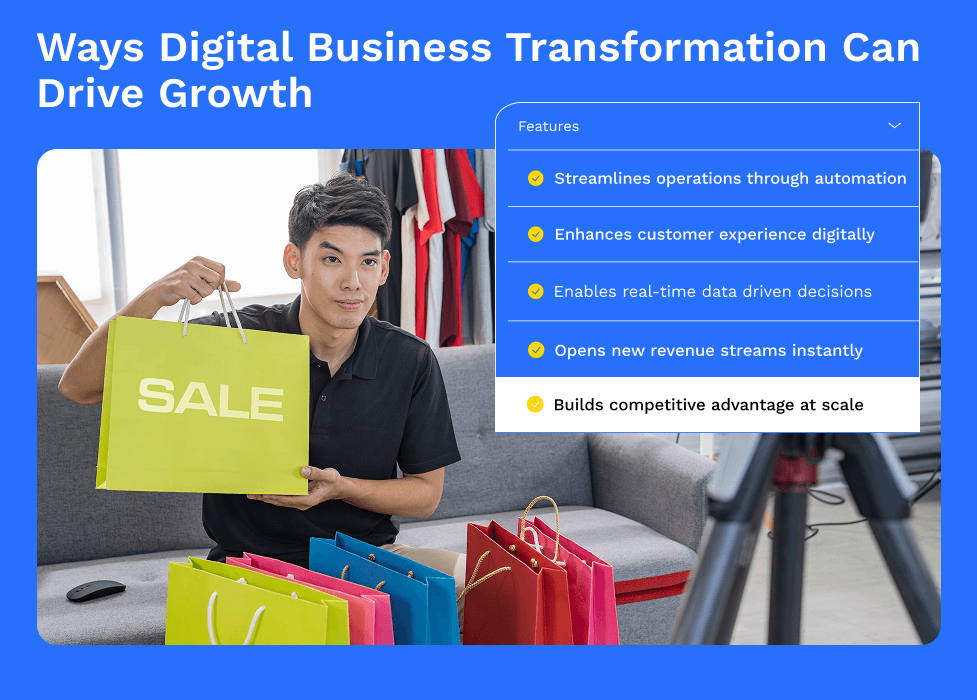
Digital business transformation is the process of integrating digital technology into all areas of a business to fundamentally change how it operates, delivers value to customers, and competes in the marketplace, driving growth, agility, and long-term success.
Digital business transformation is not just about adopting new technologies; it’s about rethinking business strategies to leverage these advancements effectively. In today’s fast-paced environment, companies must embrace digital transformation to stay competitive, enhance customer experiences, and drive growth.
In this guide you will learn what digital business transformation actually means, the 10 most impactful ways it drives growth, how to start the journey, and how to measure whether it is working.
What is Digital Business Transformation
Digital business transformation is the process of leveraging digital technologies to change the way a business operates fundamentally, delivers value to customers, and competes in the marketplace. It involves a shift from traditional business models to more digitally driven ones, often requiring significant organisational structure, culture, and processes changes.

Key Components and Technologies Involved
1. Cloud Computing
Storing and processing data on remote servers, offering scalability and flexibility.
2. Artificial Intelligence (AI) and Machine Learning
Analysing data to automate processes, make predictions, and personalise customer experiences.
3. Internet of Things (IoT)
Connecting physical objects to the internet, enabling data collection and STP automation.
4. Mobile Technology
Developing mobile apps and optimising websites for mobile devices to reach a wider audience.
5. Social Media
Engaging with customers, building brand awareness, and gathering customer insights.
6. Data Analytics
Collecting, analysing, and interpreting data to make informed business decisions.
The Role of Digital Transformation in Enhancing Business Operations
Digital transformation in business can significantly enhance operations by:
1. Improving efficiency
Automating processes, reducing costs, and streamlining workflows.
2. Enhancing customer experience
Personalising interactions, providing 24/7 support, and offering innovative products and services.
3. Increasing revenue
Expanding into new markets, creating new revenue streams, and improving customer loyalty.
4. Strengthening competitiveness
Gaining a competitive edge by adopting cutting-edge technologies and adapting to changing market conditions.
5. Improving decision-making
Leveraging data analytics to make more informed and data-driven decisions.
By embracing digital transformation, businesses can position themselves for long-term success in today's rapidly evolving digital landscape.
Benefits of Digital Business Transformation
Understanding why digital transformation is essential for business growth starts with looking at what it actually delivers. Here are the core benefits that consistently show up across industries and business sizes.
1. Improved Operational Efficiency
Digital transformation in business eliminates the manual, repetitive work that slows teams down and increases error rates. Automated workflows, integrated systems, and real-time data access mean teams spend less time managing processes and more time driving outcomes. The efficiency gains compound over time as more of the business becomes digitally connected.
2. Enhanced Customer Experience
Customers today expect fast, personalised, and consistent interactions across every touchpoint. Digital business transformation gives organisations the tools to deliver exactly that from personalised product recommendations to seamless omnichannel support. Businesses that improve their digital customer experience consistently see higher satisfaction scores and stronger retention rates.
3. Better Data-Driven Decision Making
One of the most significant benefits of digital transformation for business is access to real-time data across every function. Instead of making decisions based on monthly reports and gut instinct, leaders can act on live insights from sales, operations, marketing, and customer behaviour simultaneously. According to McKinsey, data-driven organisations are 23 times more likely to acquire customers and 6 times more likely to retain them.
4. Increased Revenue and New Revenue Streams
Digital business transformation opens doors that traditional business models cannot reach. E-commerce, digital products, subscription services, and platform-based revenue models all become accessible when the right digital infrastructure is in place. Many businesses discover entirely new customer segments and revenue opportunities through the process of transforming their operations.
5. Stronger Competitive Positioning
The importance of digital transformation in business becomes most visible when you compare digitally mature organisations against those still operating legacy systems. Digital businesses move faster, respond to market changes more effectively, and deliver better experiences at lower cost. That combination is increasingly difficult for non-digital competitors to match.
6. Greater Business Agility
Digital business growth depends on the ability to adapt quickly. Cloud-based infrastructure, modular technology stacks, and data-driven operations give businesses the flexibility to pivot when market conditions change - whether that means launching a new product, entering a new market, or adjusting to a sudden shift in customer behaviour.
10 Ways Digital Business Transformation Can Drive Growth
1. Enhanced Customer Experience with First-Party Data in Digital Business Transformation
Digital transformation in business enables organisations to provide personalised experiences that meet customer expectations. By leveraging first-party data, Sekel Tech helps businesses understand customer preferences and behaviours across all touchpoints. This personalization fosters customer satisfaction and loyalty. Tools like Dynamic Store Locator, Google business profiles (GMB) profiles & Listings, and Social Feeds play a critical role in ensuring customers have easy access to information and services.
Discover how leveraging first-party data enhances customer interactions across all touchpoints. Watch this video to learn how Sekel Tech helps businesses provide consistent, personalised experiences that drive customer satisfaction and loyalty.
2. Improved Operational Efficiency through Digital Transformation in Business
Implementing digital solutions streamlines processes, reduces manual efforts, and minimises errors. Sekel Tech's AI agent for engagement automates customer interactions, while IVR Systems automates responses and manages reviews efficiently. These tools enhance operational efficiency, allowing businesses to focus on core activities.
3. Data-Driven Decision Making for Strategic Growth in Digital Business Transformation
Leveraging analytics and data helps organisations make informed decisions. Sekel Tech’s Customer Data Platform (CDP) and CRM systems provide valuable insights into customer behaviour, enabling businesses to personalise offerings and optimise strategies effectively.
4. Increased Agility and Flexibility with Digital Tools in Business
Digital tools allow businesses to respond quickly to market changes and customer demands. Sekel Tech's Marketplace integration helps businesses adapt their offerings to meet evolving needs, enhancing flexibility and responsiveness.
5. Enhanced Collaboration and Communication Across Teams with Digital Transformation in Business
Digital transformation fosters better communication within organisations. Sekel Tech’s solutions, like PIMS (Product Information Management System) and LMS (Learning Management System), ensure consistent information sharing, promoting collaboration across teams.
Consistency is key to building trust and brand loyalty. Watch this video to understand how Sekel Tech's solutions ensure brand consistency across all sales channels, enhancing communication and collaboration efforts within your organisation.
6. Cost Reduction through Automation in Digital Business Transformation
Automating processes and optimising resources through digital tools can significantly reduce operational costs. Sekel Tech’s Meta Ads and Google Ads solutions allow businesses to target their advertising efforts more effectively, improving ROI.
7. Greater Market Reach with Hyperlocal Solutions in Digital Business Transformation
Embracing digital channels expands the customer base and enhances visibility. Sekel Tech's Hyperlocal Discovery & Omnicommerce Platform connects businesses with local audiences, bridging the gap between online and offline channels.
Explore how Sekel Tech's hyperlocal solutions bridge the gap between online and offline channels, expanding market reach and enhancing customer engagement. This video highlights the strategies that help businesses adapt and thrive in the digital retail landscape.
8. Enhanced Security and Compliance in Digital Marketing through Digital Transformation
Navigating privacy regulations is crucial for retaining customer trust. Sekel Tech’s Consent Management tools help businesses comply with legal requirements, ensuring secure data handling and effective customer consent management.
As digital marketing evolves, understanding consent and compliance has become crucial for retailers. This video delves into the complexities of privacy regulations and how businesses can navigate these challenges while ensuring they maintain customer trust and meet legal requirements. Gain insights on best practices for managing customer consent in your marketing efforts.
9. Employee Empowerment and Engagement through Digital Transformation in Business
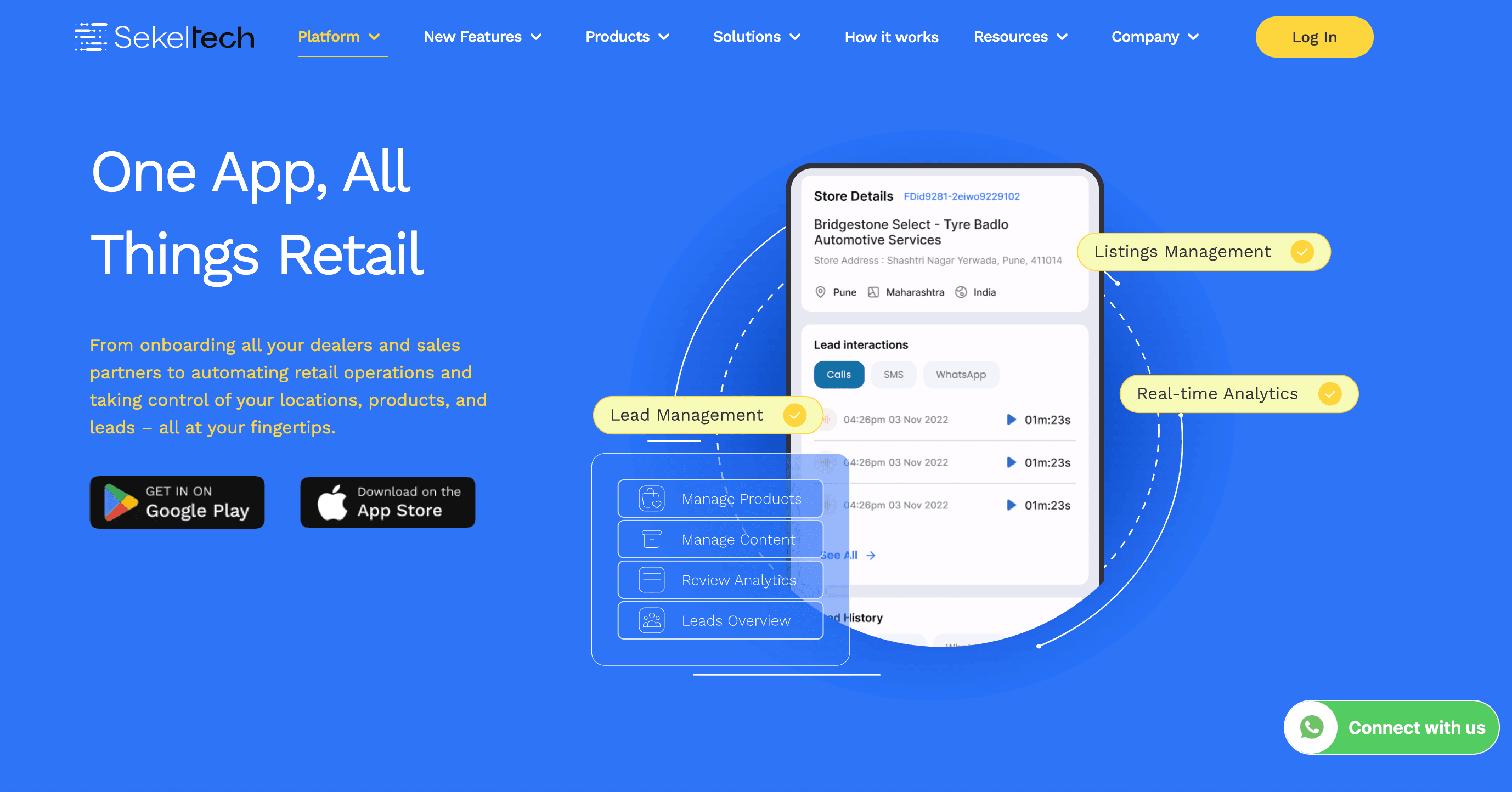
Digital business transformation provides employees with the tools and data they need to perform their jobs more effectively. By using systems like SellrApp, businesses can empower employees with easy access to information, enabling them to serve customers better.
10. Innovation and New Revenue Streams with Digital Business Transformation
Adopting new technologies fosters a culture of innovation. Sekel Tech’s Product Catalogue Feed and commerce tools allow businesses to introduce new products and services quickly, opening avenues for additional revenue.
By integrating these digital solutions, businesses can transform their operations, enhance customer experiences, and ultimately drive digital business growth in an increasingly competitive landscape. Sekel Tech's tools provide the necessary support for organisations looking to embark on this transformative journey.
How to Start Your Digital Business Transformation Journey
Transforming into a digital business does not happen overnight and it should not. The organisations that succeed are the ones that approach it as a structured journey rather than a one-time technology project. According to SAP, businesses that follow a phased, strategy-first approach to digital transformation consistently outperform those that start with technology and work backwards.
1. Assess Your Current Digital Maturity
Before deciding where to go, understand where you are. Map your existing systems, processes, and data flows honestly. Identify what is working, what is creating friction, and where the biggest gaps exist between your current operations and where you need to be.
2. Define Clear Business Objectives
Digital transformation for business only delivers results when it is tied to specific outcomes. More foot traffic? Faster fulfilment? Better customer retention? Every initiative in your transformation roadmap should connect directly to a measurable business goal rather than a technology preference.
3. Build Leadership and Cultural Alignment
How to digitally transform your business is as much a people question as a technology one. Leaders who champion the change and teams that understand the why behind it are what separate successful transformations from expensive failed projects.
4. Choose the Right Technology Partners
Not every business needs the same digital stack. Choose partners and platforms that solve your specific problems rather than following industry trends. The right business digital transformation solutions grow with your business rather than locking you into rigid systems.
5. Start With High-Impact Quick Wins
Trying to transform everything simultaneously is one of the most common reasons digital transformation stalls. Start with the initiatives that deliver the fastest visible results. Early wins build momentum, demonstrate ROI, and bring sceptical stakeholders on board.
6. Measure and Iterate Continuously
Set clear KPIs before each phase launches and review them regularly. Digital business transformation is not a destination - it is an ongoing capability that improves with every iteration.
Challenges of Digital Transformation in Business
Digital business transformation delivers significant rewards but the path is rarely smooth. Here are the five challenges that derail most transformation efforts and how to address them practically.
1. Resistance to Cultural Change
Technology is rarely the hardest part of digital transformation in business. People are. Employees who have worked the same way for years often see digital change as a threat rather than an opportunity. The solution is not to mandate adoption but to build genuine understanding. Involve teams early, communicate the reasoning behind every change, and create space for questions before resistance becomes entrenched.
2. Legacy System Integration
Most organisations cannot replace their entire technology stack at once. Integrating new business digital transformation solutions with existing legacy systems is complex, expensive, and frequently underestimated in planning. The practical approach is to build integration layers that allow old and new systems to share data rather than forcing immediate wholesale replacement.
3. Cybersecurity Risks
As more business operations move online, the exposure to cyber threats grows proportionally. According to IBM, the average cost of a data breach reached USD 4.88 million in 2026 - the highest on record. For businesses undergoing digitalization, building robust security frameworks from the start is not optional. It is foundational.
4. Skill and Talent Gaps
Enabling digital business transformation requires capabilities that many existing teams do not yet have. Rather than replacing entire workforces, the most effective organisations invest in targeted upskilling programmes alongside strategic external hiring for specialist roles. Digital transformation small business environments face this challenge most acutely given tighter budgets and smaller teams.
5. Unclear ROI Measurement
One of the most consistent blockers to sustained transformation investment is the inability to demonstrate clear returns. When ROI is undefined or unmeasured, budget conversations become difficult and transformation momentum stalls. The solution is to define specific KPIs before each phase begins so that progress is visible and investment decisions are grounded in real performance data rather than assumption.
How to Measure ROI and Success in Digital Business Transformation
Unlocking success in digital transformation requires more than launching initiatives - it requires knowing whether they are actually working. Here are the 5 metrics that give businesses a clear, honest picture of transformation performance.
1. Cost Reduction and Efficiency Gains
Track operational costs before and after each transformation phase. Automation and process digitisation should produce measurable reductions in manual effort, error rates, and processing time. If costs are not falling over time, the implementation needs attention before the next phase begins.
2. Revenue Growth from Digital Channels
Monitor what percentage of total revenue is coming through digital channels and whether that number is growing consistently. This is one of the clearest indicators that digital business growth is translating into real commercial outcomes rather than just internal improvements.
3. Customer Satisfaction Improvement
Successful digitalization of business processes should show up directly in how customers feel. Track NPS, customer satisfaction scores, and support ticket volume regularly. Improving scores confirm that digital initiatives are delivering value to the people they are designed to serve.
4. Employee Productivity Gains
Measure output per employee before and after key business digital transformation initiatives. If teams are spending less time on manual tasks and more time on high-value work, the transformation is delivering on its promise. Flat productivity after significant technology investment is a signal that adoption or training needs to be revisited.
5. Time to Market Improvement
One of the most tangible benefits of digital transformation in business is the ability to move faster from idea to execution. Track how long it takes to launch new products, campaigns, or services. A shortening cycle time is a strong indicator that the business has genuinely transformed its operating model and not just upgraded its tools.
Expand your knowledge with the insightful article "Digital Transformation: The way ahead to achieve organisational growth and Success in a rapidly evolving digital world," featured in the Times of India. This comprehensive piece highlights how businesses can leverage digital transformation to drive growth and stay competitive in today’s digital landscape.
Frequently Asked Questions (FAQs)
1. What is digital transformation in business with an example?
Digital transformation in business means using technology to fundamentally change how a company operates. A practical example is a retail brand replacing manual inventory tracking with a real-time digital system connected to both online and in-store operations, reducing stockouts, improving fulfilment speed, and giving customers accurate product availability instantly.
2. Is digital business transformation only for large enterprises?
Not at all. Digital transformation small businesses benefit just as much as large enterprises - often more, because the efficiency gains are proportionally larger relative to team size. Cloud-based tools, affordable automation platforms, and hyperlocal digital solutions make business digitalization accessible for businesses of every size and budget.
3. How long does digital business transformation take?
There is no fixed timeline. Simple transformations like automating a single workflow can show results within weeks. Full organisational digital transformation in business typically takes 2 to 5 years depending on the complexity of existing systems, the size of the organisation, and how effectively change is managed across teams.
4. What is the difference between digitisation, digitalisation, and digital business transformation?
Digitisation means converting analogue information into digital format. Digitalisation means using digital technologies to improve existing processes. Digital business transformation goes further, it fundamentally rethinks how the entire business operates and delivers value, not just how individual processes are executed.
5. How do you measure the success of digital transformation?
Track five core metrics: cost reduction, revenue growth from digital channels, customer satisfaction scores, employee productivity, and time to market improvement. Set baseline measurements before each phase so progress is measured against real starting points rather than assumptions.
Conclusion
In conclusion, digital business transformation is essential for organisations seeking to thrive in today’s fast-paced market. By embracing innovative technologies and strategies, businesses can enhance operational efficiency, improve customer engagement, and drive sustainable growth. The ten approaches outlined in this article highlight the transformative potential of integrating digital solutions into various aspects of operations. As businesses navigate this journey, staying adaptable and committed to continuous improvement will be key to realising the full benefits of digital transformation in business. Take the first step towards a brigh`ter future by investing in your digital transformation strategy today.
Take Advantage of Digital Business Transformation with Sekel Tech
Embracing digital business transformation allows organisations to harness innovative technologies and strategies that streamline operations, enhance customer experiences, and drive significant growth. By integrating digital solutions, businesses can optimise workflows, gather valuable insights through data analytics, and respond more effectively to market changes. This transformation not only improves efficiency but also fosters a culture of agility and innovation, positioning your business for long-term success. Don’t miss the opportunity to elevate your business—start your digital business transformation journey today with Sekel Tech’s expert solutions!
Read Also:
1. Boost Sales with Digital Transformation in Retail Industry
2. How Digital Transformation in Fashion Retail Drives Sales
3. Retail Banking Digital Transformation : 2025 Recent trends
4. Top 15 Digital Transformation Services & Solutions in 2025
Share


Similar Blogs
Loved this content?
Sign up for our newsletter and get the latest tips & updates directly in your inbox.
There’s more where that came from!
 Connect with us