
Omnilocal
Omnilocal Orchestration Platform for Discovery to Delivery
Fri, 02 Jan 2026 07:20:47 GMT
Speak to our Hyperlocal Expert
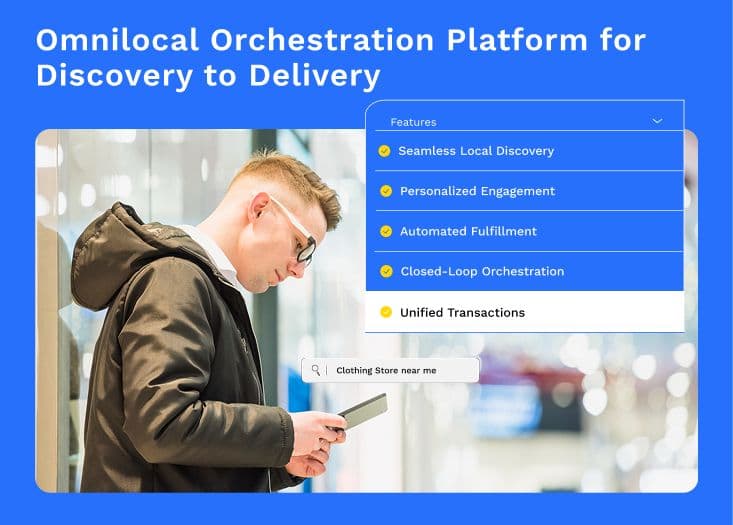
When a customer searches “near me,” the outcome is decided in seconds. In multi-location businesses, we consistently see that visibility alone does not convert demand into revenue. The real challenge begins after discovery, when listings, inventory, pricing, fulfillment, and field execution fail to work together.
At Sekel Tech, we have observed that nearly half of high-intent local journeys drop off not due to lack of demand, but due to fragmented execution between discovery, transaction, and delivery. Businesses lose customers because systems operate in silos, data does not flow in real time, and local teams depend on manual coordination.
This is where traditional commerce and omnichannel platforms fall short.
The future of multi-location commerce is Omnilocal Orchestration, a system that connects every local touchpoint from the moment a customer searches to the moment the order is delivered. Instead of managing channels independently, omnilocal orchestration ensures intelligence, execution, and fulfillment work as one continuous workflow.
In this article, we explain what omnilocal orchestration truly means, why omnichannel execution breaks at the local level, and how a discovery-to-delivery framework enables businesses to capture, convert, and retain local demand at scale.
The Evolution: From Multichannel to Omnilocal Execution
Commerce platforms have evolved over time, but most were not designed for real-time, location-level execution. Understanding this evolution explains why many businesses struggle to convert local intent into outcomes.
1. Multichannel (Past)
In early multichannel models, digital and physical channels operated independently. Local listings, inventory, marketing, and store operations existed in separate systems. Customer journeys were fragmented, attribution was unclear, and local optimization was nearly impossible.
2. Omnichannel (Present)
Omnichannel platforms improved visibility by connecting channels. Customers could move between online and offline touchpoints more easily. However, execution gaps remained. Inventory accuracy, pricing, fulfillment decisions, and local task execution still relied heavily on manual intervention, leading to delays and revenue leakage.
3. Omnilocal (Next Stage)
Omnilocal represents a shift from connectivity to orchestration. Instead of simply linking systems, an omnilocal platform coordinates actions across discovery, transaction, and execution in real time. AI-driven intelligence ensures that every location responds to customer intent autonomously, without manual effort.
Omnilocal is not omnichannel with location data. It is a closed-loop execution model where local relevance, automation, and accountability are built into every step of the customer journey.
Read Also - Omnichannel to Omnilocal: Next-Gen Local Brand Execution
What Is Omnilocal Orchestration?
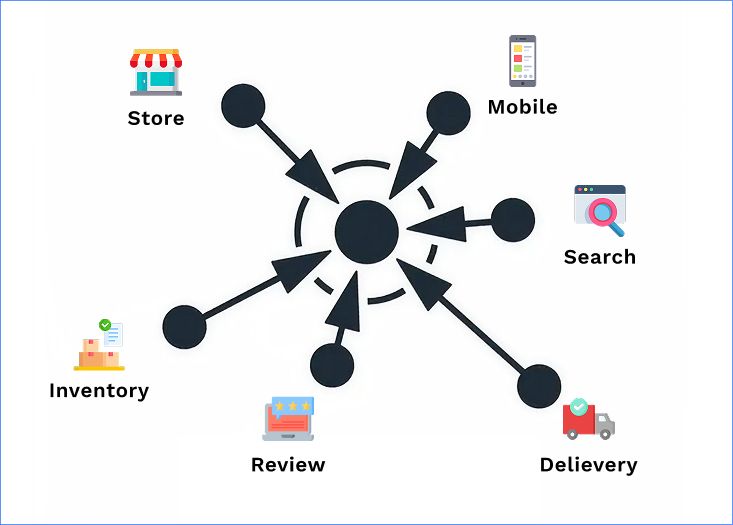
Omnilocal orchestration is the automated coordination of local discovery, engagement, transaction, and execution across all business locations. It ensures that every customer interaction from search to delivery is connected, personalized, and measurable.
Unlike traditional omnichannel systems that focus on visibility, an Omnilocal Orchestration Platform focuses on execution. It connects marketing, inventory, pricing, fulfillment, and field operations into a single, intelligent workflow.
What Makes a Platform Truly Omnilocal:
1. Location-level intelligence - Content, offers, and inventory visibility are dynamically optimized for each store or service area.
2. Unified orchestration across channels - Search, web, store, call, and delivery systems operate as one continuous journey.
3. AI-driven autonomous actions - Decisions related to pricing, fulfillment routing, and task execution happen automatically based on real-time data.
4. Closed-loop data flow - Every interaction feeds insights back into the system, enabling continuous optimization.
5. End-to-end execution - From discovery to delivery, there are no manual handoffs or operational gaps.
An Omnilocal Orchestration Platform does not just connect systems. It ensures that local demand is captured, executed, and fulfilled seamlessly at scale.
The 3 Pillars of Omnilocal Orchestration
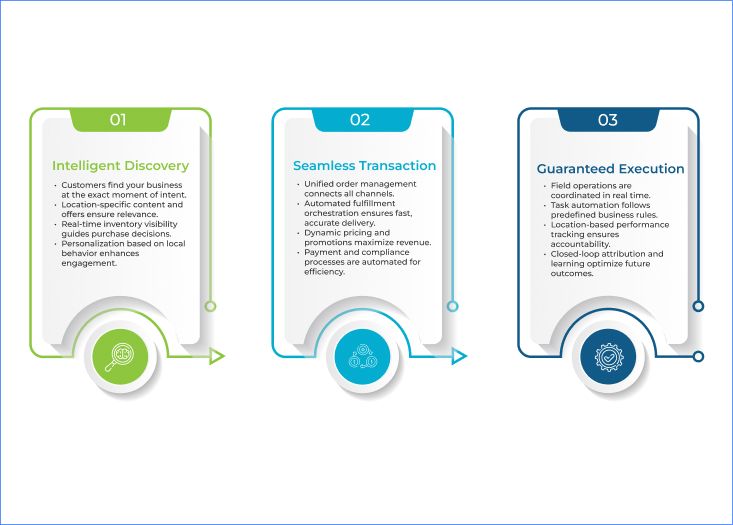
Pillar 1: Intelligent Discovery
- Customers find your business at the exact moment of intent.
- Location-specific content and offers ensure relevance.
- Real-time inventory visibility guides purchase decisions.
- Personalization based on local behavior enhances engagement.
Pillar 2: Seamless Transaction
- Unified order management connects all channels.
- Automated fulfillment orchestration ensures fast, accurate delivery.
- Dynamic pricing and promotions maximize revenue.
- Payment and compliance processes are automated for efficiency.
Pillar 3: Guaranteed Execution
- Field operations are coordinated in real time.
- Task automation follows predefined business rules.
- Location-based performance tracking ensures accountability.
- Closed-loop attribution and learning optimize future outcomes.
These three pillars work together to create a fully orchestrated local customer journey, ensuring discovery, conversion, and execution are seamless and measurable at every location.
Read Also - How OmniLocal Technology Drives Hyperlocal Retail Growth
Why Orchestration Matters
Orchestration is more than just integrating systems. It is intelligent coordination that ensures every component of a business works together seamlessly. Traditional platforms may allow channels to communicate, but orchestration makes them collaborate. Marketing, inventory, fulfillment, and customer engagement are no longer isolated. They operate as a unified ecosystem. This allows businesses to respond to customer intent in real time, delivering the right message, product, or service at the right moment.
With true orchestration, decisions happen automatically rather than manually. Every action triggers the next with precision, reducing delays, errors, and missed opportunities. For example, a customer’s search can immediately influence store-level inventory, promotions, and personalized offers without human intervention. This creates a frictionless local customer journey where discovery, transaction, and execution are tightly connected. Ultimately, orchestration turns fragmented processes into a coordinated engine that drives higher engagement, conversions, and measurable ROI.
The Discovery-to-Delivery Framework
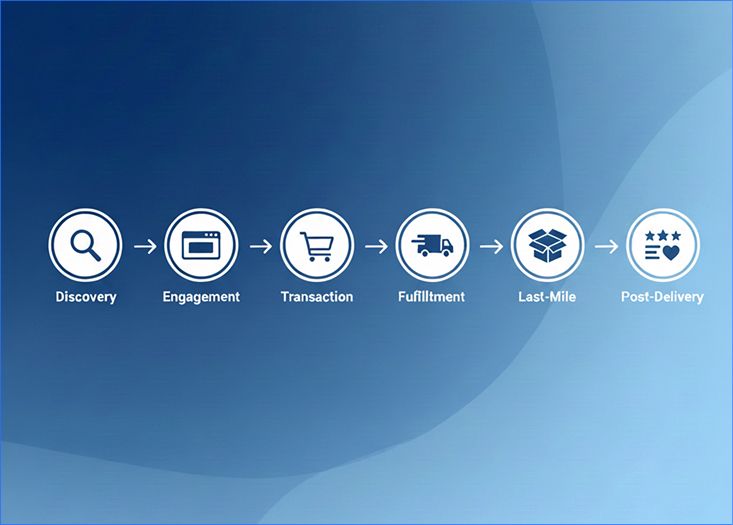
The Discovery-to-Delivery Framework illustrates how an Omnilocal Orchestration Platform manages the complete customer journey, ensuring every interaction is coordinated, personalized, and measurable.
Stage 1: Local Discovery (The Search Moment)
What Happens: Customers search "near me," AI-powered local SEO ensures visibility, real-time inventory checks across nearby locations, personalized content based on search intent and location, and dynamic pricing reflecting local demand.
Traditional Gap: Outdated listings, no inventory visibility, generic content.
Omnilocal Advantage: 22–24% search-to-visit conversion compared to the 3–5% industry average.
Stage 2: Engagement & Consideration
What Happens: Location-specific microsites with relevant content, real-time offers triggered by geo-proximity, local reviews and ratings as social proof, personalized recommendations, seamless transition from browse to buy.
Traditional Gap: Generic national content, no local relevance, manual offer management.
Omnilocal Advantage: Automated, location-aware engagement at scale.
Stage 3: Transaction & Order
What Happens: Unified order capture across web, app, store, or phone; intelligent routing to optimal fulfillment location; real-time inventory reservation; automated pricing, tax, and compliance calculations; and multiple payment options.
Traditional Gap: 4-6 hours of manual order processing, inventory conflicts, and system delays.
Omnilocal Advantage: 42-minute average order-to-cash, 85% faster than traditional methods.
Stage 4: Fulfillment & Logistics
What Happens: AI determines optimal fulfillment strategy, automated stock movement between locations, dynamic route planning, real-time shipment tracking, and exception handling.
Traditional Gap: Manual coordination, delayed shipments, poor visibility.
Omnilocal Advantage: Autonomous fulfillment with 60% cost reduction.
Stage 5: Last-Mile Delivery
What Happens: Geo-optimized delivery routes, driver coordination via mobile apps, customer notifications with live tracking, contactless delivery, and automated feedback collection.
Traditional Gap: Static routes, poor coordination, limited tracking.
Omnilocal Advantage: 30% faster deliveries, 40% higher customer satisfaction.
Stage 6: Post-Delivery Experience
What Happens: Automated thank-you messages, review requests, loyalty points or incentives, next-purchase offers based on behavior, service reminders, and complete attribution back to the original search.
Traditional Gap: Manual follow-ups, no retention marketing, lost attribution.
Omnilocal Advantage: 59% higher repeat purchase rate.
Using an Omnilocal Orchestration Platform, businesses can orchestrate every stage from discovery to delivery, turning local searches into seamless, measurable customer journeys that drive engagement, conversion, and loyalty.
Watch the video to discover how Omnilocal orchestration connects every touchpoint from search to delivery.
Technology Architecture Behind an Omnilocal Orchestration Platform
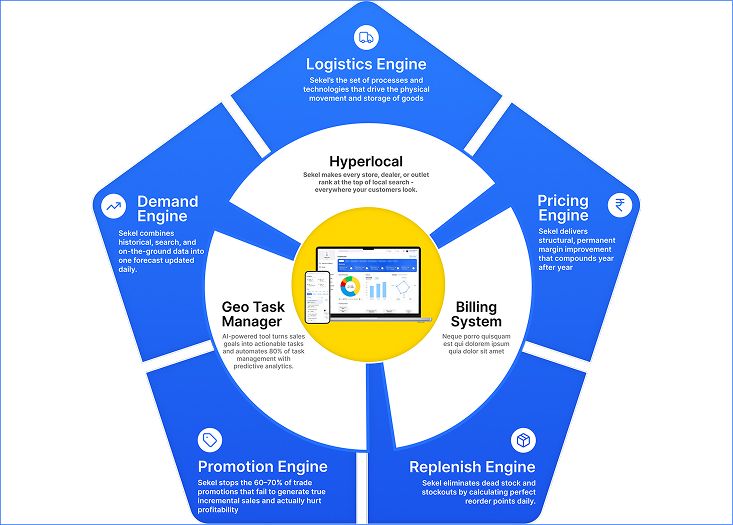
To deliver seamless local experiences, an Omnilocal Orchestration Platform relies on advanced technology that connects discovery, transactions, and execution in real time. Sekel Tech’s platform is a prime example, providing multi-location businesses with tools to manage every stage of the local customer journey efficiently.
Three Core Products Powering the Platform:
1. Hyperlocal Discovery Engine
- AI-powered local SEO and content optimization for each location
- Real-time inventory and pricing visibility across stores
- Centralized multi-directory listing management
- Automated review and reputation monitoring to build trust
2. Order-to-Cash Engine
- Unified order management across EPOS, online, and phone channels
- Automated billing, tax, and compliance handling
- Payment processing and reconciliation
- Warranty, service, and post-sale orchestration
3. Geo Task Manager
- AI-generated field tasks based on real-time data
- SLA and performance tracking for locations and teams
- Territory and route optimization for field operations
- Dealer and store health monitoring for proactive execution
Sekel Tech’s Omnilocal Orchestration Platform integrates these products to provide a unified, intelligent system. It ensures that discovery, transaction, and fulfillment work together seamlessly, enabling businesses to turn local intent into measurable outcomes.
Watch the video to see how businesses evolve from disconnected channels to fully orchestrated local operations.
The Closed-Loop Advantage of an Omnilocal Orchestration Platform
A key difference between traditional systems and an Omnilocal Orchestration Platform is the elimination of gaps in the customer journey.
Traditional Approach: Discovery → Gap → Transaction → Gap → Fulfillment → Gap → Delivery
- Each stage operates in isolation
- Manual handoffs create delays and errors
- Revenue and engagement opportunities are lost
Omnilocal Approach: Discovery → Transaction → Fulfillment → Delivery
- Every action triggers the next automatically
- Complete data loop with continuous learning
- Zero revenue leakage between systems
- Seamless end-to-end orchestration ensures consistent, personalized experiences at every location
With an Omnilocal Orchestration Platform, businesses gain a fully connected, closed-loop system where discovery, transaction, fulfillment, and delivery work together intelligently. This integration maximizes efficiency, drives higher conversion, and ensures that local intent translates directly into measurable results.
Real-World Impact of an Omnilocal Orchestration Platform
Impact Area | Metrics / Results |
| Discovery Impact | 420% increase in local search visibility 22–24% search-to-visit conversion (vs 3-5% traditional) 50,000+ monthly local impressions per location |
| Transaction Impact | 85% faster order processing (42 min vs 4-6 hours) 99.8% order accuracy Zero inventory conflicts across locations |
| Execution Impact | 75% increase in field team productivity 80% task completion rate (vs 35% manual) 45% reduction in dealer/store churn |
| Business Impact | 28% revenue growth across transformed locations 380% ROI in first year 3.5x faster growth vs competitors |
Using an Omnilocal Orchestration Platform enables measurable improvements across discovery, transaction, execution, and overall business performance, turning local intent into real growth and ROI.
Frequently Asked Questions (FAQs)
1. What is an omnichannel platform?
An omnichannel platform is a business strategy and technology solution that enables a seamless shopping experience across all channels, including online, mobile, and in-store. It ensures consistent messaging, inventory visibility, and customer engagement so customers can move smoothly between touchpoints without friction.
2. What is the meaning of OmniLocal?
OmniLocal refers to an all-in-one marketing platform designed to simplify and amplify local marketing efforts. It helps businesses attract, engage, and convert customers by offering tools like local SEO optimization, hyperlocal content management, real-time analytics, and location-specific campaign execution.
3. What exactly is orchestration?
Orchestration is the automated coordination and management of multiple systems, applications, or services. It strings together individual tasks into a unified workflow, enabling businesses to execute complex processes efficiently and accurately without manual intervention.
4. How does an Omnilocal Orchestration Platform differ from omnichannel?
While omnichannel connects multiple customer touchpoints, an Omnilocal Orchestration Platform goes further by combining local intelligence, real-time execution, and AI-driven automation. It ensures each location delivers personalized experiences from discovery to delivery with no gaps.
5. Why is orchestration important for local marketing?
Orchestration ensures that all local marketing efforts work together seamlessly. It reduces operational gaps, improves customer engagement, increases conversion rates, and provides real-time insights, making local marketing measurable, efficient, and scalable.
Conclusion
Customers today expect seamless, personalized experiences. Competitors are rapidly building omnilocal capabilities, and the gap between those who orchestrate and those who simply coordinate grows every day. The choice is clear: continue managing disconnected channels manually, or embrace an Omnilocal Orchestration Platform that executes autonomously. Omnilocal is not the future - it is the present. The question is whether your business will lead or follow.
Sekel Tech’s Omnilocal Orchestration Platform turns discovery into delivery with zero gaps and guaranteed execution. Take the next step to improve your local operations and deliver seamless customer experiences. Request a demo today and see how Sekel Tech’s Omnilocal Orchestration Platform can help your business connect discovery to delivery effortlessly.
Share


Similar Blogs
Loved this content?
Sign up for our newsletter and get the latest tips & updates directly in your inbox.
There’s more where that came from!
 Connect with us