
Hyperlocal
10 Hyperlocal Intelligence Strategies for Enterprise Retail
Wed, 28 Jan 2026 05:28:45 GMT
Speak to our Hyperlocal Expert
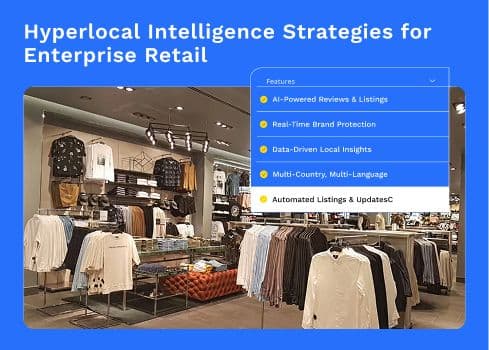
Are your stores really being found by the right customers at the right time?
For enterprise retailers managing 100+ locations, fragmented local data isn’t just an inconvenience, it’s a hidden revenue drain. Inconsistent listings, slow review responses, and disconnected tools can cost thousands of potential visits every month. With over 2.5 million monthly searches across multiple markets, even a 3% drop in conversions can translate into millions in lost revenue.
Traditional local SEO strategies aren’t enough anymore; retailers need hyperlocal intelligence strategies to track customer behavior, competitor activity, and store-level performance in real time.
In this blog, we explore the top hyperlocal intelligence strategies enterprise retailers can use to improve visibility, unify local data, and drive store performance across all locations.
What Is Hyperlocal Intelligence in Enterprise Retail

Hyperlocal intelligence goes far beyond basic listings management or traditional local SEO. It refers to the ability to collect, analyze, and act on real-time, location-specific data across every store, market, and micro-region. This includes customer intent signals, local search behavior, reviews, competitor activity, footfall trends, and conversion data at a store level.
Unlike standard enterprise dashboards that provide aggregated or regional performance metrics, hyperlocal intelligence focuses on granular, store-level insights. While enterprise dashboards answer “how the brand is performing overall,” hyperlocal intelligence answers “why one store outperforms another in the same city.”
At scale, this store-level intelligence becomes critical. For retailers operating hundreds of locations, even small visibility gaps or experience issues at individual stores can lead to significant revenue loss. Hyperlocal intelligence enables enterprise retailers to identify underperforming locations, optimize local customer journeys, and drive consistent performance across every market.
Read Also - #1 Hyperlocal Intelligence Platform for Retail Tech Growth
Why Enterprise Retail Needs Hyperlocal Intelligence Strategies
For enterprise retailers operating across multiple countries and regions, managing local performance at scale is increasingly complex. Differences in language, search behavior, cultural preferences, and regulatory requirements make it difficult to maintain consistent visibility and engagement across markets without a unified approach. This is where hyperlocal intelligence strategies become essential.
Without hyperlocal intelligence strategies, customer experiences often vary widely from one location to another. Inconsistent listings, unmanaged reviews, and delayed local responses can erode brand trust, even when the overall brand presence appears strong at a national level. Customers judge brands at the store level, not at the headquarters level.
Siloed tools further limit visibility into real customer demand. When listings, reviews, paid media, CRM, and analytics operate independently, valuable demand signals such as search intent, visit patterns, and local conversion trends are missed. Hyperlocal intelligence strategies unify these signals, enabling enterprise retailers to identify high-intent opportunities, optimize local engagement, and respond faster to market-level changes.
Key Components of a Successful Hyperlocal Intelligence Strategy
A successful hyperlocal intelligence strategy is built on the ability to connect data, insights, and execution at the store level. For enterprise retailers, this requires more than individual tools. It demands a unified framework that delivers real-time visibility and action across every location.
- Centralized local data management is the foundation. Listings, reviews, store attributes, and location updates must be accurate, consistent, and controlled from a single source to eliminate fragmentation across markets.
- Real-time customer insight and analytics enable retailers to understand how customers search, engage, and convert at each store. This includes visibility into local search trends, footfall signals, and performance gaps between locations.
- Unified execution across channels ensures that insights translate into action. Paid media, organic search, reviews, and local content should work together rather than in isolation, creating a consistent customer experience at every touchpoint.
- Automation at scale plays a critical role. From review responses to listing updates and alerts, automation allows enterprise teams to manage hundreds or thousands of locations efficiently without sacrificing accuracy or speed.
- Actionable store-level intelligence completes the strategy. Enterprise retailers need clear, location-specific insights that highlight opportunities, risks, and performance drivers, enabling faster decisions and measurable business impact.
A unified platform is critical for executing hyperlocal intelligence strategies efficiently. Watch this video highlights how enterprises centralize local operations across locations. "Manage Listings, Content, Reviews & Sales - All in One Place"
Key Challenges Enterprise Retailers Face Without Hyperlocal Intelligence
Enterprise retailers with hundreds of locations often struggle to manage local performance at scale due to fragmented systems and limited visibility.
1. Disconnected local data
Listings, reviews, ads, and analytics are managed across multiple tools, making it difficult to get a complete view of store-level performance.
2. Inconsistent customer experience
Variations in store information, review responses, and local engagement lead to uneven brand perception across locations.
3. Limited store-level visibility
Aggregated dashboards hide local issues, making it hard to identify why certain stores underperform within the same region.
4. Missed demand and intent signals
Without real-time hyperlocal insights, enterprise teams fail to capture high-intent local search and footfall opportunities.
5. Operational complexity at scale
Managing hundreds of stores manually slows execution and increases the risk of errors.
Top Hyperlocal Intelligence Strategies for Enterprise Retail Growth
Hyperlocal Intelligence Strategy 1: Centralize Store Listings and Location Data
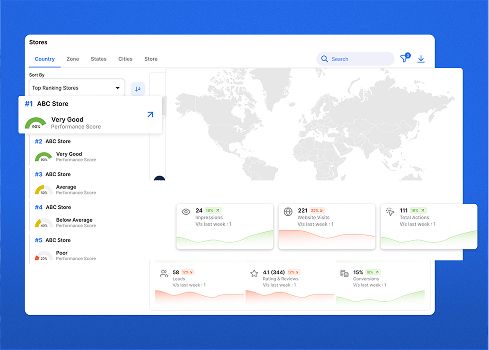
Managing hundreds of store listings across platforms often leads to inconsistencies and manual errors. Sekel Tech centralizes all store data into a single platform, ensuring every location reflects accurate, up-to-date information across discovery channels. This creates a strong foundation for local visibility and customer trust.
How Sekel Tech enables this:
- Single dashboard to manage all store listings across regions and countries
- One-click updates pushed across platforms after approval
- Store, regional, and country-level visibility for governance
Read Also - Location Data Management for Multi-Store Hyperlocal Growth
Hyperlocal Intelligence Strategy 2: Ensure Review Responses Within 24 Hours
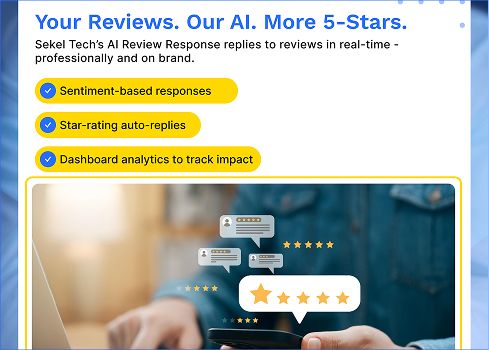
Customer reviews are real-time feedback loops that influence footfall and conversions. Sekel Tech helps enterprises monitor, prioritize, and respond to reviews within a defined SLA, ensuring consistent brand voice and faster customer engagement.
How Sekel Tech enables this:
- Centralized review inbox across all locations
- AI-assisted and brand-approved response workflows
- SLA tracking dashboard to monitor response compliance
Read Also - Multi-Location Review Management: 10 Proven Strategies
Hyperlocal Intelligence Strategy 3: Protect Listings From Unauthorized Changes

Unauthorized edits to store hours, addresses, or categories can mislead customers and damage brand credibility. Sekel Tech continuously monitors listings and alerts teams to third-party changes before they impact customer experience.
How Sekel Tech enables this:
- Real-time alerts for external listing edits
- Approval-based publishing workflows
- Audit trail for all changes made at store level
Hyperlocal Intelligence Strategy 4: Eliminate Fake and Duplicate Listings
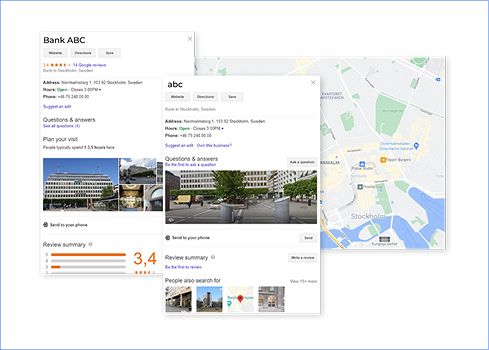
Fake or duplicate listings dilute search visibility and redirect customers to incorrect locations. Sekel Tech automatically identifies such listings and manages their resolution, ensuring every search leads to an authentic store.
How Sekel Tech enables this:
- Automated detection of duplicates and fake profiles
- Centralized suppression and escalation workflow
- Resolution tracking with reporting by market
Read Also - How to Prevent Duplicate Google Listing for Business
Hyperlocal Intelligence Strategy 5: Streamline Bulk Store Verification

Verifying hundreds of locations manually is slow and inefficient. Sekel Tech simplifies bulk verification and ownership management, allowing enterprise teams to maintain control over all store profiles from day one.
How Sekel Tech enables this:
- Centralized ownership and access management
- Bulk verification workflows with progress tracking
- Escalation handling for delayed or failed verifications
Read Also - The Ultimate Guide to Bulk Listing Management in 2026
Hyperlocal Intelligence Strategy 6: Maintain Listing Accuracy With Weekly Quality Checks

Even verified listings can drift over time due to platform updates or user edits. Sekel Tech runs automated quality checks to ensure store information remains accurate and compliant across all locations.
How Sekel Tech enables this:
- Weekly scans for NAP, hours, categories, and attributes
- Flagged issues queued for approval before publishing
- Compliance reporting by store, region, and country
Hyperlocal Intelligence Strategy 7: Publish Local Content at Scale
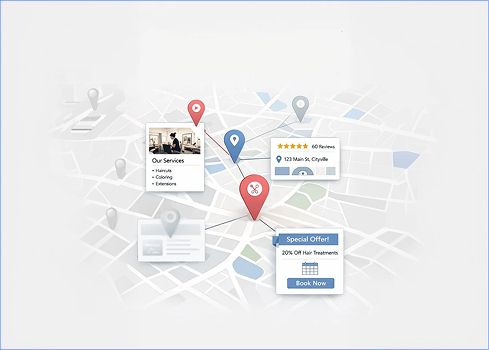
Enterprise retailers often struggle to keep local pages active with promotions and updates. Sekel Tech enables bulk publishing of posts and campaigns while allowing localization for different markets.
How Sekel Tech enables this:
- Bulk Google Posts scheduling across locations
- Localization support for language and offers
- Performance tracking for engagement and reach
Hyperlocal Intelligence Strategy 8: Turn Reviews Into Operational Insights

Reviews reveal recurring operational issues when analyzed at scale. Sekel Tech applies sentiment analysis to reviews, helping enterprises identify trends and take corrective action at the store level.
How Sekel Tech enables this:
- Sentiment tagging for positive and negative reviews
- Store-level issue identification and trend tracking
- Data-backed insights for operations and CX teams
Hyperlocal Intelligence Strategy 9: Ensure Brand-Compliant Visual Presence

Inconsistent or outdated store images weaken brand perception. Sekel Tech centralizes photo management to maintain visual consistency and compliance across all locations.
How Sekel Tech enables this:
- Bulk image uploads with approval workflows
- Brand compliance checks for store visuals
- Control over customer-uploaded or off-brand images
Hyperlocal Intelligence Strategy 10: Improve Discovery With an SEO-Optimized Store Locator

Customers often search for nearby stores before visiting. Sekel Tech provides an SEO-optimized store locator that improves discoverability and drives high-intent traffic to physical locations.
How Sekel Tech enables this:
- Search-friendly store pages with structured data
- Accurate real-time store information synced from listings
- Analytics to track clicks, directions, and conversions
Effective hyperlocal intelligence strategies directly impact discoverability and store visits. Watch this video outlines how retailers improve local rankings and foot traffic. "How Retailers Boost Local Search Rankings & Foot Traffic?"
What Makes Sekel Tech Different From Traditional Vendors
1. Intelligence Layer, Not Just Listing Management
Traditional vendors focus mainly on maintaining listings. Sekel Tech operates as an intelligence layer, connecting hyperlocal signals with enterprise systems to enable smarter, data-driven decisions at scale.
- Hyperlocal insights integrated with ERP and CRM systems
- Store-level demand and customer behavior signals
- Competitor activity and sentiment insights for strategic planning
2. Built for Global Enterprise Scale
Sekel Tech is designed for large, multi-location businesses operating across regions and countries. It supports rapid global rollout with built-in governance, localization, and compliance.
- Enterprise-first architecture for distributed teams
- Fast multi-country deployment
- Native multi-language and regional support
3. Transparent and Predictable Pricing
Unlike fragmented vendor and agency models, Sekel Tech offers clear, location-based pricing that scales predictably as businesses grow.
- Fixed per-location pricing with full platform access
- No hidden fees or surprise add-ons
- Lower and predictable total cost of ownership
4. Approval-First Governance and Control
For global brands, consistency and control are critical. Sekel Tech ensures every change follows structured approval workflows, reducing risk and maintaining brand integrity.
- Mandatory approval before publishing changes
- Enterprise-grade audit trails
- Reduced brand risk compared to auto-publishing systems
Frequently Asked Questions (FAQs)
1. What is a hyperlocal strategy?
A hyperlocal strategy focuses on engaging customers based on precise, location-specific signals such as store proximity, local search behavior, and real-time demand. For enterprises with multiple locations, it ensures each outlet is discoverable, accurate, and relevant to nearby customers while maintaining centralized control.
2. What concept is hyperlocal targeting associated with?
Hyperlocal targeting is associated with location-based marketing and local intelligence. It uses geographic data, customer intent, and contextual signals to deliver relevant experiences, content, and offers at the right place and time.
3. How is hyperlocal intelligence different from local SEO?
Local SEO focuses mainly on improving visibility in local search results. Hyperlocal intelligence goes further by combining listings, reviews, customer sentiment, analytics, and operational data to drive better business decisions at the store level.
4. Why is hyperlocal intelligence important for enterprise businesses?
For enterprises operating across regions or countries, hyperlocal intelligence helps maintain consistency, protect brand integrity, and uncover local demand patterns. It enables centralized teams to manage performance while allowing local teams to act quickly.
5. Can hyperlocal strategies scale across global markets?
Yes. With the right platform, hyperlocal strategies can scale across multiple countries, languages, and regulations. Centralized governance combined with localized execution ensures consistency without losing regional relevance.
Conclusion
For enterprise retailers managing hundreds of locations, a hyperlocal intelligence platform is no longer optional. Fragmented tools, delayed responses, and inconsistent store data directly impact revenue, customer trust, and brand equity. A scalable hyperlocal intelligence strategy brings everything together, from listings and reviews to content, analytics, and governance, giving enterprises full control over how each store is discovered and experienced locally.
Beyond visibility, the long-term value lies in operational efficiency, faster decision-making, and proactive brand protection across markets. When local insights are centralized and automated, teams can focus on growth instead of firefighting daily issues.
Platforms like Sekel Tech’s Hyperlocal Intelligence Platform enable this enterprise-scale execution by unifying local operations, ensuring accuracy, and transforming store-level data into actionable intelligence. The result is a future-ready retail ecosystem where every location performs, competes, and converts consistently.
Share


Similar Blogs
Loved this content?
Sign up for our newsletter and get the latest tips & updates directly in your inbox.
There’s more where that came from!
 Connect with us