
Order-to-Cash
Omnilocal Order-to-Cash: Boosts Multi-Location Revenue
Thu, 18 Dec 2025 07:06:54 GMT
Speak to our Hyperlocal Expert
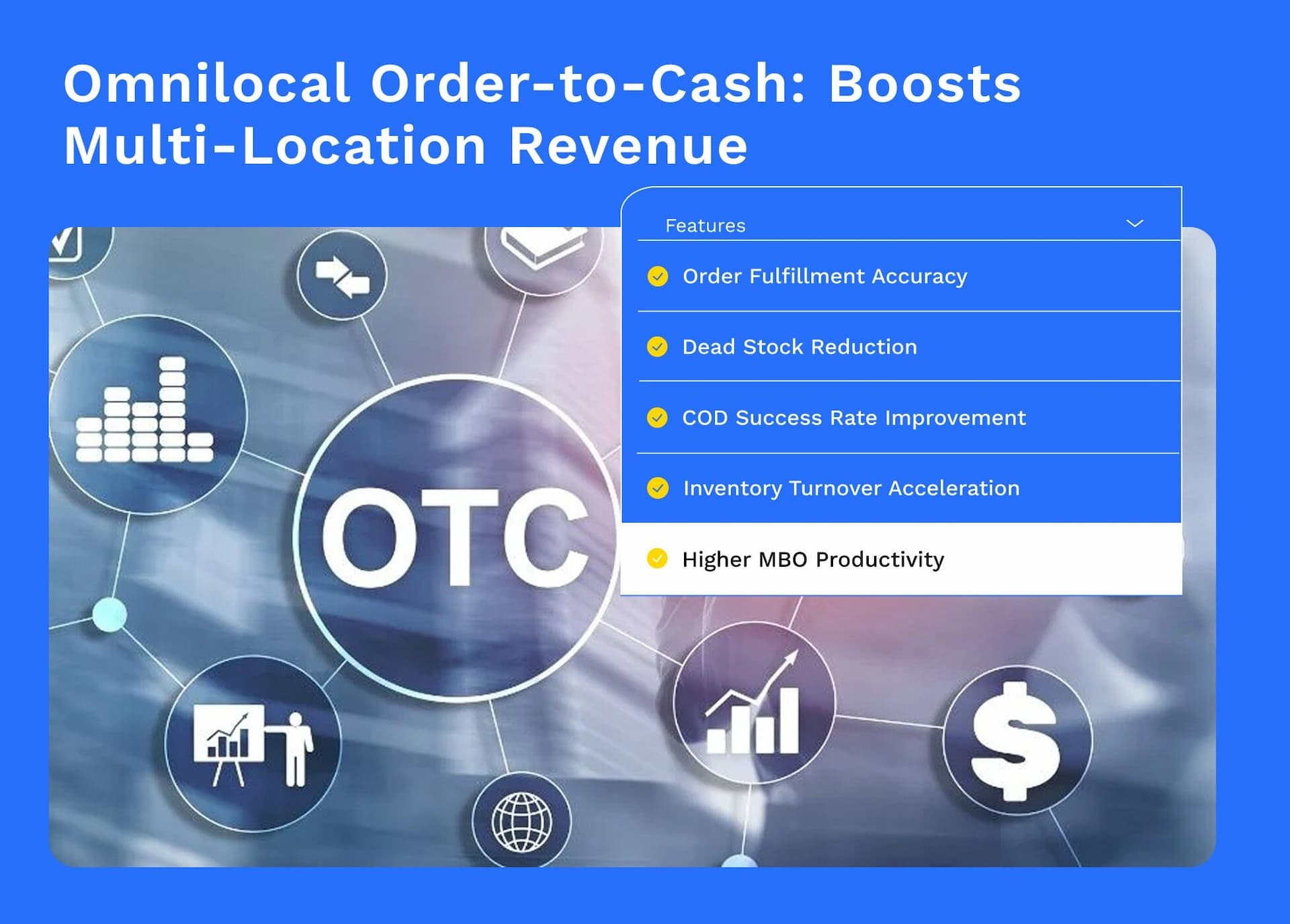
For large retail networks, rapid expansion often masks a costly reality: revenue is quietly leaking at every transaction.
Retailers with 500+ locations lose an average of 12-18% of potential revenue to preventable operational failures. As brands scale across thousands of stores and partner outlets, fulfillment errors, inventory misallocation, and fragmented systems compound into serious profit erosion.
The numbers tell the story:
- 1 in 4 orders contains fulfillment errors
- 35-40% of COD orders fail due to poor coordination
- Inventory turnover stagnates at 3-4x annually, causing simultaneous stockouts and dead stock
- Multi-brand outlet partners operate in silos without unified inventory or customer data
Traditional approaches no longer work. Stitching together separate POS, inventory, order management, and finance systems creates data delays, manual workarounds, and operational blind spots.
The cost is both operational and strategic.
Customers expect seamless experiences across all touchpoints. A stockout in one location while excess inventory sits nearby isn't just an inventory problem. It's a broken customer promise. These gaps erode trust and send shoppers to competitors.
By 2026, operational efficiency will separate market winners from losers. Success requires flawless execution at the location level, where every store operates as an intelligent node in a unified revenue network.
This demands a shift from omnichannel thinking to omnilocal execution.
An Omnilocal Order-to-Cash approach connects the entire revenue cycle in real time across all locations. It unifies EPOS, inventory, order routing, customer data, and financial reconciliation into one platform, transforming operational complexity into competitive advantage.
Sekel Tech's Omnilocal Order-to-Cash Platform eliminates revenue leakage, accelerates fulfillment, and turns fragmented operations into a scalable growth engine.
What Is an Omnilocal Order-to-Cash Platform?

An Omnilocal Order-to-Cash Platform manages the complete order lifecycle across multiple locations, from order capture through fulfillment, payment, and revenue recognition.
The key difference: Traditional omnichannel systems connect online and offline channels. Omnilocal platforms provide location-level intelligence, turning every store and partner outlet into a smart fulfillment node with real-time visibility.
For retailers managing 1,000+ stores and 2,000+ multi-brand outlets, this distinction is critical. Without location intelligence, you're running thousands of independent operations that can't leverage network strengths.
Why Traditional Systems Fail at Scale
Most ERP, POS, and order management systems were built for centralized operations. They struggle with:
- Real-time inventory sync across hundreds of locations
- Dynamic order routing based on proximity and stock levels
- Location-specific customer preferences
- Partner network management with varying commission structures
- Multi-location financial reconciliation and compliance
The result: manual workarounds, delayed data, fulfillment errors, and lost revenue.
How Omnilocal Platforms Solve This
Modern omnilocal platforms use AI and real-time data to:
- Optimize inventory: Predict demand by location and SKU, automate transfers and replenishment
- Route orders intelligently: Match orders to optimal fulfillment locations
- Unify customer data: Single profiles tracking purchases and preferences across all touchpoints
- Automate finance: Handle settlements, commissions, GST, and cash flow without manual work
- Enable flexible fulfillment: Support BOPIS, ship-from-store, endless aisle, and returns anywhere
The platform transforms network complexity into competitive advantage, enabling growth without proportional operational overhead.
Key Challenges Faced by Brands Without an Omnilocal Order-to-Cash Platform
Retail networks without unified order-to-cash systems face critical operational and financial issues that erode profitability.
Operational Gaps
- High Fulfillment Errors: 20-25% of orders contain errors due to manual processes and disconnected inventory systems, increasing returns and frustrating customers.
- COD Failures: 35-40% of cash-on-delivery orders fail from poor coordination and lack of unified tracking, creating cash flow problems.
- Inefficient Inventory Management: Low turnover (3-4x annually) from inability to see stock across locations in real time. Simultaneous stockouts and excess inventory tie up working capital.
- Fragmented Customer Data: No unified view across 2,000+ Multi-brand Outlets and brand stores limits personalization and loyalty efforts.
Financial Risks
- Manual Reconciliation: Daily settlements and commission tracking require significant manual effort, delaying cash flow and increasing errors.
- Compliance Issues: Inconsistent GST handling creates regulatory exposure and makes audits difficult.
- Revenue Leakage: Pricing discrepancies, untracked discounts, and inventory shrinkage quietly erode margins without real-time visibility.
Business Impact
- Reduced profitability from operational inefficiencies
- Limited scalability as manual processes can't support network growth
- Poor customer experience from delays and stockouts
- Competitive disadvantage against automated retailers
An Omnilocal Order-to-Cash Platform solves these challenges by unifying orders, inventory, fulfillment, payments, and reconciliation with real-time visibility across all locations.
Benefits of an Omnilocal Order-to-Cash Platform
1. Eliminate Fulfillment Errors and Speed Up Delivery
Real-time inventory visibility across all locations dramatically reduces order errors. Intelligent order routing matches customer orders to the nearest fulfillment point with available stock, cutting delivery times and shipping costs while improving customer satisfaction.
2. Improve Cash Flow and Payment Success
Integrated payment gateways and automated COD tracking significantly increase cash-on-delivery success rates. Automated daily reconciliation across all locations accelerates cash collection and eliminates manual payment tracking errors.
3. Optimize Inventory and Increase Turnover
AI-driven demand forecasting prevents stockouts in high-demand locations while identifying slow-moving inventory for redistribution. This frees up working capital, reduces carrying costs, and ensures products are where customers need them.
4. Unify Customer Data Across All Touchpoints
A single customer profile across online channels, brand stores, and multi-brand outlets enables personalized recommendations and seamless experiences. Customers can buy anywhere, return anywhere, and receive consistent service regardless of location.
5. Scale Without Operational Complexity
Automated processes for order routing, inventory transfers, commission calculations, and financial reconciliation allow networks to grow without proportionally increasing administrative workload. Operations that previously required manual coordination now happen automatically.
6. Reduce Revenue Leakage and Improve Margins
Real-time visibility into pricing, discounts, settlements, and inventory shrinkage helps identify and address revenue leaks quickly. Automated GST compliance and accurate commission tracking eliminate costly errors and regulatory risks.
7. Enable Flexible Fulfillment Models
Support for buy online pickup in-store, ship-from-store, endless aisle, and cross-location returns turns every location into a potential fulfillment center. This flexibility increases order completion rates and reduces lost sales from out-of-stock situations.
The Competitive Advantage
Brands with omnilocal order-to-cash platforms operate with fundamentally different economics than competitors using fragmented systems. Lower fulfillment costs, faster inventory turns, higher payment success rates, and reduced administrative overhead create sustainable margin improvements while delivering superior customer experiences.
Watch the video to discover how Sekel Tech enables businesses to convert footfalls and online visitors into loyal customers. "The Smart Way to Convert Visitors into Lifetime Customers"
How Sekel Tech’s Omnilocal Order-to-Cash Platform Works
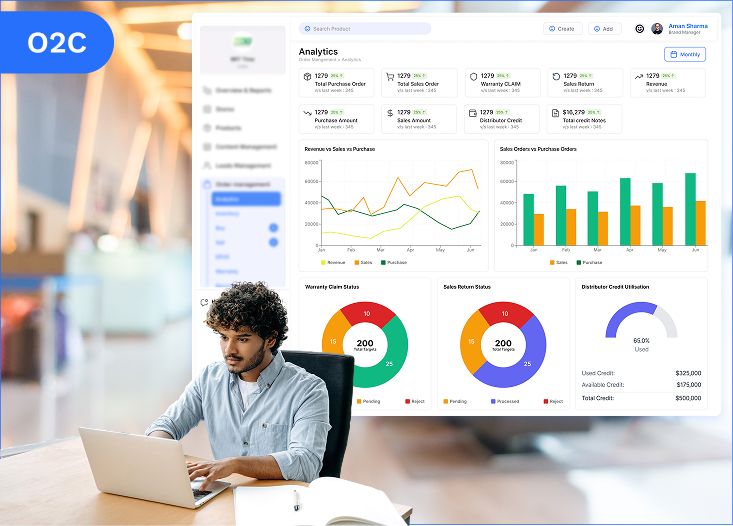
1. Unified Order Capture
The platform captures orders from every channel into a single system: online marketplaces, brand websites, mobile apps, in-store POS, and multi-brand outlet partners. Every transaction is tracked in real time, creating complete visibility across your entire network from the moment an order is placed.
2. Intelligent Inventory and Fulfillment
Real-time inventory visibility across all locations enables smart fulfillment decisions. AI-powered routing selects the optimal fulfillment location based on stock availability, proximity to customer, and delivery speed. The system supports online pickup in-store, ship-from-store, endless aisle, and automatic store-to-store transfers to prevent stockouts.
3. Unified Customer Experience
Every order links to a single customer profile that captures purchase history, preferences, and loyalty data across all touchpoints. Whether customers shop online, visit a flagship store, or browse a multi-brand outlet, they receive personalized recommendations and consistent service. Returns and exchanges work seamlessly across any location.
4. Automated Financial Reconciliation
Payments, COD collections, GST compliance, and partner commissions are automatically reconciled without manual intervention. The platform provides real-time profit and loss visibility by location, region, and channel, while handling daily settlements and commission payments to multi-brand outlet partners.
5. Actionable Insights and Optimization
The platform delivers performance analytics at both location and network levels. Retailers can identify top-performing stores, optimize inventory distribution, track fulfillment speed, and measure revenue impact. Predictive insights help anticipate demand patterns and proactively adjust operations.
The Result
Every order flows through a connected system that eliminates manual handoffs, reduces errors, and turns operational data into revenue intelligence. What used to require coordination across multiple disconnected systems now happens automatically within one platform.
Key Capabilities
Sekel Tech’s Omnilocal Order-to-Cash Platform is designed to solve the challenges of multi-location retail networks, including high fulfillment errors, manual inventory tracking, and lack of unified customer visibility across multi-brand outlets and brand stores.
1. Unified EPOS Across All Locations
- Cloud-based infrastructure, real-time synchronization across multiple stores
- Offline-capable to handle internet interruptions
- Single dashboard for Multi-brand outlets and 1,000+ brand stores
- Integrated payment gateway (UPI, cards, wallets, COD tracking)
- Automated GST compliance and invoicing
- Multi-brand Outlet partner portal with real-time commission tracking
Read Also - Omnilocal EPOS: Why Retailers Need It to Win Local Markets
2. Omnichannel Order Management
- Buy Online, Pickup In-Store (BOPIS) across multi-location network
- Ship-from-Store (SFS) with AI-powered routing
- Endless Aisle: shared inventory across all locations
- Store-to-Store transfer optimization
- Returns anywhere across all locations
Read Also - Omnilocal Order Management System for Multi-Store Brands
3. Intelligent Inventory Management
- Real-time visibility of every SKU, size, and location
- AI-driven demand forecasting by location, SKU, size, and color
- Automated replenishment with location-specific size curves
- Transfer optimization for slow-moving stock
- Centralized stock pool across multi-location network
Read Also - Omnilocal Inventory Management Platform for Smarter Retail
4. Unified Customer Data Platform (CDP)
- Single customer profile across online, brand stores, and Multi-brand Outlets
- Purchase history, preferences, and cross-location tracking
- Personalized recommendations powered by multi-location data
- Loyalty program unified across all touchpoints
Read Also - Is Your Brand Using a Hyperlocal Customer Data Platform?
5. Dealer/Multi-brand Outlet Management
- Real-time sales conversion and commission automation
- Inventory on consignment
- Partner performance dashboards and rankings
- Training and certification tracking
- Co-marketing campaign execution and measurement
Read Also - Multi-Brand Outlets Near Me: Boost Your Local Visibility
6. Financial Reconciliation & Revenue Control
- Automated daily settlements across all locations
- Real-time P&L by location, region, and channel
- Cash flow visibility and forecasting
- Multi-brand Outlet commission auto-calculation and payment processing
Watch the video to learn how Sekel Tech empowers retailers to capture and convert high-quality leads across multiple locations. "How to Track & Convert Quality Leads for Your Store."
Industries That Benefit from Omnilocal Order-to-Cash
Industry | Primary Benefit |
| Fashion & Apparel | Real-time inventory across sizes/colors, unified customer profiles |
| Consumer Electronics | Accurate order fulfillment, warranty tracking, multi-location service |
| Beauty & Personal Care | Personalized recommendations, loyalty program integration |
| Home & Furnishing | Large inventory management, delivery coordination |
| Automotive | Dealer network optimization, parts inventory control |
| Fitness & Wellness | Multi-location bookings, membership management |
| Healthcare & Pharmacy | Compliance tracking, prescription management |
| Food & FMCG | Fast inventory turnover, expiry management |
| Jewelry | High-value inventory tracking, COD management |
| Banking & Finance | Multi-branch reconciliation, commission automation |
Watch the video to see how Sekel Tech helps retailers manage listings, content, reviews, and sales seamlessly across multiple locations. "Manage Listings, Content, Reviews & Sales - All in One Place"
Real-World Applications
1. Fashion Retail Network
A national apparel brand with 800+ stores struggled with size-based stockouts and excess inventory. After implementing omnilocal order-to-cash, they gained real-time visibility into every size and color across all locations. The system now automatically suggests transfers when a customer's size is unavailable locally, enabling endless aisle fulfillment. Inventory turnover improved significantly while customer satisfaction increased from reduced stockouts.
2. Electronics Retail Chain
A consumer electronics retailer with 500+ stores and 1,200+ multi-brand outlet partners faced high COD failure rates and manual commission reconciliation. The platform automated payment tracking and commission calculations, eliminating errors and disputes. Real-time inventory visibility enabled ship-from-store fulfillment, reducing delivery times and logistics costs while improving cash flow management.
3. Home Furnishing Brand
A furniture and home decor company managing 300+ experience centers and 800+ dealer partners needed unified customer data across touchpoints. The omnilocal platform created single customer profiles linking showroom visits, online browsing, and purchases. This enabled personalized follow-ups, coordinated delivery scheduling, and seamless post-sale service regardless of purchase location.
Read Also: 10 OmniLocal Business Management Tips for Local Success
Why 2026 Is the Inflection Point
The retail landscape is undergoing its most significant transformation in decades, and 2026 marks the point where operational efficiency separates market leaders from those left behind.
1. AI-Driven Commerce Expectations
Customers now expect instant answers, real-time inventory accuracy, and same-day fulfillment. AI-powered search and recommendation engines have raised the bar for personalization. Retailers operating with outdated systems cannot meet these expectations and lose customers to competitors who can.
2. Zero-Tolerance for Friction
Modern shoppers abandon purchases immediately when facing stockouts, delayed updates, or payment issues. The traditional grace period for operational mistakes has disappeared. Every fulfillment error, every inventory discrepancy, every payment friction point drives customers to alternatives.
3. Economic Pressure on Margins
Rising operational costs, competitive pricing pressure, and customer acquisition expenses mean retailers cannot afford hidden revenue leakage. Brands that eliminate operational inefficiencies gain 8-15% margin advantages over competitors still using manual processes and fragmented systems.
4. Location-Level Competition
Success is no longer measured at the brand level but at the location level. A flagship store in one city and an underperforming outlet in another cannot be managed with the same centralized approach. Winners optimize each location's inventory, staffing, and customer experience based on local data.
5. Technology Maturity
AI, cloud infrastructure, and real-time data processing have reached the point where omnilocal execution is not just possible but economically accessible. What required massive IT investments three years ago is now available as scalable platforms that deliver ROI within months.
6. Regulatory and Compliance Complexity
GST requirements, data privacy regulations, and financial compliance standards continue tightening. Manual processes create exposure. Automated compliance built into order-to-cash platforms reduces risk and administrative burden.
The brands investing in omnilocal infrastructure today are building competitive moats that will be difficult for competitors to overcome. By 2027, the gap between leaders and laggards will be too wide to close with incremental improvements.
Frequently Asked Questions (FAQs): Omnilocal Order-to-Cash
1. Which is better, P2P or O2C?
Purchase-to-Pay (P2P) focuses on controlling spend and managing vendors, while Order-to-Cash (O2C) drives order fulfillment and revenue collection. Both processes benefit from automation, which reduces manual errors and speeds up operations. Integrating P2P and O2C prevents data silos and ensures smooth reconciliation. Sekel Tech’s platform bridges these processes, enabling end-to-end operational efficiency and revenue growth.
2. What is the O2C process?
The O2C process is the end-to-end workflow from receiving a customer order to collecting payment. It includes order management, inventory allocation, fulfillment, invoicing, and cash collection. Sekel Tech’s Omnilocal O2C platform ensures seamless execution across multiple locations, reduces errors, and improves cash flow while enhancing the customer experience.
3. What is the billing process in O2C?
Billing in the O2C cycle involves collecting customer information, generating accurate invoices, delivering them, collecting payments, and reconciling accounts. Sekel Tech automates these steps across all locations, integrates with ERP and CRM systems, and ensures timely cash flow and accurate revenue reporting.
4. What are the main types of business processes?
The four primary business process types are:
- Operational processes: Core functions that deliver products or services
- Management processes: Planning, monitoring, and performance management
- Support processes: Activities supporting operational and strategic functions
- Strategic processes: Long-term planning and organizational growth initiatives
5. What is the best software for purchase orders?
The best purchase order software integrates seamlessly with your O2C platform, providing real-time inventory visibility, automated vendor management, and streamlined approvals. Sekel Tech’s Omnilocal Order-to-Cash platform supports both order and purchase workflows, ensuring accurate tracking, faster processing, and unified operational control.
Conclusion
The complexity of managing multi-location retail networks is not going away. It's intensifying. More channels, higher customer expectations, tighter margins, and increased competition mean that operational excellence is no longer optional.
The retailers winning in 2026 and beyond are those who've transformed their operations from fragmented systems into unified revenue engines. They've eliminated the 20-25% fulfillment error rates, the manual reconciliation processes, the inventory blind spots, and the revenue leakage that quietly erodes profitability.
Sekel Tech's Omnilocal Order-to-Cash Platform is purpose-built for this reality.
It unifies EPOS, inventory, order management, customer data, and financial reconciliation into a single intelligent system. Every order is captured accurately, routed optimally, fulfilled efficiently, and reconciled automatically. Every location operates with real-time data instead of yesterday's reports. Every customer receives personalized, consistent experiences regardless of how or where they engage.
This is not about incremental improvement. It's about building the operational infrastructure that enables sustainable growth.
The brands that hesitate, waiting for perfect conditions or trying to patch together legacy systems, will find themselves competing against networks that execute flawlessly at the location level. The operational gap will become a competitive chasm.
The time to act is now.
Discover how Sekel Tech's Omnilocal Order-to-Cash Platform can transform your retail network from operational complexity into competitive advantage.
Your next order should be the start of seamless execution, not another source of revenue leakage.
Share


Similar Blogs
Loved this content?
Sign up for our newsletter and get the latest tips & updates directly in your inbox.
There’s more where that came from!
 Connect with us