
Hyperlocal Marketing
What is Hyperlocal Delivery? Your Complete Guide for 2026
Thu, 23 May 2024 08:46:29 GMT
Speak to our Hyperlocal Expert
Editor’s Note: This post was originally published in May 2024 and was updated in Jul 2026 for accuracy and comprehensiveness.
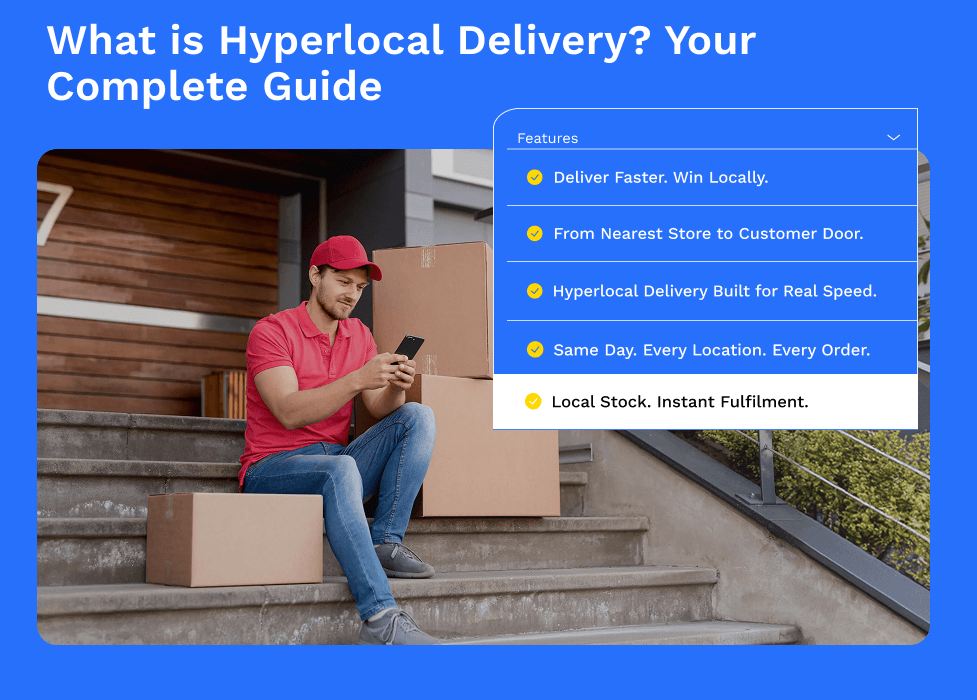
Hyperlocal delivery refers to delivering goods and services within a small, specific geographic area typically within a few miles or hours of order placement. It connects local businesses directly to nearby customers faster than traditional last-mile delivery models.
Hyperlocal delivery involves delivering goods within a small, specific geographic area, typically within a few miles. In 2026, this concept has surged in popularity, driven by the demand for swift and convenient delivery experiences. Understanding the hyperlocal delivery meaning is crucial for businesses aiming to meet these rapid fulfilment expectations.
In this article, we explore what is hyperlocal delivery and the benefits it offers for businesses and consumers. We'll also discuss key topics such as technology, challenges, and future trends shaping the hyperlocal delivery landscape.
What is Hyperlocal Delivery?
Hyperlocal delivery is a specialised logistics strategy focused on delivering goods and services within a very limited geographical area, typically within a few miles or even blocks. The hyperlocal delivery meaning emphasises the extreme proximity between the point of origin (such as a store or warehouse) and the destination (the customer's location). This approach prioritises speed, efficiency, and convenience by leveraging local resources and infrastructure to fulfil orders quickly.

Hyperlocal Delivery vs Last-Mile Delivery
These two terms are often used interchangeably but they describe fundamentally different logistics models with different cost structures, speed expectations, and operational requirements.
Factor | Hyperlocal Delivery | Last-Mile Delivery |
| Geographic Scope | 2 to 5 kilometre radius from source | City-wide or regional from distribution centre |
| Delivery Speed | Same day to within hours | Next day to 3 to 5 days typically |
| Point of Origin | Local store, dark store, micro-fulfilment centre | Regional warehouse or distribution hub |
| Order Volume per Route | Lower volume, higher frequency | Higher volume, less frequent |
| Customer Expectation | Immediate need fulfilment | Planned purchase delivery |
| Cost per Delivery | Higher per unit but lower transport cost | Lower per unit but longer route cost |
| Best For | Groceries, food, medicine, urgent retail | Electronics, apparel, large orders |
| Technology Requirement | Real-time inventory, route optimisation, live tracking | Warehouse management, batch routing |
The fundamental difference is intent. Last-mile delivery solves the problem of getting goods from a centralised point to the customer efficiently. Hyperlocal delivery solves the problem of getting goods to the customer immediately by removing the centralised point entirely and putting stock as close to the customer as possible before the order is even placed.
How Does Hyperlocal Delivery Work?
Hyperlocal delivery streamlines the process of getting goods from local stores to customers' doorsteps efficiently and swiftly. Here's a breakdown of the key steps involved:
1. Order Placement
Customers place orders through hyperlocal platforms like websites or mobile apps, or directly with local stores. They browse through available products, select items, and proceed to checkout, specifying their delivery address and preferred delivery time.
2. Order Processing
Upon receiving an order, the seller, which could be a restaurant, grocery store, or other local business, processes the order. They prepare the items, package them securely, and generate necessary documentation for delivery.
3. Delivery Assignment
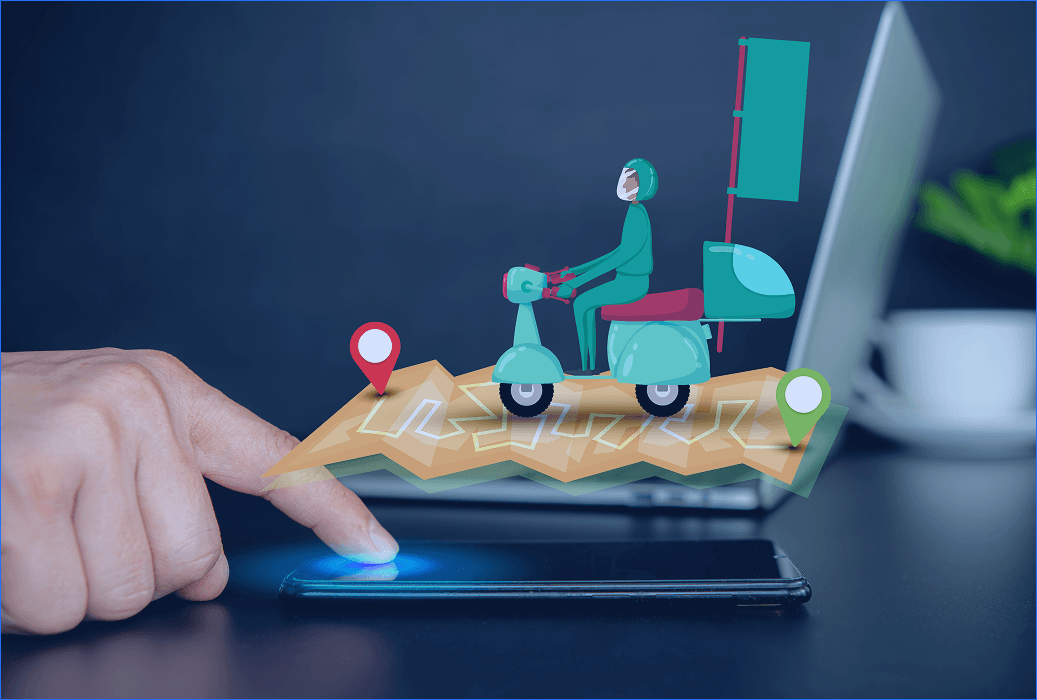
Delivery personnel, often equipped with bicycles, scooters, or on foot for short distances, receive notification of the order pickup. They navigate to the seller's location, pick up the packaged order, and set out for the customer's address.
4. Delivery to Doorstep
The delivery personnel follow optimised routes to reach the customer's location efficiently. Upon arrival, they hand over the order to the customer, ensuring prompt and courteous service. Ideally, the delivery timeframe is short, typically within a few hours of order placement.
What Are the Different Types of Hyperlocal Delivery Business Models?
Different businesses approach hyperlocal delivery differently depending on their size, inventory model, and customer base. Here are the main models operating in India and globally in 2026.
1. Inventory-Led Model
The business owns and manages its own stock in a local warehouse or dark store. Orders are fulfilled directly from that inventory without depending on third-party sellers. This model gives the business complete control over product quality, availability, and delivery speed but requires significant upfront investment in stock and storage infrastructure.
2. Marketplace Model
A platform connects customers with multiple local sellers without holding any inventory itself. The platform manages order routing, payment processing, and delivery logistics while sellers manage their own stock. Swiggy Instamart and Dunzo operate variations of this model. Lower capital requirement but dependent on seller reliability and stock accuracy.
3. Store-to-Door Model
Existing retail stores act as fulfilment points for online orders. Customers browse online, the nearest store picks and packs the order, and a delivery partner completes the last leg. This model leverages existing store infrastructure without building separate fulfilment centres making it the most cost-efficient entry point for established retailers moving into hyperlocal delivery.
4. Aggregator Model
A single platform aggregates delivery capacity from multiple local logistics providers rather than managing its own fleet. The platform optimises routing and assignment across the network. Scales quickly without fleet investment but gives less control over delivery quality and timing consistency.
5. Quick Commerce Model
Dark stores stocked with high-frequency essentials positioned within 2 to 3 kilometres of dense residential areas. Designed specifically for 10 to 30 minute delivery windows. Blinkit and Zepto operate this model in India. Extremely capital intensive but creates a genuinely differentiated customer experience that drives strong repeat purchase behaviour.
Model | Capital Required | Speed Potential | Best For |
| Inventory-Led | High | Very High | Businesses wanting full control |
| Marketplace | Low | Medium | Platforms connecting local sellers |
| Store-to-Door | Low | High | Established retailers with physical stores |
| Aggregator | Medium | Medium | Scaling delivery without fleet investment |
| Quick Commerce | Very High | Highest | High-frequency essential goods |
Empowering Neighbourhoods: The Impact of Hyperlocal Services
Hyperlocal services cater to the immediate needs of customers within specific geographic areas, such as neighbourhoods or city districts. These services offer:
- Fast Delivery
On-demand or same-day delivery of groceries, meals, and essential items to customers' doorsteps within a localised radius.
- Personalised Assistance
Tailored services like home repairs, beauty treatments, and transportation, meeting the unique needs of residents.
- Community Engagement
By leveraging local infrastructure and resources, hyperlocal services foster connections and support local businesses, enhancing the overall community experience.
- Convenient Access
Providing convenient access to local goods and services, reducing the need for customers to travel long distances for their needs.
- Sustainability Initiatives
Implementing eco-friendly practices such as using electric vehicles or supporting local farmers and artisans, contributing to a greener and more sustainable community.
Which Industries Use Hyperlocal Delivery?
1. Grocery and Fresh Produce
The highest-volume hyperlocal category globally. Perishability and immediacy make hyperlocal delivery operationally necessary for grocery businesses competing with quick commerce platforms.
2. Food and Restaurant Delivery
The category that popularised hyperlocal delivery in India. Restaurants serve a defined delivery radius with 30 to 45 minute windows now the baseline customer expectation in most urban markets.
3. Pharmacy and Healthcare
Medicine delivery within hours is one of the fastest-growing hyperlocal categories in India. The urgency of healthcare needs makes hyperlocal the only viable delivery model for this category.
4. Consumer Electronics and Accessories
Same-day delivery of mobile accessories and small electronics is increasingly expected by urban customers. Retailers with multiple locations are well positioned to fulfil from the nearest store.
5. Fashion and Apparel
Try-before-you-buy and same-day delivery models are emerging in fashion. The proximity of local stores makes this economically viable in ways that centralised warehouse models cannot replicate.
6. Home Services
Plumbers, electricians, and repair technicians dispatched within hours. The hyperlocal services market is one of the fastest-growing segments with platforms aggregating skilled local providers across city districts.
7. B2B and Trade Distribution
FMCG manufacturers are using hyperlocal delivery for faster dealer replenishment cycles. Same-day delivery of trade stock reduces dealer inventory requirements and strengthens channel relationships.
Benefits of Hyperlocal Delivery
1. For Businesses:
- Increased Sales and Customer Reach
Hyperlocal delivery expands businesses' reach, driving higher sales by tapping into local markets.
- Improved Customer Satisfaction
Fast, convenient delivery options enhance satisfaction and loyalty among customers.
- Faster Inventory Turnover
Prompt delivery reduces excess inventory and overhead costs, boosting efficiency.
- Competitive Edgex
Smaller businesses can compete with larger retailers by offering personalised services and local products.
2. For Customers:
- Convenience and Speed
Hyperlocal delivery provides swift order fulfilment, offering unmatched convenience for customers. Understanding the hyperlocal delivery meaning helps customers appreciate the value of rapid and localised service.
- Diverse Product Range
Customers gain access to a wider variety of locally sourced products, supporting local businesses. This aspect of hyperlocal delivery highlights the connection between local economies and consumer convenience.
- Community Support
Choosing hyperlocal delivery fosters community growth by supporting local economies and businesses.
Challenges in Hyperlocal Delivery
1. Logistics Complexity
Navigating and managing multiple deliveries within a limited geographic area pose logistical challenges for retailers, leading to delays and inefficiencies.
2. Inventory Management
Balancing inventory levels across multiple stores and ensuring product availability for hyperlocal delivery can be challenging, resulting in stock outs or overstocking.
3. Customer Expectations
In the era of instant gratification, customers expect fast and reliable hyperlocal delivery services. Meeting these expectations while maintaining operational efficiency is a significant challenge for retailers.
4. Data Security and Compliance
Managing sensitive customer data and ensuring compliance with data protection regulations present challenges for retailers, especially in the context of hyperlocal delivery.
Leveraging Technology for Hyperlocal Delivery Solutions
In the fast-paced world of retail, leveraging technology is essential to meet the evolving demands of customers and streamline delivery operations. Sekel Tech offers a comprehensive suite of hyperlocal delivery solutions tailored to retailers, enabling them to optimise their delivery processes and provide exceptional customer experiences.
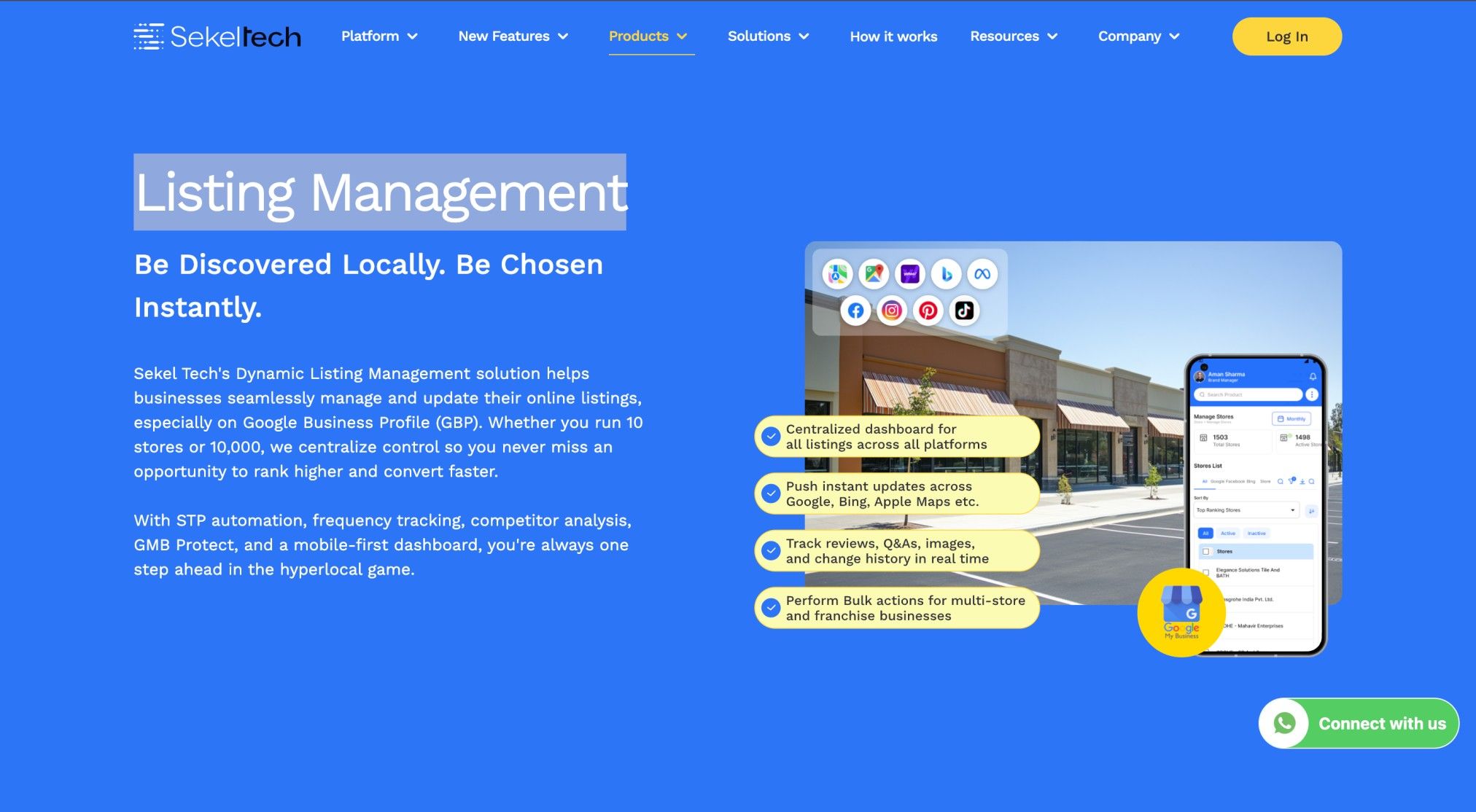
1. Dynamic Listing Management
Sekel Tech's Dynamic Listing Management service ensures that businesses maintain accurate and up-to-date listings across various online platforms. By seamlessly managing and updating listings, retailers can enhance their online visibility and attract more customers to their stores.
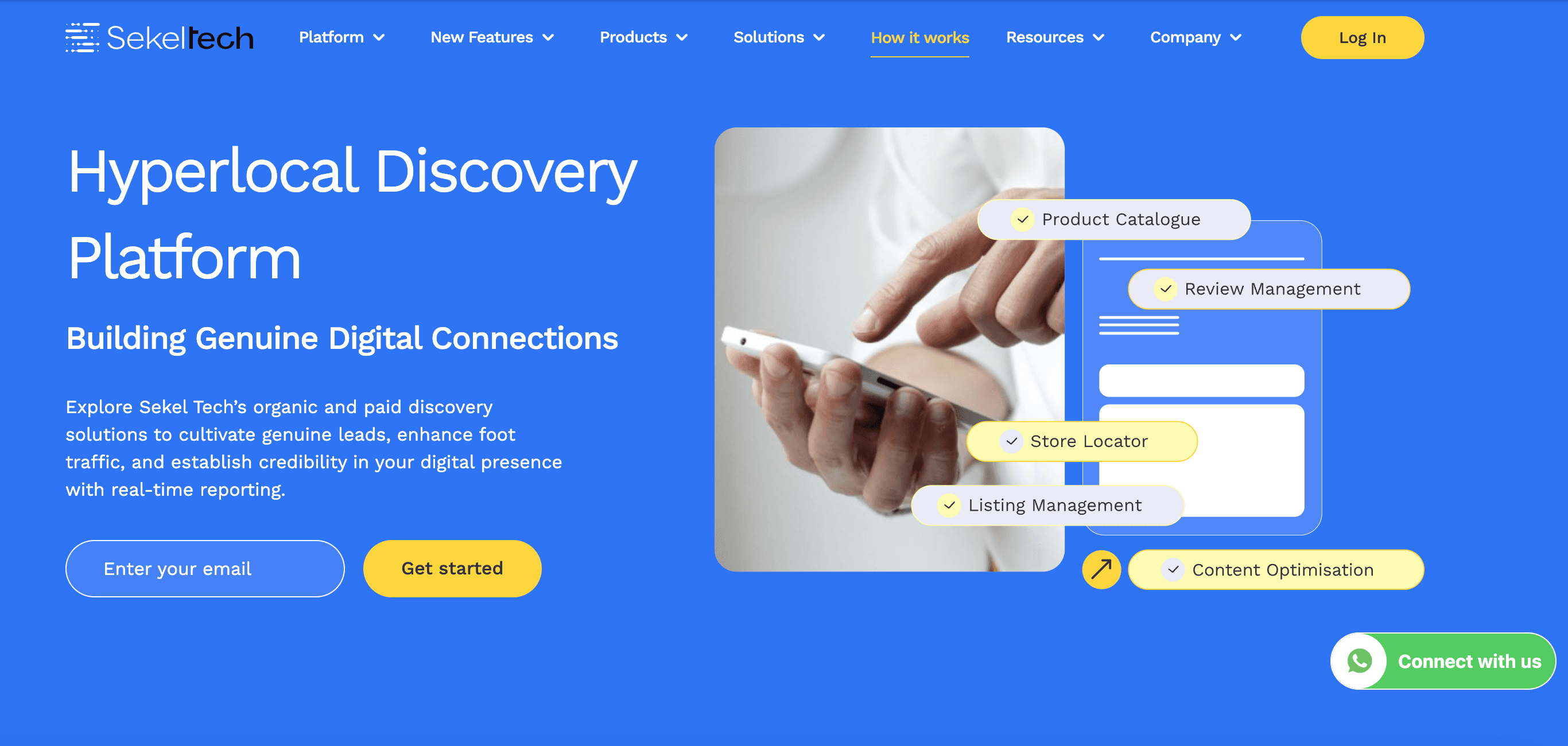
2. Discovery Platform
With Sekel Tech's Discovery Platform, retailers can create personalised microsites for each store, ensuring top rankings in "near me" searches. This feature enables customers to easily locate nearby stores and access essential store information, driving foot traffic and boosting sales.
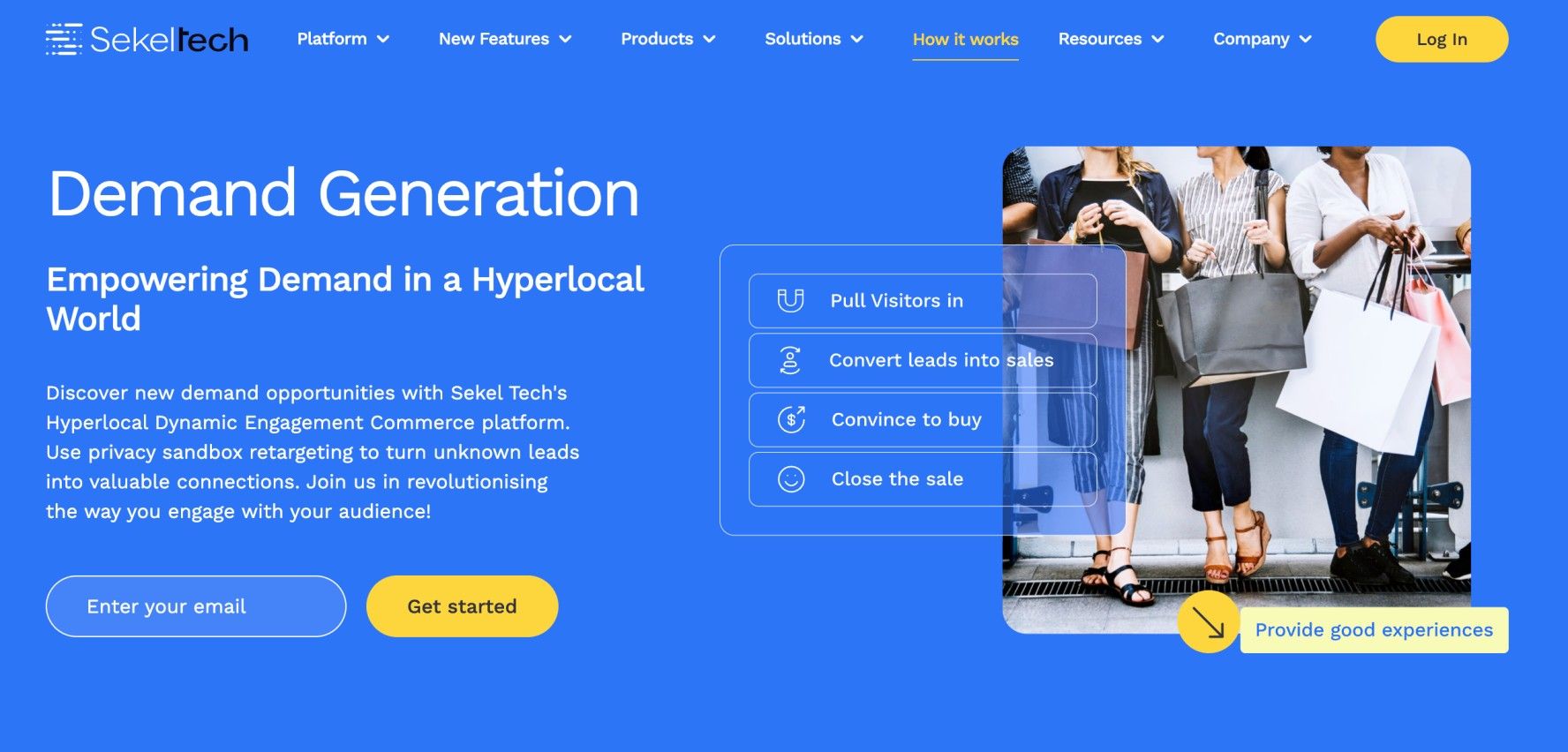
3. Demand Generation
Sekel Tech's Demand Generation tools empower retailers to run targeted digital marketing campaigns and engage with customers effectively. Through digital campaigns, customer relationship management, and real-time conversion analytics, retailers can drive customer loyalty and increase sales revenue.
4. SellrApp
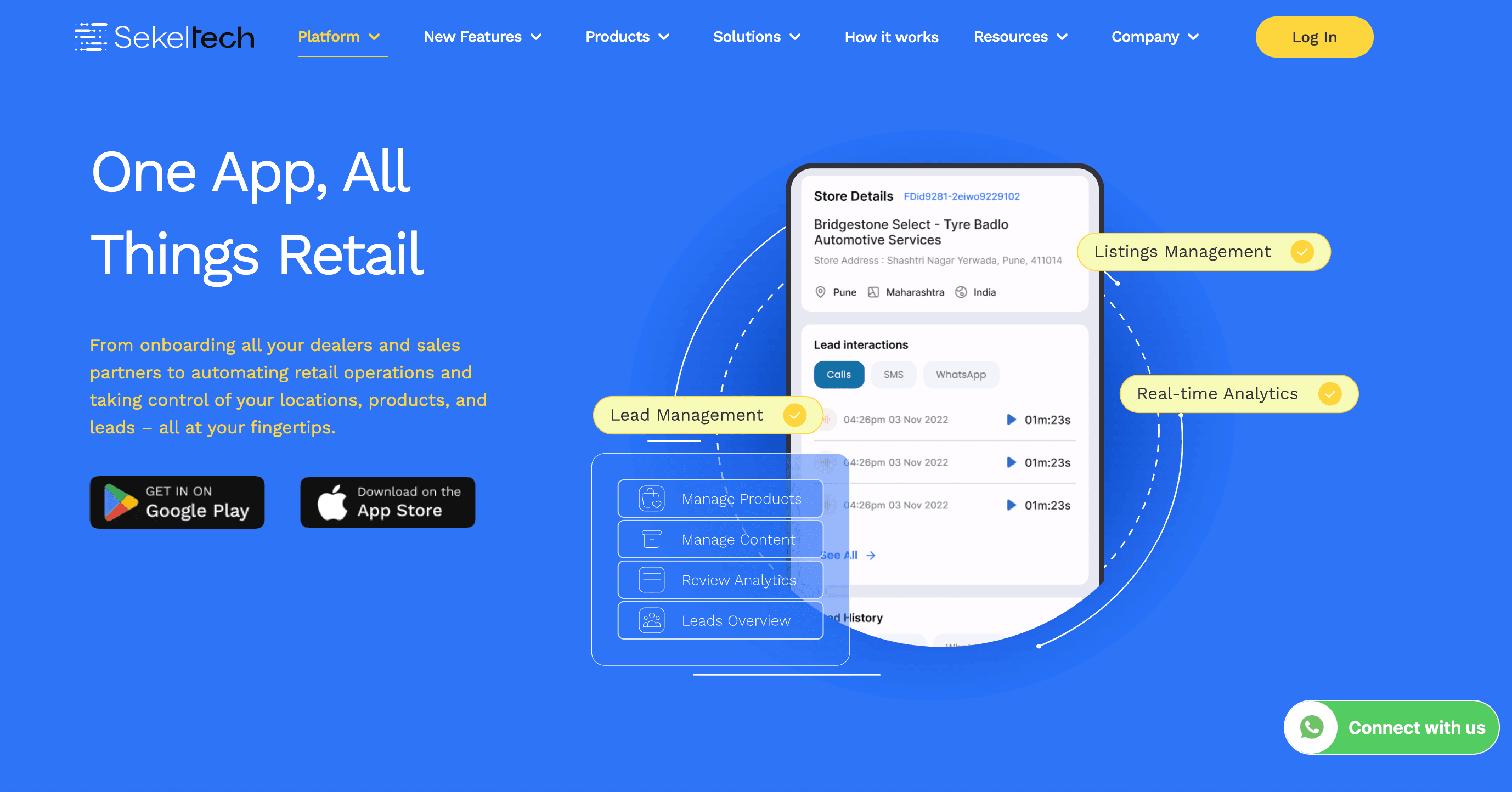
Sekel Tech's SellrApp provides retailers with real-time sales data and insights, enabling them to make informed decisions and optimise their hyperlocal delivery operations. With SellrApp, retailers can track conversion metrics, manage inventory, and streamline order fulfilment processes, ultimately enhancing the overall customer experience.
5. Security and Compliance
Sekel Tech's hyperlocal delivery solutions prioritise security and compliance, ensuring that sensitive customer information is protected and that retailers adhere to data protection regulations. By implementing robust security measures, retailers can build trust with their customers and safeguard their reputation.

6. Store2Door Omni Commerce
Sekel Tech's Store2Door Omni Commerce solution enables seamless omnichannel commerce, allowing customers to shop online and choose from various delivery options, including store pickup and home delivery. This integrated approach enhances convenience for customers and drives sales for retailers.

By leveraging Sekel Tech's hyperlocal delivery solution, retailers can optimise their delivery operations, drive sales, and foster customer loyalty. With a focus on innovation and customer-centricity, Sekel Tech empowers retailers to thrive in the hyperlocal delivery landscape and deliver exceptional experiences to their customers.
Watch this video to learn more about Sekel Tech's Hyperlocal Solution and how it navigates challenges in the era of online-to-offline retail. Discover how our innovative technology is revolutionising hyperlocal delivery and empowering businesses to thrive in today's dynamic marketplace.
Role of Technology in Hyperlocal Delivery
- Mobile Apps
User-friendly mobile apps facilitate order placement, payment processing, and real-time order tracking for customers. They also provide a platform for sellers to manage inventory, receive orders, and communicate with delivery personnel.
- Order Management Systems
Advanced order management systems streamline the processing of incoming orders, ensuring accurate fulfilment and timely dispatch. These systems integrate with inventory databases, allowing sellers to monitor stock levels and replenish supplies as needed.
- Route Optimization
Route optimization software analyses delivery routes in real-time, considering factors such as traffic conditions, distance, and delivery time windows. By identifying the most efficient routes, delivery personnel can minimise travel time and maximise the number of deliveries completed per trip.
In essence, the convergence of hyperlocal platforms and cutting-edge technology enables businesses to offer fast, reliable delivery services while providing customers with the convenience and flexibility they demand in today's fast-paced world.
See how Sekel Tech helps retail brands manage listings, orders, and sales from one unified hyperlocal platform.
How to Start a Hyperlocal Delivery Business
Future Trends Shaping the Hyperlocal Delivery Landscape
The hyperlocal delivery landscape is rapidly evolving, influenced by technological advancements, consumer behaviour changes, and innovative business models. Here are key trends shaping its future:
- AI and Machine Learning
Optimise delivery processes through predictive analytics and route optimization.
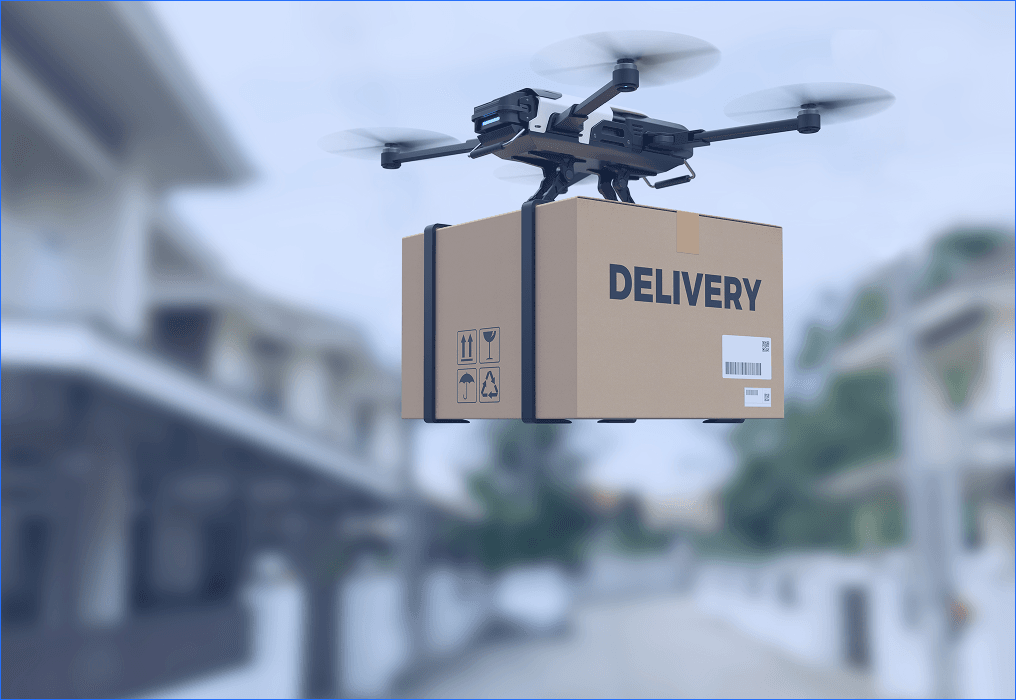
- Autonomous Delivery Vehicles
Drones and self-driving vehicles promise faster, more efficient deliveries.
- Micro-Fulfillment Centers
Small, automated warehouses store inventory closer to customers.
- Augmented Reality (AR)
Enhances customer engagement and operational efficiency.
- Sustainable Delivery Solutions
Eco-friendly practices minimise environmental impact.
- Hyper-Personalised Customer Experiences
Tailor offerings and provide personalised promotions using data analytics.
- Omnichannel Integration
Creates a unified shopping experience.
- Real-Time Tracking and Transparency
Offers real-time updates and transparency.
- Subscription-Based Delivery Services
Provide regular, hassle-free deliveries of essential items.
- Collaborative Delivery Networks
Share resources and optimise routes for efficiency.
Expand your knowledge with the informative article "Hyperlocal delivery: The future of retail in a digitally connected world" featured in the Times of India. This insightful piece provides valuable insights to navigate the dynamic world of the Indian retail industry in 2026.
Frequently Asked Questions (FAQs)
1. What is the meaning of hyperlocal delivery?
Hyperlocal delivery refers to proximity-based fulfilment that connects customers to the nearest available product source rather than routing orders through distant warehouses. The emphasis is on speed and locality. Delivery happens within the immediate neighbourhood or city district making it fundamentally different from traditional courier or last-mile logistics models that cover much larger geographic areas.
2. What is the difference between hyperlocal delivery and quick commerce?
Quick commerce is a specific type of hyperlocal delivery focused on delivering essential goods within 10 to 30 minutes using dark stores stocked with high-frequency items. Hyperlocal delivery is the broader category that includes quick commerce but also covers store-to-door retail, food delivery, home services, and B2B trade distribution. All quick commerce is hyperlocal but not all hyperlocal delivery is quick commerce.
3. What is hyperlocal grocery delivery?
Hyperlocal grocery delivery connects customers to the nearest grocery store, dark store, or local supermarket for same-day or within-hours delivery of fresh produce, dairy, and essentials. It differs from scheduled grocery delivery services by prioritising immediacy over planning. Customers order what they need now and receive it before they would have finished the trip to the store themselves.
4. How does hyperlocal delivery benefit local businesses?
Local businesses gain access to customers who would otherwise choose larger e-commerce platforms for convenience. Hyperlocal delivery levels the playing field by giving neighbourhood stores the same speed advantage that online giants have on price and variety. It drives higher order frequency, reduces cart abandonment caused by long delivery windows, increases average transaction values through impulse purchases enabled by fast fulfilment, and builds stronger community relationships through consistent local service.
5. What is the difference between hyperlocal delivery and e-commerce delivery?
E-commerce delivery moves goods from centralised warehouses to customers across cities, states, or countries typically within one to seven days. Hyperlocal delivery operates within a small local radius using nearby sources for same-day or within-hours fulfilment. E-commerce prioritises scale and cost efficiency across large distances. Hyperlocal prioritises speed and proximity within a defined local zone. Many retailers now run both models simultaneously serving planned purchases through e-commerce and immediate needs through hyperlocal.
Conclusion
Hyperlocal delivery is a dynamic and essential service model that revolutionises the last mile of delivery, ensuring rapid and efficient fulfilment of customer orders within specific geographic areas. By understanding what hyperlocal delivery is, businesses can harness the benefits of hyperlocal services to enhance customer satisfaction, support local economies, and stay competitive in an evolving marketplace.
Why Choose Sekel Tech for Hyperlocal Delivery Solutions
At Sekel Tech, we understand the challenges businesses face in the hyperlocal delivery landscape. That's why we're committed to providing innovative solutions that drive success and growth. With our expertise and dedication to excellence, Sekel Tech is the partner of choice for businesses looking to thrive in the fast-paced world of hyperlocal delivery. Join us as we revolutionise the future of delivery together.
Share


Similar Blogs
Loved this content?
Sign up for our newsletter and get the latest tips & updates directly in your inbox.
There’s more where that came from!
 Connect with us