
Omnilocal
Omnilocal Store Strategies to Stop Return Fraud in 2026
Wed, 11 Feb 2026 11:27:06 GMT
Speak to our Hyperlocal Expert
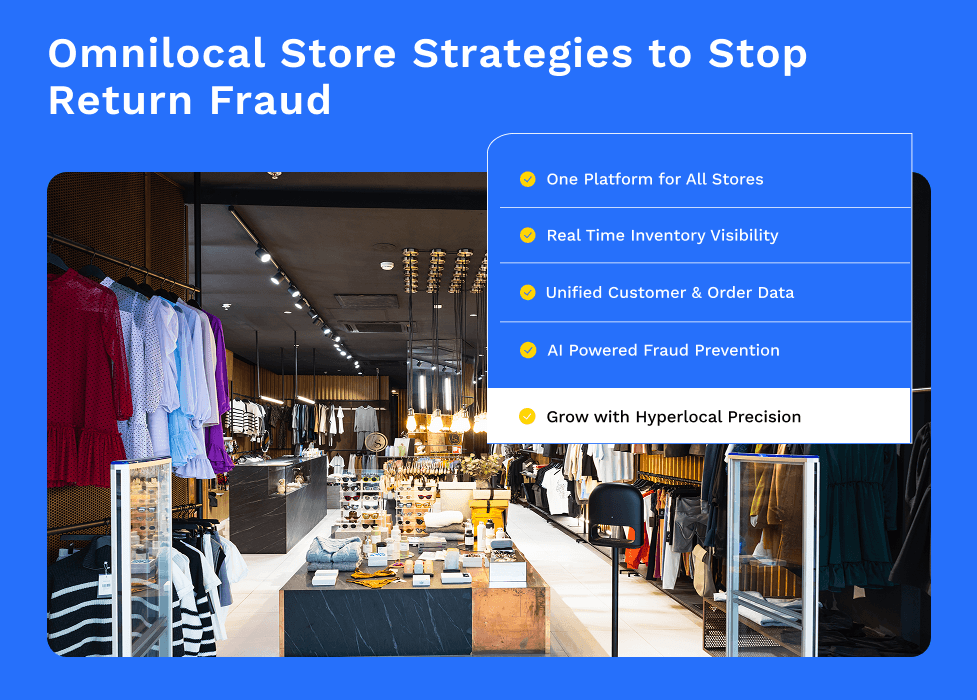
Return fraud is probably costing you more than you think.
Here's what's happening in retail right now: A customer orders a designer handbag online, wears it to a wedding, then returns it in-store claiming it didn't fit. Your store manager processes it without knowing this person has returned five items this month. Why? Because your online system and store POS don't talk to each other.
Fraudsters know this. They've figured out that most retailers can't connect the dots between channels. They buy on your website, return at Store A, then do it again at Store B. By the time you notice the pattern, they're long gone.
Traditional retail systems weren't built for this. Your e-commerce platform lives in one world. Your stores run different software. Your marketplace integrations are separate. Your dealer network? Completely disconnected.
Omnilocal store strategies change that. Instead of scattered data across a dozen systems, you get one unified view. When someone tries to game the system, you catch it before the refund goes through.
In this guide, you'll see 10 practical omnilocal store strategies that real retailers are using right now to stop fraud. No made-up stats, no theory. Just what's actually working for multi-location businesses like yours.
Let's get into it.
What Is Omnilocal Store Strategy and Why It Matters for Fraud Prevention
Most people confuse omnichannel with omnichannel. Here's the difference that matters.
Omnichannel means your customers can shop across multiple channels. Buy online, pick up in store. Return in-store what they bought on your app. It's about giving customers options.
Omnilocal store strategy goes deeper. It's about treating each physical location as its own micro-market while connecting everything through unified data. Every store gets hyperlocal discovery and marketing. Every transaction feeds into one real-time system. Every customer interaction is tracked across all touchpoints.
Why does this matter for stopping fraud?
Because fraud happens in the gaps. When your Delhi store can't see what happened at your Mumbai location, fraudsters exploit it. When your online team doesn't know what's happening in physical stores, return scams multiply. When your dealer network operates independently, tracking cross-location patterns becomes impossible.
Omnilocal store strategies eliminate these gaps. You get:
- Single customer view across every channel and location
- Real-time inventory tracking so you know exactly what was sold where
- Cross-location pattern detection that flags suspicious behavior instantly
- Unified return policies that can't be manipulated by channel-hopping
Think about it this way. Traditional systems are like having security cameras that only record individual stores. An omnilocal store strategy connects all those cameras into one control room where you can spot patterns across your entire network.
That's how you catch the fraudster who's hitting 10 different locations with the same scam.
The 10 Omnilocal Store Strategies That Actually Stop Return Fraud
Strategy 1: Unified Customer Identity Across All Touchpoints

Here's the problem: The same person shows up as different customers in different systems. Online they're abc@email.com. In Store A they used the phone number 98XXXXXXXX. At Store B they paid with a different card. Your systems see three separate people.
How omnilocal platform fixes this
Connect every identifier into one customer profile. Email, phone, device ID, loyalty number, payment methods, shipping addresses. When someone tries to create a new account to bypass return limits, the system flags it instantly.
What you need
- Customer Data Platform (CDP) that merges data from POS, e-commerce, mobile app, and marketplaces
- Identity resolution algorithms that match patterns (same device + different email = probably same person)
- Real-time syncing so updates happen across all systems immediately
Strategy 2: Real-Time Inventory Sync Across Every Location

Fraudsters love inventory blind spots. They return items your store never stocked. They claim they bought something at Location A when that SKU was only available at Location B. They exploit the lag time between channels.
How omnilocal platform fixes this
Live inventory tracking across warehouses, stores, online, and marketplaces. Every sale updates instantly. Every return is validated against actual purchase records. No more "trust the customer" refunds.
What you need
- Cloud-based inventory management syncing every 30-60 seconds
- SKU-level tracking showing which locations carry which products
- Integration between ePOS systems, e-commerce platform, and dealer management system (DMS)
Strategy 3: Location-Based Return Verification

This is where omnilocal store strategies really shine. Use actual geography to validate returns.
How it works
When someone claims they bought an item at your Bangalore store but they're trying to return it 800km away in Mumbai the same day, that's physically impossible. GPS data, geofencing, and location tracking make these scams obvious.
What you need
- Mobile app with location permissions enabled
- Geofencing around each store location (typically 2-5km radius)
- Receipt validation tied to GPS metadata showing where the transaction actually happened
Strategy 4: AI Pattern Recognition That Learns Your Fraud Fingerprints

Here's what humans miss: Statistical patterns that emerge across thousands of transactions.
Someone returns items every Friday. Always high-margin products. Always just under your manager approval threshold. Always different stores. To any individual store manager, this looks random. To AI analyzing your entire network using agentic AI engines, it screams fraud.
How omnilocal AI works
Machine learning models and AI engines analyze return frequency, timing, categories, amounts, and customer behavior across all locations. They identify anomalies that would be invisible to siloed systems.
What you need
- Unified data lake feeding AI models and AI engines with transactions from all channels
- Predictive analytics platform with agentic AI trained on your specific business patterns
- Alert system that flags high-risk returns before they're processed
Patterns AI catches
1. Time-based fraud: Returns spike at specific times (end of month, right after payday, consistently on weekends)
2. Amount clustering: Always returning items priced at ₹1,999 or ₹4,999 (just below certain thresholds)
3. Category targeting: Only returns high-margin categories like electronics or designer apparel
4. Velocity fraud: Same customer across multiple locations in impossible timeframes
5. Receipt fraud: Purchase dates that align suspiciously with promotional periods
Strategy 5: Store-Level Authorization Workflows That Empower Staff

Your store associates are your first line of defense, but only if you give them the right tools and context.
The problem with traditional systems
Associate scans return. The system says "approved" or "denied" with no context. They have no idea this customer has returned 12 items in the past month. They can't see this was purchased during a sale that ended 45 days ago. They're flying blind.
How omnilocal platform fixes this
Dynamic authorization workflows show associates exactly what they need to know, right when they need it. Risk scoring. Purchase history. Return patterns. Manager escalation triggers.
What you need
- Mobile-enabled DMS with real-time customer and transaction history
- Decision-tree logic built into return workflow (if X and Y, then escalate to manager)
- Manager override capabilities with logging for audit trails
Sample workflow
Customer brings item to return desk.
1. Associate scans product barcode
2. System pulls up:
- Original purchase details (date, location, price paid)
- Customer history (total returns, frequency, amounts)
- Risk score (green/yellow/red based on AI analysis)
3. If green: Process immediately
4. If yellow: Additional verification steps required (photo of item, reason code)
5. If red: Automatic manager escalation with full context
Strategy 6: Receipt Validation That Can't Be Faked

Fake receipts are getting scary good. Fraudsters use Photoshop, receipt-printing apps, and even steal real receipt templates from your own stores.
How omnilocal platform stops this
Cross-reference every claimed purchase against actual transaction logs. QR codes, blockchain verification, or secure databases make counterfeiting nearly impossible.
What you need
- Digital receipts with QR codes or unique transaction IDs
- Database linking every receipt to actual inventory movements
- OCR scanning that validates printed receipts against transaction records
How it works in practice
Customer presents receipt for return.
Old way: Associate eyeballs with it. Looks real enough. Processes return. Later discovers the receipt was fake.
Omnilocal way: Associate scans QR code or enters transaction ID. System instantly confirms:
- This transaction actually happened (or didn't)
- At the claimed location and date
- For the exact items being returned
- With the payment method on file
If any detail doesn't match, the return is flagged for investigation.
Strategy 7: Unified Return Policies That Close Channel Loopholes

Different return windows for different channels? Fraudsters love you.
Common loopholes
- Online: 90-day returns
- In-store: 30-day returns
- Marketplace: 45-day returns
Guess what happens? Customers shop around your own policies, claiming the most generous window regardless of where they actually bought.
How omnilocal platform fixes this
One policy tracked consistently across all channels. Purchase date auto-populates. The system calculates exact days since purchase. Red flags anything outside the window.
What you need
- Unified policy enforcement in your return management system
- Automatic date calculation tied to original purchase timestamp
- Clear communication so customers know what to expect
Strategy 8: Payment Method Matching That Stops Cash-Back Scams

This scam is everywhere. Buy with a stolen card. Return for cash or gift card. The real cardholder disputes the charge. You lose twice.
One of the most effective omnilocal store strategies to stop this is simple. Refunds go back to the original payment method. No exceptions unless there is a manager override with proper documentation.
What you need
- ePOS integration that captures and stores original payment details
- System-level enforcement so cash refunds cannot be processed for card purchases
- Safer alternatives like store credit for genuine edge cases
Here is how the scam usually plays out. A fraudster buys ₹50,000 worth of goods, returns them at another store for cash, then disappears. Later, the chargeback hits.
With an omnilocal store strategy, refunds are locked to the original card. If the card is unavailable, the system forces manager approval, store credit, and additional verification. It also flags patterns like repeated lost card claims or high-value cash refund requests.
Strategy 9: Visual AI Verification for Item Condition

“I never wore it.” But the AI sees stretched fabric, makeup marks, missing tags, or resealed packaging.
Wardrobing is a major issue, especially for premium categories. Store associates often notice signs of use but still process returns to avoid confrontation.
This is where omnilocal store strategies combined with AI make a difference. Associates take quick photos during the return. Computer vision models analyze condition, wear, damage, and authenticity, then approve or flag the return.
What you need
Mobile app or in-store camera integrated into the return workflow
Computer vision AI trained on your product categories
Clear standards for what qualifies as acceptable return condition
The AI detects worn apparel, used electronics, damaged packaging, swapped items, and counterfeits, without putting staff in difficult situations.
Strategy 10: Network-Wide Fraud Intelligence Sharing

This is where omnilocal store strategies really shift the balance.
Without shared intelligence, a fraud ring can hit dozens of locations before anyone connects the dots. Each store treats it as an isolated incident.
An omnilocal store strategy ensures that once suspicious activity is flagged at one location, that insight is shared across the entire network in real time. Customer profiles are marked, alerts go out, and other stores are protected immediately.
What you need
- Centralized fraud alert system for stores, dealers, and franchises
- Real-time watch list updates across the network
- Notification system for store teams and regional managers
Fraud intelligence can be shared responsibly by focusing on behavior patterns instead of personal details, using anonymized identifiers, and maintaining clear criteria for adding or removing flags. One store’s experience becomes protection for every other store.
How These Omnilocal Store Strategies Work Together
Individually, each of these omnilocal store strategies closes a specific gap. Together, they form a connected system that is much harder to game.
A unified customer identity makes sure the same person cannot hide behind multiple accounts. Real-time inventory sync ensures returns are validated against what was actually sold and where. Location-based verification adds physical reality checks that simple systems miss.
AI pattern recognition ties everything together. It looks across customer behavior, store activity, timing, and value to surface patterns no single store or team could spot on its own. Visual AI verifies item condition, while payment method matching stops cash-back scams before money leaves the business.
What really changes the game is network-wide intelligence sharing. When one store flags suspicious activity, every other location benefits instantly. The system learns, adapts, and gets sharper with every transaction.
That is the power of an omnilocal store strategy. Instead of fighting fraud store by store, you defend the entire network as one connected operation, without slowing down genuine customers or burdening store teams.
How to Implement Omnilocal Store Strategies in Your Business
Implementing omnilocal store strategies does not mean ripping out everything you already use. It means connecting what you have so data flows instead of getting trapped in silos.
This is where Sekel Tech’s omnilocal platform fits in. It acts as a unifying layer that connects ePOS, e-commerce, marketplaces, dealer systems, and store operations into a single real-time view, without forcing brands to replace their existing tools.
Start by unifying customer and transaction data across channels. With Sekel Tech’s omnilocal platform, purchases, returns, payment methods, and customer identities are stitched together automatically, creating a consistent view across every location.
Next, standardize return logic across stores. The platform enforces return rules consistently while still allowing flexibility by category, location, or customer risk level. Validation happens in the background, so associates are guided by the system rather than relying on memory or guesswork.
Then layer in intelligence. Sekel Tech’s omnilocal platform uses AI and agentic AI engines that learn from your actual transaction patterns. Start in observation mode, allow the system to understand normal behavior, and then progressively enable automated controls as confidence builds.
Store teams are a critical part of success. The platform surfaces only the information associates need at the return desk, keeping workflows simple while improving decision quality.
Finally, think network-wide from the beginning. Sekel Tech’s omnilocal platform ensures that insights from one store immediately protect every other store, dealer, and channel. Fraud prevention becomes a shared, continuously improving capability across the entire business.
Watch the video to see how multi-location retailers simplify store operations and gain centralized control. "From Chaos to Control: Smarter Store Management Starts Here"
How Sekel Tech Powers Omnilocal Store Strategies to Eliminate Return Fraud

Return fraud occurs when online, in store, dealer, and marketplace systems operate in silos. Sekel Tech eliminates these gaps with a closed loop, AI native omnilocal platform that connects every customer, inventory, transaction, and location into one unified system built for multi location retail.
One Platform for 100 to 1,000+ Locations
Sekel Tech replaces fragmented ERP, CRM, POS, and analytics tools with a single dashboard that provides real time visibility across all stores and channels. Every purchase, pickup, delivery, exchange, and return is tracked end to end.
Five Module Omnilocal Framework
Sekel’s platform combines five tightly integrated modules to stop return fraud at scale:
- Unified Commerce ensures real time inventory accuracy across all channels
- Order2Cash creates a complete transaction audit trail from purchase to return
- Hyperlocal Discovery and Geo Fencing verify where customers actually engaged and purchased
- Geo Task Manager enforces standardized fraud checks at every location
- AI Agents continuously detect abnormal return and inventory patterns across the network
Closed Loop Fraud Prevention
All modules operate on the same real time data layer, allowing the system to block fraudulent returns before refunds are issued. Cross store scams, fake receipts, and ghost inventory returns are identified instantly.
Result: lower return fraud, higher inventory accuracy, consistent policy enforcement, and a trusted return experience powered by one scalable omnilocal platform.
Watch the video to get an overview of how an omnilocal platform connects stores, channels, and data. "Sekel Tech Omnilocal Platform: All-in-One Solution for Retail Growth"
FAQs: Sekel Tech and Omnilocal Store Strategies
1. What is an omnilocal store strategy?
An omnilocal store strategy connects online commerce, physical stores, dealer networks, and marketplaces into a single operational system. It allows retailers to manage inventory, orders, customers, and returns in real time across all locations while delivering a seamless local customer experience.
2. How does Sekel Tech help reduce return fraud?
Sekel Tech uses a closed loop platform that links inventory data, transaction history, customer location signals, and AI driven risk analysis. Fraudulent returns are flagged or blocked automatically when there are mismatches in purchase location, inventory availability, payment details, or return behavior.
3. Can Sekel Tech work with our existing ERP, POS, and e-commerce systems?
Yes. Sekel Tech integrates with major ERP, CRM, POS, and e-commerce platforms through API first architecture. This allows businesses to keep their existing systems while gaining a unified, real time omnilocal layer.
4. Is the platform suitable for large multi location businesses?
Sekel Tech is built specifically for enterprises managing hundreds or thousands of locations. The platform is designed to scale, supporting high transaction volumes while enforcing consistent processes and fraud controls across every store.
5. How quickly can businesses see results after implementation?
Most retailers begin seeing measurable reductions in return fraud and improvements in inventory accuracy within the first few months. Because all modules share a real time data layer, fraud prevention improves continuously as the AI models learn from network wide activity.
Conclusion
Return fraud is a growing challenge driven by disconnected systems and inconsistent processes across locations. An effective omnilocal store strategy brings everything together by connecting inventory, transactions, customers, and stores in real time.
Sekel Tech enables this with a closed loop, AI native omnilocal platform designed for multi location businesses. By unifying commerce, Order2Cash visibility, hyperlocal verification, store execution, and AI driven insights, Sekel Tech helps brands reduce return fraud, improve inventory accuracy, and maintain consistent control across all locations.
If you want better visibility, stronger fraud prevention, and smoother store operations, Sekel Tech’s omnilocal platform can help you get there. Reach out to learn more or request a demo.
Read More Blogs:
1. Omnilocal Orchestration Platform for Discovery to Delivery
2. 10 OmniLocal Business Management Tips for Local Success
3. Omnilocal Inventory Management Platform for Smarter Retail
Share


Similar Blogs
Loved this content?
Sign up for our newsletter and get the latest tips & updates directly in your inbox.
There’s more where that came from!
 Connect with us