
Review Management
10 Business Review Management Strategies That Work in 2026
Tue, 26 May 2026 18:30:00 GMT
Speak to our Hyperlocal Expert
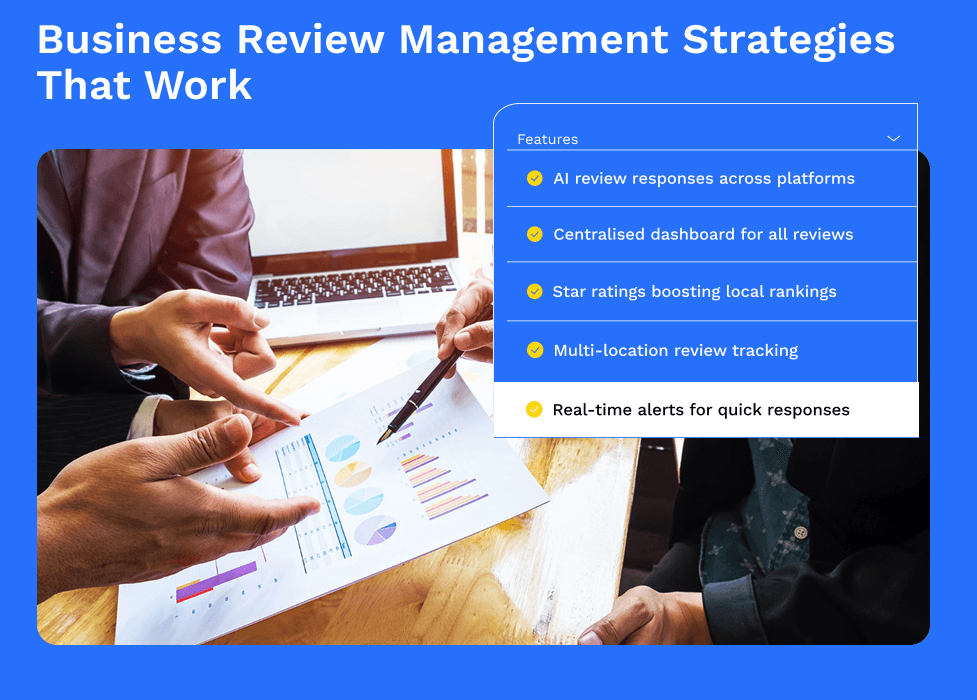
Every brand has reviews. Most brands have no system for them.
A single unanswered 1-star review on your Google Business Profile can cost you customers, not because the review exists, but because your silence signals you do not care. That is the real challenge with business review management in 2026. It is not just about reviews. It is about response speed, consistency, and the system behind it.
The businesses winning local search today are not the ones with the most 5-star reviews. They are the ones that respond consistently, track review performance by location, and treat customer feedback as a growth signal instead of a PR issue.
This guide covers 10 business review management strategies that actually work in 2026 for small businesses, local brands, and service businesses looking to improve trust, visibility, and customer engagement.
What Is Business Review Management?
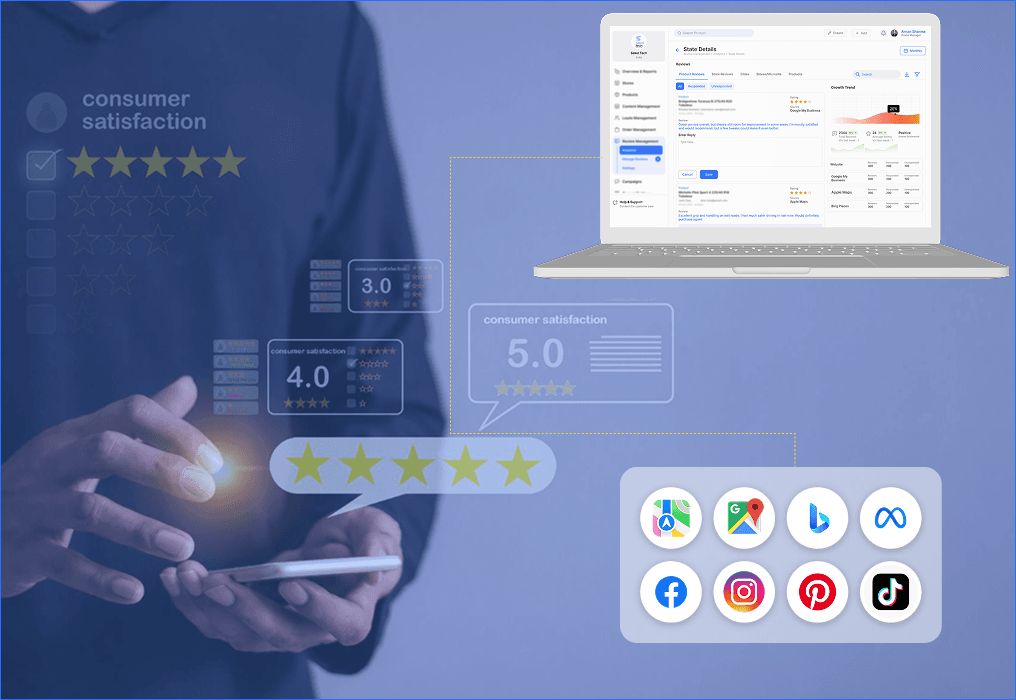
Business review management is the process of monitoring, responding to, and generating customer reviews across platforms like Google, Yelp, Trustpilot, and industry directories to protect and grow your online reputation.
But in 2026, it is more than damage control.
Google now treats review velocity, response rate, and customer sentiment as local ranking signals. AI-generated search summaries and Google SGE also pull review signals directly into search results, making reviews visible before users even click a website. With the rise of zero-click searches, your ratings, responses, and customer sentiment now influence visibility, trust, and conversions instantly.
Effective business review management focuses on three key areas:
- Monitor: track what customers are saying across platforms
- Respond: reply consistently in a way that reflects your brand
- Analyse: use review insights to improve operations and visibility
Most businesses do these inconsistently. The ones outperforming competitors have a system that manages all three at scale through centralised review tracking, automated responses, and location-level analytics.
Why Business Review Management Matters More Than Ever in 2026
Here's a number worth sitting with: 93% of consumers say online reviews influence their purchase decisions, ranking higher than paid ads, influencer recommendations, and even brand websites. That is not a trend anymore. That is how trust gets built before a transaction happens, and businesses still treating reviews as an afterthought are quietly losing ground to competitors who figured this out years ago.
Google's local ranking algorithm now actively factors in review velocity, response rate, and sentiment patterns across your review profile. According to Google's own local search guidelines, businesses that engage with reviews consistently are considered more reputable and more likely to appear in local results. On top of that, Google's AI-generated search overviews now pull star ratings and review highlights directly into results, meaning your review profile shapes what a searcher sees before they ever click your link. Business review management online has moved from a reputation task to a visibility and ranking discipline.
The businesses winning local search today are not necessarily the ones with the most reviews. They are the ones responding consistently, monitoring every platform, and treating feedback as a performance signal. Sekel Tech's review management platform brings all of this together in one place, covering AI-powered responses, centralised review monitoring across Google My Business and microsites, and geo-level analytics down to individual store level, so no location falls behind and no review goes unanswered.
10 Proven Business Review Management Strategies for 2026
- Strategy 1: Build a Review Generation System, Not a One-Time Ask

Most small businesses ask for reviews inconsistently, verbally, with no follow-up, which is why review volume stays flat while competitors build momentum through a single automated SMS flow. A proper small business review management system removes the human variable entirely: the task goes out automatically after a purchase, service completion, or support resolution, when the customer is at peak willingness. Sekel Tech's platform automates this entire request workflow, connected directly to your store and GMB data, so the right customer gets the right task without anyone on your team remembering to send it.
- Strategy 2: Respond to Every Review, Positive and Negative

Response rate is a confirmed local ranking signal, but most businesses only respond when something goes wrong, which is exactly backwards. Responding to positive reviews increases repeat purchase likelihood, and responding to negative ones publicly demonstrates accountability in a way that actually converts sceptical prospects reading your profile. The formula for a negative response is simple: acknowledge the experience, apologise where warranted, and move the resolution offline. According to Harvard Business Review, businesses that respond to reviews consistently see measurable rating improvements over time. Sekel Tech's AI Agent Review Response analyses sentiment and crafts professional replies automatically, ensuring no review across any location goes unanswered.
- Strategy 3: Use Local Business Review Management to Dominate Nearby Search

Google's local map pack ranks businesses based on review count, recency, response rate, and the language customers use inside reviews, all signals you can actively influence. Encouraging customers to naturally mention the city, service type, or neighbourhood in their review adds location relevance that generic five-star ratings do not. For multi-location brands, local business review management means each store maintains its own active review profile rather than relying on central responses that feel disconnected from the local customer. Sekel Tech's Manage Reviews dashboard covers Google My Business and microsites in one place, making it practical to manage local review activity across every location without things falling through the cracks.
Managing reviews across multiple locations requires a dedicated system. Read our complete guide on Multi-Location Review Management to see how leading brands do it at scale.
- Strategy 4: Turn Negative Reviews Into a Trust Signal
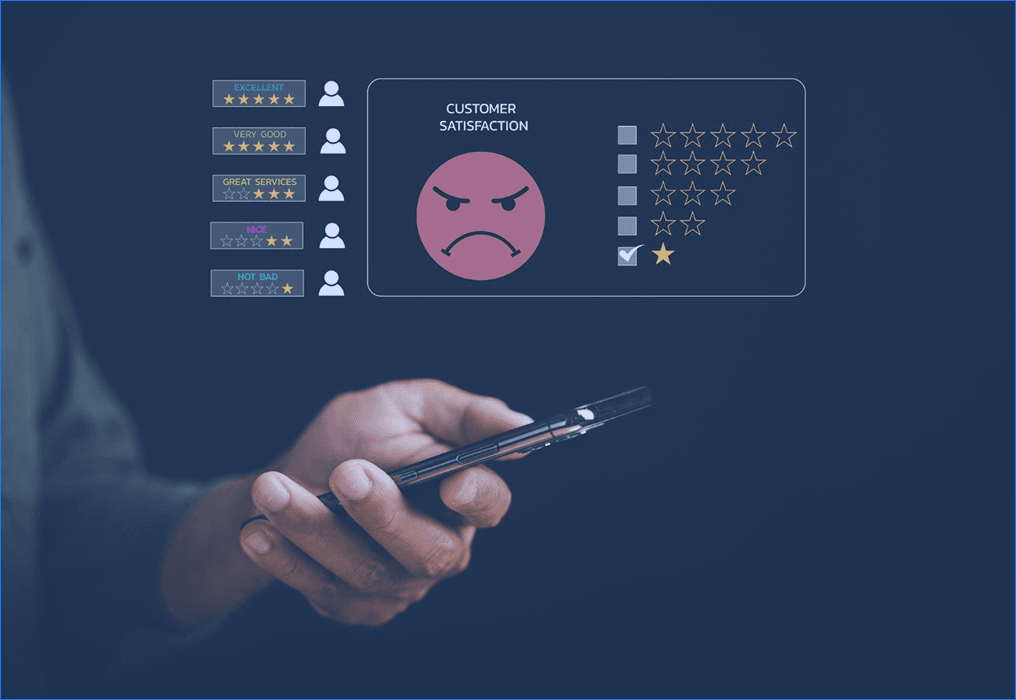
A profile with nothing but five-star reviews triggers suspicion in modern buyers, because real customer experiences are never perfectly uniform, and sophisticated shoppers know it. A one-star or two-star review handled with professionalism, empathy, and a genuine offer to resolve the issue publicly demonstrates the kind of accountability that advertising cannot manufacture. Google also allows businesses to flag reviews that violate content policies for removal but in most cases a well-crafted public response does more for conversion than removal ever would.
- Strategy 5: Integrate Review Management Into Your Service Business Workflow

Service businesses run on trust more than any other category, and reviews are the most scalable form of trust available, yet most service providers treat the review task as an awkward afterthought rather than a built-in step. Building the task into the service close, whether that is a technician completing a job, a consultant wrapping a project, or a clinic finishing an appointment, turns every satisfied customer into a potential review without anyone having to think about it. For high-ticket service business review management, a personalised follow-up outperforms an automated template every time, because the relationship warrants it and the customer notices the difference. Moz's Local Search Ranking Factors study consistently highlights review signals as among the top local ranking inputs for service category businesses.
- Strategy 6: Monitor All Platforms From One Dashboard

The reason most businesses fall behind on business review management online is not lack of intention, it is the operational reality of checking Google, Yelp, Trustpilot, Facebook, and industry directories separately and consistently, which simply does not happen without a system. A centralised online review management platform aggregates every review into one feed, sends alerts when new reviews land, and gives the team a single place to respond rather than five separate logins. Sekel Tech's Manage Reviews dashboard does exactly this, covering GMB, microsites, and product reviews in one panel with filter, search, and export functionality, so the team sees everything and nothing gets missed regardless of how many locations or platforms are in play.
Not sure which tools to evaluate? Here is our curated list of the 10 Best Review Management Tools for Better Local Discovery.
- Strategy 7: Showcase Reviews as Conversion Assets on Your Website
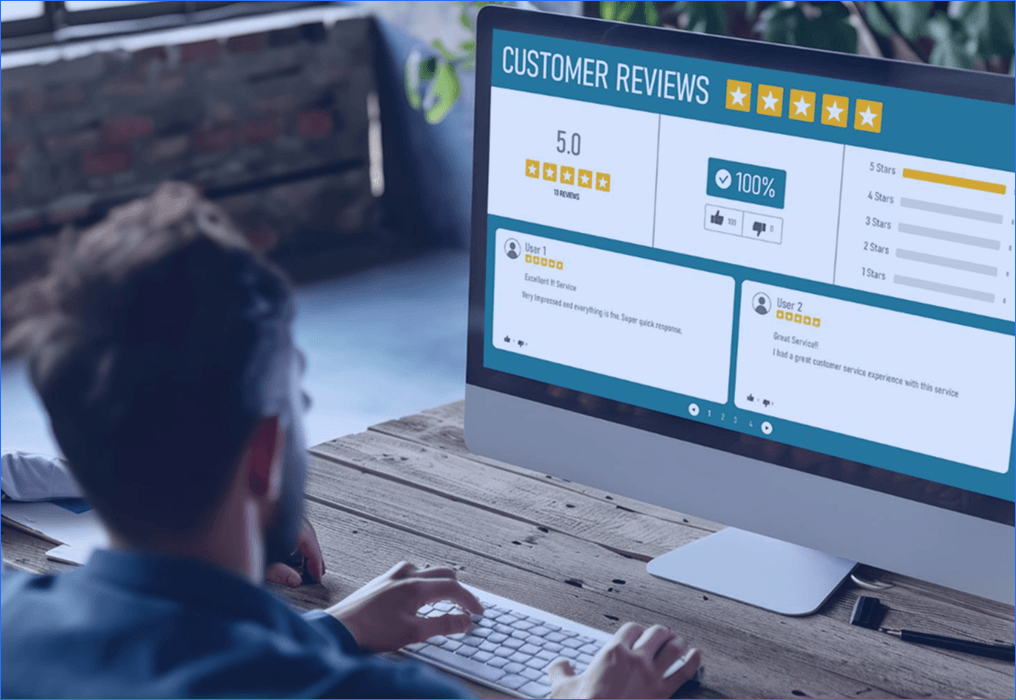
Reviews should not live only on third-party platforms when your own website is where purchase decisions get finalised. Embedding reviews on service pages, homeplates, and landing pages keeps the trust signal exactly where conversion happens, and adding review schema markup means Google can display star ratings directly in search results, improving click-through rate before the visitor even arrives. For service and local businesses, video testimonials carry the highest trust weight of any format because they are the hardest to fake and the easiest for a prospect to relate to. Google's structured data documentation covers exactly how to implement a review schema to qualify for rich results.
- Strategy 8: Use Review Data to Improve the Business, Not Just the Rating

Recurring complaints in reviews are an operations problem wearing a reputation costume, and the businesses that treat them as such consistently outperform those that treat every negative review as a PR event to manage. Sentiment analysis across your review profile reveals patterns: what customers consistently praise, what they flag, which locations underperform, and which service elements need attention before they become a pattern. Sekel Tech's Review Analytics breaks this down geographically by country, state, city, and individual store, giving multi-location brands the visibility to identify which locations are building the brand and which need intervention, rather than waiting for a rating drop to signal a problem that has been brewing for months.
Reviews hold more business intelligence than most brands realise. See how to act on it in our guide: 10 Review Management Strategies: Turn Feedback into Growth.
- Strategy 9: Train Your Team on Review Response Standards

One dismissive reply from a junior staff member can undo ten positive reviews in the mind of a prospect reading the profile, which is why response consistency matters as much as response rate. A simple internal guide covering tone, structure, escalation path for difficult reviews, and who owns the process removes the ambiguity that leads to inconsistent or defensive responses. For small business review management where one person often wears every hat, building a 24-hour response habit is the standard worth setting, because review recency and engagement frequency both factor into how Google evaluates the profile over time.
- Strategy 10: Track Review Performance as a Business KPI
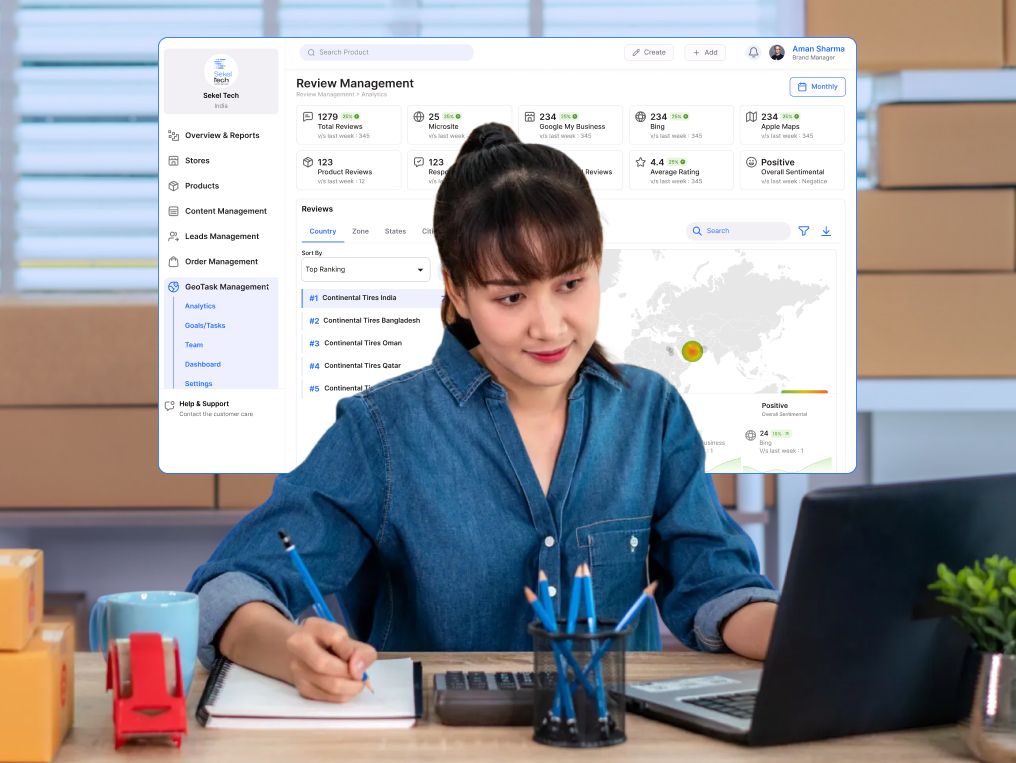
Review management without measurement is a maintenance task; review management with measurement is a growth strategy. The metrics worth tracking are review volume, average star rating, response rate, review velocity, and platform distribution, benchmarked monthly against competitors in the same geography and category. Sekel Tech's weekly reporting view and store-level analytics make this straightforward for multi-location brands, turning what is usually a manual audit into a live performance dashboard. Setting quarterly targets for review volume and response rate, the same way you would for any revenue metric, is what separates brands that manage reviews reactively from brands that use them to compound local visibility over time.
Watch the video to see how Sekel Tech brings listings, content, reviews, and sales into one single platform.
How to Choose the Right Business Review Management Software in 2026
Choosing business review management software comes down to separating what looks good in a demo from what actually holds up when your team is using it daily across locations and platforms. Here is what to evaluate before committing:
- Must-have features :
- Multi-platform monitoring across Google, Yelp, Facebook, and industry directories
- Automated review request workflows triggered by purchase or service completion
- Response templates with tone customisation for different review types
- Reporting dashboard with response rate, volume, and sentiment tracking
- Sentiment tagging to identify patterns across positive and negative feedback
- Nice-to-have features :
- AI-assisted response drafting that matches your brand voice
- CRM integration so review data connects directly to customer records
- White-label options for enterprises managing reviews across multiple brands or markets
- Red flags that signal a platform is not enterprise-ready:
- Review data is locked with no clean export option
- No API access for integration with existing business tools
- Poor mobile UX, because review activity does not follow office hours
The one question every vendor must answer before you sign: "Can I export all my review data if I leave?"
Sekel Tech's Review Management covers every requirement on this list, from AI-powered auto-responses and centralised GMB and microsite monitoring to geo-level analytics and weekly store-level reporting, purpose-built for multi-location brands and enterprises that need full visibility across every location without operational gaps.
Business Review Management for Small, Local, and Service Businesses: Key Differences
Business review management is not a one-size-fits-all discipline, and applying the same strategy across different business types is one of the most common reasons brands plateau despite doing everything else right.
For small business review management, volume is the core challenge. Fewer transactions mean fewer natural review opportunities, so the automated ask system is not optional - it is the entire strategy. For local business review management, geography is the ranking lever. Review recency, response consistency, and location-specific language customers use inside reviews all feed directly into Google's map pack algorithm. For service business review management, trust is the conversion lever. Prospective clients are evaluating risk, and a strong review profile reduces that perceived risk faster than any other content format available.
Business Type | Primary Challenge | Key Lever | Priority Action |
| Small business | Low review volume | Automated ask system | Set up triggered post-purchase requests |
| Local business | Map pack visibility | Geo-relevant review language | Encourage location-specific feedback |
| Service business | Prospect trust | Risk reduction through social proof | Build reviews into the service close |
The common thread across all three is this: consistency of response beats volume of reviews in Google's eyes. A business responding to every review across 80 profiles outperforms one with 200 reviews and silence beside them, every time.
Watch the video to see how top retailers are using local review signals to drive rankings and real footfall.
Frequently Asked Questions(FAQs)
1. How many reviews does a business need to rank locally?
There is no fixed number that guarantees local ranking. Recency and response rate carry more weight than volume alone, and a business with 40 recent, consistently responded-to reviews will typically outperform one sitting on 200 old, ignored ones. Google rewards active engagement over accumulated totals.
2. Can I delete a bad Google review?
Only if it violates Google's content policies, which covers fake reviews, spam, and prohibited content. You can flag it for removal through your Google Business Profile, but you cannot remove a review simply because you disagree with it.
3. How do I get more reviews without incentivising them?
Timing and friction reduction are the two levers. Ask immediately after a positive interaction, send a single direct link to your review profile, and make it a one-tap process for the customer. Incentivised reviews violate Google's terms and risk account suspension, which creates a far bigger problem than a slow review count.
4. Is business review management online different from offline reputation management?
Online review management is measurable, platform-specific, and directly tied to local search rankings, making it a discipline with clear inputs and trackable outputs. Offline reputation is broader and harder to quantify. Managing your reputation online is where brands can take systematic action and see direct results in visibility and conversion.
5. How does Sekel Tech help businesses manage reviews at scale?
Sekel Tech's Review Management module gives multi-location brands and enterprises a single dashboard covering AI-powered auto-responses, centralised monitoring across Google My Business and microsites, and geo-level analytics broken down by country, state, city, and individual store. For businesses managing reviews across dozens or hundreds of locations, that level of visibility and automation is what turns review management from a manual task into a consistent growth system.
Conclusion
Business review management in 2026 is not about protecting your reputation from the occasional bad review. It is a growth channel, a local ranking signal, and a direct input into how much a prospective customer trusts you before they ever make contact. The businesses winning locally right now are not the ones with the most stars. They are the ones with a system behind every task, every response, and every piece of feedback they receive.
Building that system does not have to start from scratch. Sekel Tech's Review Management platform gives brands the infrastructure to monitor, respond, and analyse reviews across every location and platform from a single dashboard, so consistency stops being a goal and starts being the default.
The brands that treat business review management as a core business discipline in 2026 are the ones that will be hardest to displace in 2027.
How to Choose the Best Review Management Platform for You?
Share


Similar Blogs
Loved this content?
Sign up for our newsletter and get the latest tips & updates directly in your inbox.
There’s more where that came from!
 Connect with us