
Multi-Location Marketing
Multi-Location Local Engagement Platform: Complete Guide
Mon, 16 Feb 2026 15:00:54 GMT
Speak to our Hyperlocal Expert
Your Mumbai store is thriving. Delhi is struggling. Bangalore just hit record sales. Why does the same brand perform so differently across locations? Each store serves different customers, faces different competitors, and responds to local demand, yet most brands market to all locations the same way.
Here is what truly matters. Seventy three percent of customers search “near me” before visiting a store. They are looking for the closest location, available products, and immediate relevance. Traditional marketing treats 500 stores as one entity, sacrificing local relevance for central control.
This is where multi location local engagement becomes critical.
A multi location local engagement platform combines enterprise scale with hyperlocal precision. Each store gains localized discovery, targeted outreach, and personalized engagement while leadership retains brand consistency and visibility.
In this guide, you will learn what multi location local engagement means, how it differs from omnichannel, ROI outcomes, and implementation steps clearly.
What Is Multi-Location Local Engagement and Why It Matters
Multi-location local engagement means treating every physical store or outlet as a unique micro-market, while still operating with a unified brand, strategy, and data backbone. Each location has its own customers, competitors, and demand patterns, and success depends on addressing those local realities without losing enterprise-wide control. This approach combines hyperlocal relevance with enterprise scale.
Multi-location local engagement differs from traditional retail marketing. Multichannel models operate in silos, while omnichannel connects channels but often ignores location-level nuance. A proper multi-location local engagement platform enables brands to localize execution while keeping intelligence centralized.
There are three core principles behind this model.
1. Local autonomy
Each store maintains its own digital presence through local listings, microsites, and search visibility. Campaigns, promotions, and inventory messaging can be tailored to local demand rather than dictated solely by headquarters.
2. Unified intelligence
All locations feed into a central data platform, allowing leadership to view performance holistically, identify patterns, and coordinate strategies that benefit from network effects across regions.
3. Scalable execution
Brands can deploy campaigns across hundreds of locations in hours, using standardized workflows that still allow local customization, all managed through one system.
Traditional approaches fail because national campaigns ignore regional context, stores operate in silos, and leadership lacks visibility into where execution breaks down. Retailers adopting multi-location local engagement typically see higher local search visibility, stronger store-level conversions, and increased customer lifetime value driven by relevance.
Key Features of a Multi-Location Local Engagement Platform
Not all platforms are built the same. What separates a true multi-location local engagement platform from point solutions is its ability to connect discovery, marketing, operations, and intelligence at scale. These features make a multi-location local engagement platform effective and sustainable for enterprise growth.
1. Hyperlocal Discovery Engine
At the foundation is hyperlocal discovery. Each location is optimized individually through Google Business Profiles, store-specific microsites, and scalable local SEO built around city, neighborhood, and landmark-based keywords. This matters because nearly half of all Google searches carry local intent, and most “near me” searches happen on mobile. Stores with optimized local presence consistently see higher foot traffic from digital discovery. For example, a fashion retailer with 300 stores enabled each location to rank for landmark-based searches, resulting in a significant increase in store visits driven by local search.
2. Geo-Fenced Marketing Automation
This feature allows brands to target customers within a defined radius of each store, trigger campaigns based on proximity, time, or context, and dynamically allocate spend based on store-level demand. Geo-targeted campaigns convert better because they reach customers who can act immediately, reducing wasted spend and improving ROI.
3. Unified Customer Data Across Locations
A single customer view across the network ensures that customers are recognized regardless of which store they visit. Purchase history, preferences, and loyalty data travel with the customer, enabling better service, preventing duplicate outreach, and identifying high-value customers across the entire footprint.
4. Store-Level Performance Analytics
Granular analytics provide real-time visibility into how each store performs. Leaders can compare similar locations, identify winning patterns, and replicate success systematically across the network.
5. Field Team Coordination Tools
Execution depends on consistency. Task assignment, real-time tracking, and mobile-first tools ensure strategies are implemented correctly on the ground. These capabilities are essential for successful multi-location local engagement at scale.
How Multi-Location Local Engagement Drives Revenue Growth

This is where multi-location local engagement transforms economics across the entire customer journey, from discovery to retention. The right multi-location local engagement platform impacts every stage by aligning local relevance with execution discipline.
Stage 1: Discovery (Top of Funnel)
Without a platform, customers searching for nearby stores see inconsistent results. Some locations appear, others do not, and competitors with stronger local SEO capture intent. With a multi-location local engagement platform, every store is optimized for local search with accurate listings, location-specific content, and complete profiles. The result is a substantial increase in local search impressions, more “get directions” actions, and significantly higher inbound calls to stores.
Stage 2: Consideration (Middle of Funnel)
Without localization, ads target broad audiences with generic messaging, regardless of proximity. With a platform, geo-fenced campaigns reach customers near specific stores, using localized offers and retargeting based on prior search behavior. This drives higher conversion rates, lower acquisition costs, and more store visits from paid campaigns.
Stage 3: Purchase (Bottom of Funnel)
Without context, store teams treat every visitor the same. With unified customer data, staff can recognize customers, reference prior interactions, and personalize the experience. This leads to higher in-store conversion and larger transaction sizes.
Stage 4: Retention (Post-Purchase)
Generic post-purchase communication gives way to location-aware engagement. Customers receive relevant, timely messages tied to nearby stores, increasing repeat visits and lifetime value substantially.
Step-by-Step: Implementing Multi-Location Local Engagement in Your Business
Implementing multi-location local engagement requires a structured, phased approach, especially for retailers with 100 or more locations.
Phase 1: Audit and Baseline (Weeks 1-3)
Start by mapping your current state. Document every store location, its digital presence, and how marketing is currently executed. Analyze local search visibility, foot traffic, and store-level engagement to establish a baseline. This phase highlights gaps, such as missing or incomplete listings, uneven performance across locations, and competitors winning local searches. The outcome is a clear audit report that quantifies opportunity and prioritizes action.
Phase 2: Platform Selection and Setup (Weeks 4-8)
Select a platform that supports hyperlocal discovery, geo-targeted marketing, unified customer data, analytics, and field execution. Your multi-location local engagement platform should enable integration with existing POS, CRM, and ERP systems. Configure location profiles, connect data sources, and set up dashboards to ensure visibility before launch.
Phase 3: Pilot Launch (Weeks 9-14)
Roll out a pilot across 10 to 20 diverse stores. Optimize local listings, launch geofencing campaigns, and empower store managers with localized tools. Track performance weekly and refine tactics based on real results.
Phase 4: Network-Wide Rollout (Weeks 15-26)
Scale in waves, starting with high-impact locations. Support each wave with training, playbooks, and coordinated task execution to ensure consistency.
Phase 5: Continuous Optimization (Ongoing)
Sustained success comes from ongoing reviews, experimentation, and sharing best practices, turning local execution into a long-term competitive advantage.
How Sekel Tech's Multi-Location Local Engagement Platform Works
Sekel Tech's multi-location local engagement platform delivers enterprise scale with hyperlocal precision. We are a hyperlocal discovery & omni-commerce platform built specifically for multi-location retail enterprises, serving Fortune 100 brands operating 100 to 1,000+ locations globally across retail chains, QSR brands, automotive dealers, and manufacturer-dealer networks. Purpose-built for multi-location local engagement at scale, Sekel Tech replaces fragmented systems such as Oracle, SAP, Salesforce, and multiple point solutions with one unified, AI-native platform built on a single data foundation.
Module 1: Hyperlocal Discovery Platform
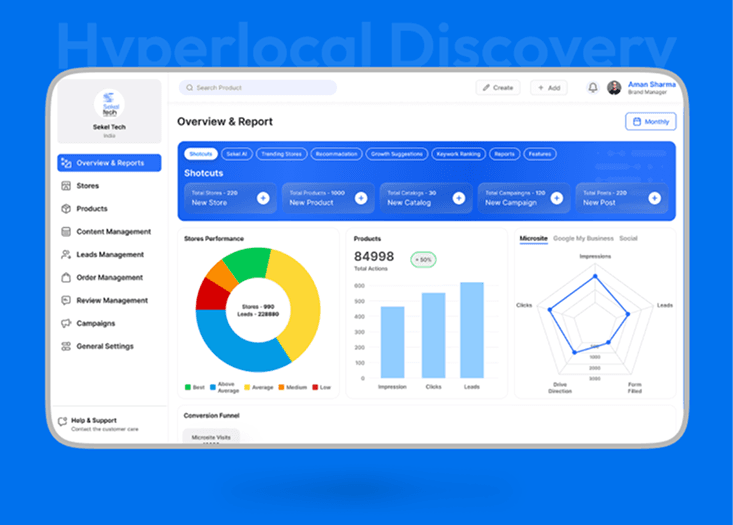
The Hyperlocal Discovery Platform ensures every store functions as a fully optimized digital storefront. It includes individual Google Business Profile management for each location, store-specific microsites with localized SEO content, automated listings across Apple Maps, Bing, Yelp, and other directories, and centralized review management at scale. Corporate teams retain centralized control while enabling location-level customization, with real-time updates to hours, promotions, and inventory hints across all listings.
Module 2: Geo-Fenced Paid Ads
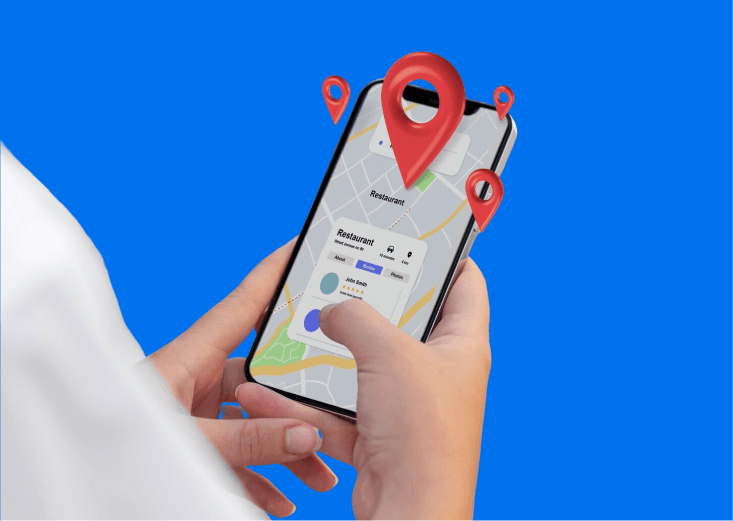
Geo-Fenced Paid Ads enable precision targeting within customizable radii, typically between 1 and 10 kilometers per store. Campaigns dynamically adjust budgets based on store traffic patterns and optimize by time of day, day of week, and even local weather triggers. This ensures ad spend reaches customers close enough to convert, eliminating waste and increasing relevance.
Module 3: Order2Cash (O2C)
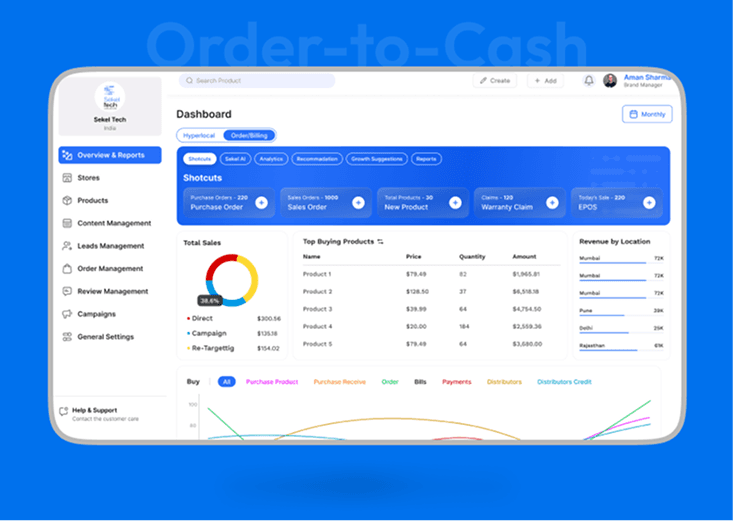
Order2Cash connects discovery to revenue through unified customer profiles across all locations and channels. It tracks transactions from the first digital touchpoint to final purchase, routes leads automatically to the appropriate stores, and enables online-to-offline attribution. Store teams gain visibility into complete customer histories, including purchases at other locations, allowing personalized engagement and eliminating duplicate outreach.
Module 4: Geo Task Manager
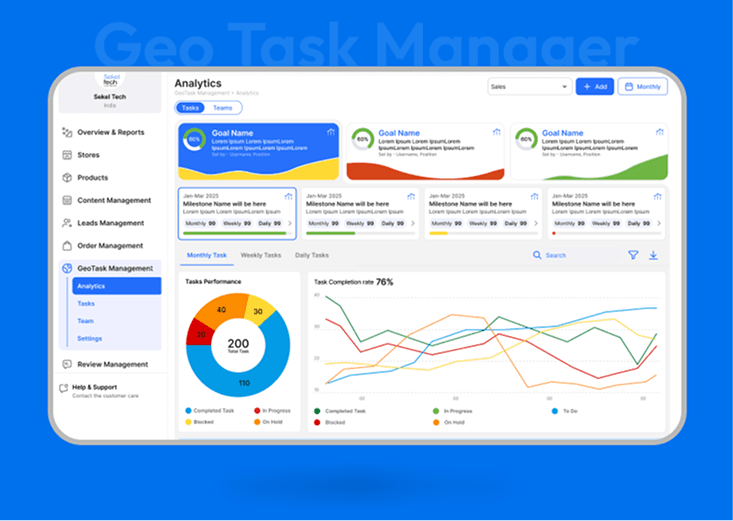
Geo Task Manager ensures execution consistency across hundreds of locations. It allows task assignment to specific stores or regions, provides a mobile-first interface for field teams, and includes photo or video verification of completion with real-time compliance reporting. Brands can deploy promotions, merchandising updates, and operational changes across 500+ locations in hours while verifying execution.
Module 5: Five Agentic AI Engines
Sekel Tech’s Five Agentic AI Engines continuously optimize performance at the store level. The Demand Forecasting Agent predicts inventory needs per location, the Dynamic Pricing Agent recommends store-specific pricing adjustments, the Promotion Intelligence Agent identifies optimal campaigns per market, the Logistics Agent optimizes replenishment and distribution, and the Content Automation Agent generates localized marketing content at scale. These AI engines learn from each store’s traffic patterns, seasonality, and customer behavior.
Platform Capabilities and Business Advantages
Capability | What It Means for Your Business | Strategic Benefit |
| Unified Data Foundation | Discovery, marketing, operations, and transactions connected in one system | Single source of truth, no data silos |
| Hyperlocal + Enterprise Control | Central governance with location-level customization | Brand consistency with local relevance |
| AI-Driven Optimization | Continuous learning from store-level data | Smarter inventory, pricing, and promotions |
| Scalable Deployment | Campaigns launched across 500+ locations in hours | Faster time to market |
| Real-Time Visibility | 30-second data synchronization across systems | Immediate performance insights |
| Integrated Architecture | Connects with POS, ERP, CRM, and e-commerce systems | No disruption to existing infrastructure |
| Verified Execution | Compliance tracking through Geo Task Manager | Strategy implemented consistently on ground |
| Enterprise-Grade Security | SOC 2 Type II, ISO 27001, GDPR compliant, India data residency | Governance confidence and risk mitigation |
Watch the video to get a quick overview of how Sekel enables enterprise-scale hyperlocal engagement. "What is Sekel Tech and How Does It Empower Brands & Retailers?"
Why Sekel Tech for Multi-Location Local Engagement
Sekel Tech is purpose-built for multi-location retail, not adapted from unrelated use cases. Our native AI is trained on retail and dealer network patterns rather than generic models. We replace five to ten fragmented systems with one unified platform proven at scale with Fortune 100 enterprises operating 1,000+ locations. Implementation typically takes 16 to 26 weeks from contract to full deployment, with measurable ROI and a typical payback period of 6 to 12 months.
Sekel Tech's multi-location local engagement platform delivers visibility, coordination, intelligence, and sustained revenue growth across every location in your network.
Frequently Asked Questions (FAQs)
1. How to do local SEO for multiple locations?
To do local SEO for multiple locations, each store must be treated as an individual digital entity. This includes creating and optimizing a Google Business Profile for every location, building store-specific landing pages with localized keywords, managing reviews consistently, and ensuring NAP (Name, Address, Phone) accuracy across directories. A scalable multi-location local engagement platform helps manage local SEO centrally while enabling location-level customization and real-time updates.
2. What are location-based services platforms?
Location-based services platforms use geographic data to deliver targeted marketing, search visibility, and customer engagement based on proximity. These platforms enable features such as geo-fenced advertising, local search optimization, store-level promotions, and proximity-triggered notifications. For multi-location enterprises, they ensure customers see the nearest store with relevant offers at the right time.
3. What is multi-location management?
Multi-location management refers to the centralized oversight and coordination of operations, marketing, performance tracking, and customer engagement across multiple physical locations. It involves maintaining brand consistency while allowing local flexibility. Modern platforms combine data, automation, and analytics to ensure consistent execution across hundreds or thousands of stores.
4. Why is multi-location local engagement important for retail chains?
Retail chains operate in diverse micro-markets where customer behavior, competition, and demand vary by region. Multi-location local engagement ensures each store is visible and relevant locally while benefiting from shared intelligence across the network. This leads to stronger search visibility, higher store visits, and improved conversion rates.
5. What is the difference between omnichannel and multi-location local engagement?
Omnichannel connects different customer touchpoints such as online and offline channels. Multi-location local engagement goes further by localizing those interactions at the store level. While omnichannel ensures continuity across channels, multi-location local engagement ensures relevance across locations, combining centralized intelligence with hyperlocal execution.
Conclusion
Multi-location local engagement is how modern retail must operate in 2026. National campaigns cannot account for local market differences, and each store needs local relevance while benefiting from shared network intelligence. The right multi-location local engagement platform unifies enterprise scale with hyperlocal precision.
Your customers search locally, compare locally, and buy locally. If your engagement strategy is not locally optimized, you are invisible at the moment of intent.
Retailers implementing true multi-location local engagement consistently see significant gains in search visibility, foot traffic, conversion rates, and long-term ROI.
The retailers winning in 2026 will not be those with the most locations, but those empowering every location with connected intelligence.
Read More Blogs:
1. 2026 Holiday Marketing Strategies for Multi-Location Brand
2. Multi-location Hospitality Marketing Tips to Boost Bookings
Share


Similar Blogs
Loved this content?
Sign up for our newsletter and get the latest tips & updates directly in your inbox.
There’s more where that came from!
 Connect with us