
Location Based Marketing
Importance of Location-Based Marketing: Power of Geolocation
Mon, 05 Jun 2023 04:45:07 GMT
Speak to our Hyperlocal Expert
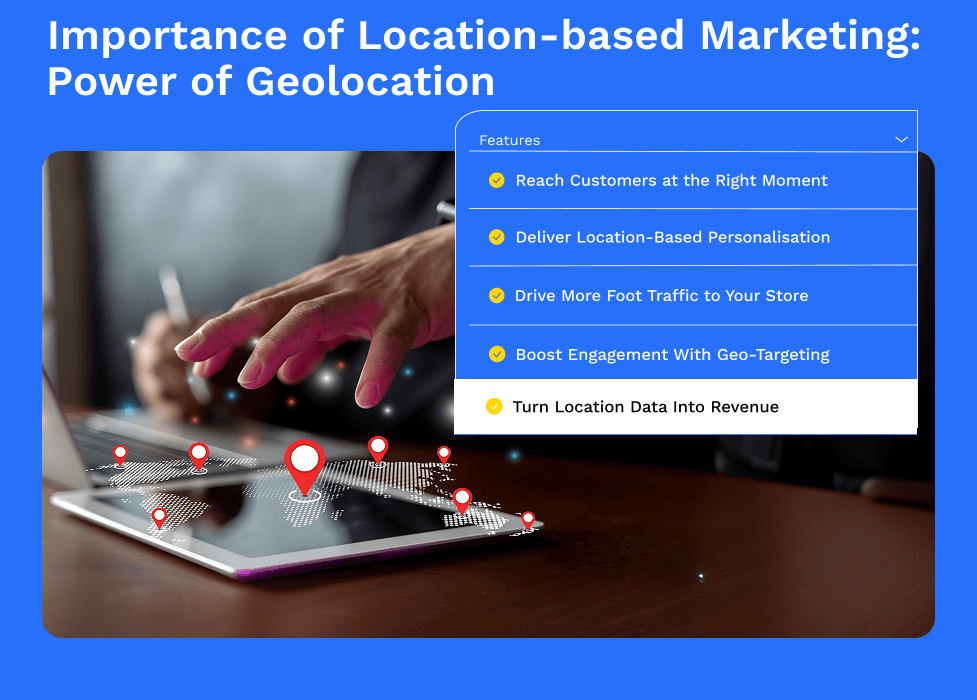
Importance of location based marketing lies in the rapid growth as consumers expect a personalised experience across all touchpoints, and businesses can use this type of marketing to communicate with their customers through multiple channels.
Location-based marketing is a growing trend in the marketing industry, leveraging the power of geolocation technology to deliver personalised and relevant marketing messages to consumers. Utilizing their present location or previous location information, firms can target clients with pertinent marketing messages depending on their actual location. With the rise of smartphones and the increasing availability of location data, businesses now can connect with their customers in real-time and at the right place and time.
In this blog, we will explore the importance of location-based marketing for businesses and how it can help them increase targeted marketing, improve customer engagement, and enhance the overall customer experience. We will also dive into the types of location-based marketing, examples, trends and how businesses can effectively leverage geolocation technology to achieve their marketing goals.
What Is Location-Based Marketing?

Location-based marketing is a strategy that uses a consumer's physical location (current or historical) to deliver targeted, relevant marketing messages. It allows businesses to connect with potential customers based on where they are in the real world, not just who they are online.
Also referred to as geolocation marketing or location marketing, this approach uses technologies like GPS, Wi-Fi, Bluetooth beacons, and IP-based targeting to identify where a user is and trigger personalised content accordingly. A customer walking past your store can receive a push notification about today's offer. A shopper inside a mall can see an in-app ad for a nearby brand. A traveller at an airport can be targeted with a hotel promotion for their destination city.
The result is marketing that feels less like advertising and more like a useful, well-timed recommendation.
New to location-based marketing? This video walks you through everything from the core concept to the key types - giving you a solid foundation before diving into strategy. "What Is Location Based Marketing in 2023: A Complete Guide"
Importance of Location-Based Marketing
Location-based marketing plays a crucial role in modern marketing strategy. By leveraging location data, businesses can create tailored campaigns that resonate with their audience and improve the customer experience - leading to higher engagement and better ROI.
The importance of location-based marketing lies in its ability to provide businesses with actionable data insights. Rather than guessing what customers want, businesses can observe real-world behaviour where people go, when they visit, and what triggers a conversion and use that intelligence to make smarter campaign decisions.
Location-based marketing also delivers a competitive advantage. Businesses that reach customers at the moment of intent, when they're physically near a store, event, or relevant location are far more likely to convert than those relying on broad, untargeted outreach.
Overall, location-based marketing is an essential component of any comprehensive marketing strategy. For businesses looking to remain competitive and relevant, the importance of location-based marketing cannot be overstated.
Read Also: What Is Location Based Marketing in 2026: A Complete Guide
Reasons to Use Location-Based Marketing
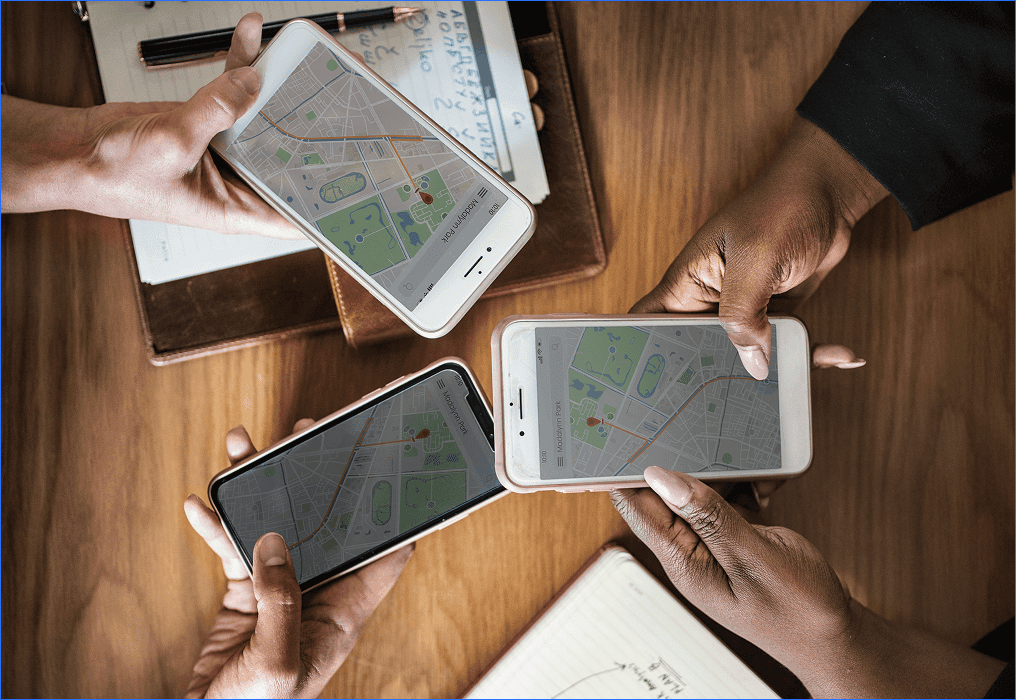
There are several compelling reasons why businesses across industries are investing in location-based marketing:
- Reach customers at the moment of intent.
When a customer is near your store or a competitor's, they're already primed to buy. Location-based marketing lets you intercept that moment with a relevant offer.
- Improve campaign relevance.
Generic ads have low engagement. Location-contextualised messages tied to where someone is right now - dramatically improve relevance and click-through rates.
- Reduce wasted ad spend.
Targeting by geography means you're spending your budget on the audiences most likely to convert, not broad segments that may never set foot near your business.
- Gain real-world behavioural data.
Location data reveals how customers move through the world, which stores they visit, how frequently, and for how long - giving you intelligence that no survey can replicate.
- Increase foot traffic and in-store sales.
Location triggers can drive customers into physical locations who might otherwise have walked past.
- Build stronger customer loyalty
Personalised, location-aware experiences make customers feel seen and valued, which increases repeat purchase rates and brand affinity.
The Benefits and Disadvantages of Location-Based Marketing
- Benefits
Precision targeting: Reach customers based on their exact location, reducing wasted impressions and improving conversion rates.
Real-time relevance: Deliver messages in the moment - when a customer is near your store, at a competitor location, or attending an event relevant to your brand.
Richer customer insights: Understand real-world behaviour, foot traffic patterns, and location-based preferences to inform future campaigns.
Improved customer experience: Personalised, timely content feels helpful rather than intrusive, increasing brand perception.
Higher ROI: More relevant messaging typically leads to better engagement, higher conversion rates, and measurable revenue outcomes.
Effectiveness of location-based marketing across channels: Works in push notifications, in-app ads, email, social media, and digital out-of-home - making it a flexible, cross-channel strategy.
- Disadvantages
Privacy concerns: Collecting and using location data without clear consent can damage customer trust and expose businesses to legal risk.
Data accuracy limitations: GPS signals can be imprecise indoors, and device settings may limit location access, reducing targeting accuracy.
Battery and data consumption: Constant location tracking can drain a user's device resources, which may cause them to disable location permissions.
Implementation complexity: Building and managing effective location-based campaigns requires investment in the right technology stack and data infrastructure.
Risk of over-targeting: Too many location-triggered messages can feel intrusive, leading to notification fatigue and opt-outs.
Discover how leading brands are using location data to drive repeat visits, build loyalty, and keep customers engaged long after the first purchase. "The Impact of Location-Based Marketing on Customer Engagement and Retention"
The Power of Geolocation in Marketing

In marketing, geolocation can be used to provide targeted advertisements, content and offers based on a user’s location. By using geolocation data, marketers can personalize their marketing efforts and improve the relevancy and effectiveness of their campaigns. This can lead to higher engagement rates, improved customer experiences and increased conversions. Examples of geolocation marketing include location-base mobile push notifications, in-app advertisements, and personalised deals and coupons.
Geolocation technology plays a crucial role in the world of digital marketing by allowing businesses to reach their target audience in a personalised and effective manner. Marketers may send highly relevant and targeted content, adverts, and offers by using the user’s location information. As the user receives information and offers that are relevant to them in their current location, this can assist to boost customer engagement and increase conversions.
For example, a customer walking by a store can receive a push notification about a special offer or deal available only in that location. This not only helps to drive traffic to the store but also provides a sense of immediacy and urgency to the customer, increasing the chances of them making a purchase. Similarly, location-based in-app advertisements can show advertisements for local businesses or products relevant to the user’s current location. This helps to increase the effectiveness of the advertisement and the chances of the customer taking action.
Furthermore, location-based marketing also provides businesses with valuable data and insights into their target audience’s behavior and preferences. By analyzing the data, businesses can make informed decisions about future marketing campaigns and target their efforts more effectively. By leveraging this data-driven approach, businesses can improve their engagement, drive more traffic, and increase their sales and revenue.
In summary, Geolocation technology is becoming increasingly important in digital marketing, and location-based marketing is a key component of this strategy. The importance of location-based marketing lies in its ability to provide targeted and personalised content to users based on their location. This personalised approach can help to improve customer engagement and increase conversions, making it a valuable tool for businesses.
Additionally, location-based marketing can provide businesses with valuable data and insights into their target audience’s behavior and preferences, allowing them to make informed decisions about future marketing campaigns. Therefore, the importance of location based marketing cannot be overstated, as it can help businesses to reach their target audience more effectively and increase their overall success in the marketplace.
How Does Location-Based Marketing Work?
Location-based marketing works by collecting a user's location data with their consent and using that data to trigger targeted marketing actions.
Here's a simplified breakdown of the process:
1. Data collection
A user opts in to share their location via a mobile app, browser, or device setting. Location data is captured through GPS, Wi-Fi triangulation, Bluetooth beacons, or IP address.
2. Audience segmentation
Businesses use that data to segment audiences by location, current position, frequently visited areas, proximity to a store or point of interest, or location history.
3. Trigger rules
Marketers define rules that determine when and how to engage. For example: "Send a push notification when a user enters a 500-metre radius of our flagship store."
4. Message delivery
When a user meets the trigger criteria, a personalised message is delivered via push notification, in-app ad, SMS, or email in real time.
5. Measurement and optimisation
Campaign performance is tracked using location data to attribute in-store visits, measure foot traffic lift, and calculate ROI, enabling continuous refinement.
Read Also - How Location Based Marketing Works & 5 Proven Ways to Do It
Industries Using Location-Based Marketing
Location-based marketing is no longer limited to retail. It has expanded into a broad range of sectors:
Retail: Drive foot traffic with proximity offers and in-store navigation assistance.
Food and beverage: Target customers near restaurants with time-sensitive meal deals.
Healthcare: Provide location-aware appointment reminders and wayfinding in large medical facilities.
Travel and hospitality: Serve travellers with contextual offers at airports, hotels, and tourist attractions.
Banking and financial services: Trigger fraud alerts or personalised offers when customers use their cards at specific locations.
Entertainment and events: Engage fans at stadiums, concerts, and theme parks with exclusive location-based content.
Automotive: Target in-market car buyers based on visits to competitor dealerships.
The growth of indoor location technologies, including beacons and Wi-Fi positioning is enabling location-based marketing inside shopping malls, airports, hospitals, and sports arenas, where GPS coverage is limited.
Location-Based Marketing vs Proximity Marketing: Key Differences
While the terms are often used interchangeably, location-based marketing and proximity marketing are distinct approaches.
Location-Based Marketing is a broad strategy that uses any form of geographic data including GPS, IP address, Wi-Fi, or historical location history to target users. It can operate at scale across large geographic areas or at the individual level.
Proximity Marketing is a subset of location-based marketing that specifically focuses on engaging customers in very close physical range - typically within a few metres to a few hundred metres of a specific point of interest. It relies heavily on short-range technologies like Bluetooth beacons, NFC (Near Field Communication), and Wi-Fi hotspots.
Location-Based Marketing | Proximity Marketing | |
| Range | City, region, or country-level | Metres to a few hundred metres |
| Technology | GPS, Wi-Fi, IP, location history | Bluetooth beacons, NFC, Wi-Fi |
| Use case | Broad geo-targeting campaigns | Hyper-local, in-moment triggers |
| Example | Targeting users in a city with a seasonal promotion | Sending an offer when a customer walks into a store aisle |
Both approaches are valuable and work best when used together within a cohesive location marketing strategy.
Privacy Concerns and Compliance in Location-Based Marketing
As location-based marketing grows, so does scrutiny over how businesses collect, store, and use location data. Privacy compliance is not optional, it is foundational to any responsible location marketing strategy.
Key regulations to understand:
1. GDPR (EU)
Requires explicit, informed consent before collecting personal data including location. Users must be able to withdraw consent at any time.
2. CCPA (California)
Gives consumers the right to know what location data is collected and to opt out of its sale.
3. App store policies
Both Apple and Google enforce strict requirements around how apps request and use location permissions.
Best practices for privacy-first location marketing:
- Always obtain clear, affirmative consent before collecting location data.
- Be transparent about how location data is used and how long it is retained.
- Give users easy, accessible controls to opt out or delete their data.
- Work with reputable data partners who comply with applicable privacy regulations.
- Audit your data collection practices regularly and update policies as regulations evolve.
Businesses that make privacy a selling point, not just a compliance checkbox - tend to build stronger customer trust and higher opt-in rates.
Read Also: Benefits & Types of Location Based Marketing in 2023
Types of Location-Based Marketing
There are several types of location-based marketing, including:
1. Geofencing
A virtual boundary is created around a specific location and customers are sent targeted messages or ads when they enter or leave the area.
2. Proximity Marketing
Marketing messages or ads are triggered when a customer is in close proximity to a business. This can be through Bluetooth beacons, Wi-Fi or GPS.
3. Location-Based Push Notifications
Customers receive push notifications on their mobile devices based on their current location.
4. In-app Advertisements
Advertisers can target customers with ads within mobile apps based on their current location.
5. Personalised Deals and Coupons
Location-based promotions and discounts can be offered to customers based on their current location and purchase history.
6. Location-based Social Media Advertising
Advertisers can target social media users based on their location, allowing them to reach a more relevant audience.
By using these types of location-based marketing, businesses can reach customers at the right place and time with the right message, leading to increased engagement and conversions.
How Geolocation can be Used to Improve Customer Experience and Increase Revenue
Geolocation technology can be used to improve customer experience and increase revenue in several ways:
1. Personalised Experiences
By offering pertinent content, offers, and promotions depending on the client’s location and behavior, geolocation data can be utilized to tailor the customer experience.
2. Improved In-Store Experience
In physical stores, geolocation can be used to offer customers real-time information and navigation support.
3. Increased Engagement
By providing location-based offers and promotions, businesses can increase customer engagement and encourage repeat visits.
4. Better Targeting
Businesses may target clients with more pertinent and successful advertising campaigns by using geolocation data to understand customer behavior and preferences.
5. Increased Loyalty
By providing personalised experiences and offers, businesses can increase customer loyalty and encourage repeat purchases.
6. Better Tracking and Analysis
Geolocation data can be used to monitor consumer behavior and assess the success of marketing initiatives, resulting in ongoing development and higher sales.
By leveraging the power of geolocation technology, businesses can create a more personalised and relevant customer experience, ultimately leading to increased customer engagement and revenue.
Implementing Location-Based Marketing
Implementing location-based marketing requires a thoughtful approach:
1. Developing a Location-Based Marketing Strategy
Start by defining your business goals and identifying target audience segments. Consider how you will collect and use geolocation data to personalize the customer experience. Choose the right technologies and platforms to support your location-based marketing efforts.
2. Utilizing Location Data for Customer Segmentation
Use geolocation data to segment your audience based on location, behavior, and preferences. This allows you to target customers with more relevant and personalised messages and offers.
3. Measuring and Optimizing Location-Based Marketing Efforts
Track and measure the effectiveness of your location-based marketing efforts by analyzing data on customer behavior and engagement. Continuously refine and optimize your strategy to improve results.
By following these steps, businesses can create and execute effective location-based marketing campaigns that drive customer engagement and increase revenue. Location based marketing importance lies in its ability to deliver personalised and targeted messages to consumers based on their physical location, enhancing the relevance and effectiveness of marketing efforts. However, it’s also important to consider privacy laws and regulations and obtain customer consent before collecting and using their location data.
Examples Location-Based Marketing Campaign
Here are a few examples of successful location-based marketing campaigns:
1. Starbucks
Starbucks used location-based marketing to send offers and promotions to customers when they were near a store. The campaign was successful in driving foot traffic and increasing sales.
2. McDonald’s
McDonald's used geofencing to target customers with location-based promotions when they were near a restaurant. The campaign increased engagement and drive-thru orders.
3. Coca-Cola
Coca-Cola used location-based advertisements in public places, such as stadiums and amusement parks, to reach customers when they were in a specific location. The campaign was successful in increasing brand awareness and sales.
4. Sephora
Sephora used location-based push notifications to promote in-store events and offer personalised beauty tips to customers when they were near a store. The campaign was successful in increasing customer engagement and foot traffic.
5. Walmart
Walmart used location-based marketing to promote in-store deals and events to customers when they were near a store. The campaign was successful in increasing customer engagement and in-store sales.
The importance of location-based marketing is demonstrated through these examples, as it can effectively drive customer engagement, increase sales, and improve the overall customer experience by targeting consumers in specific geographical locations. By leveraging data on a consumer’s location, businesses can deliver personalised and relevant messaging that is more likely to resonate with the consumer, leading to increased engagement and ultimately, increased sales.
Real-world campaign examples that show location-based marketing in action - perfect for finding inspiration for your next strategy. "Innovative Location-Based Marketing Examples: Staying Ahead of the Competition"
Trends in Location-Based Marketing
Here are some of the trends in location-based marketing
1. Increased Use of AI and Machine Learning
AI and machine learning are being used to analyze location data and personalize the customer experience in real-time.
2. Integration with Other Technologies
Location-based marketing is being integrated with technologies such as augmented reality, virtual reality, and the Internet of Things (IoT) to create more immersive and interactive experiences.
3. Focus on Privacy and Data Protection
As concerns about privacy and data protection grow, businesses will need to be transparent about how they collect and use location data, and obtain customer consent.
4. Expansion into New Industries
Beyond the retail and food service sectors, location-based marketing is employed in the banking, healthcare, and travel and hospitality sectors.
5. Growth of Indoor Location-Based Marketing
The use of indoor location technologies such as beacons and Wi-Fi is increasing, allowing businesses to reach customers in indoor spaces such as shopping malls, airports, and sports stadiums.
6. Increased Investment in Location-Based Advertising
Advertisers are investing more in location-based advertising as they see the potential for better targeting and improved ROI.
These trends show the growing importance of location-based marketing and its potential to provide a more personalised and relevant customer experience. Businesses that stay ahead of these trends will be better positioned to capitalize on the opportunities presented by location-based marketing.
Zafar Rais in one of his articles for location-based marketing has also mentioned importance of location-based marketing.
Frequently Asked Questions (FAQs)
1. What type of businesses use location-based marketing?
Retail stores, restaurants, hotels, healthcare providers, banks, entertainment venues and FMCG brands all use location-based marketing effectively. Any business with a physical location or local customer base benefits from targeting customers based on proximity, behaviour, and real-time location signals.
2. What is the perfect example of location-based marketing?
A coffee shop sending a push notification offering a discount to customers passing within 500 metres during morning commute hours is a perfect example. The message is relevant, timely, and immediately actionable making it far more likely to convert than a generic email or social media ad.
3. What advantages does location-based marketing offer?
Location-based marketing delivers higher engagement rates, better conversion, reduced ad spend waste, improved customer personalisation, and stronger ROI compared to broad digital advertising. It reaches customers at the exact moment and place where purchase intent is highest making every marketing rupee work harder.
4. What are location-based marketing types?
The main types are geofencing, geotargeting, proximity marketing, beacon marketing, geo conquesting, place-based targeting, behaviour targeting, and location-based push notifications. Each uses different technology and targeting logic suited to different business goals and customer engagement scenarios.
5. What is the difference between location-based marketing and proximity marketing?
Location-based marketing uses GPS and IP data to target customers across a broad geographic area. Proximity marketing uses Bluetooth beacons and near-field communication to target customers within a very short physical range typically inside or immediately outside a specific venue or store location.
Conclusion
In conclusion, location-based marketing is a powerful tool for businesses to reach their target audience and drive engagement and sales. By leveraging the technology of geolocation, businesses can personalize their marketing efforts and deliver relevant, targeted messages to consumers at the right place and time. By understanding the importance of location-based marketing, businesses can take advantage of the opportunities it presents and stay ahead of the competition in today’s ever-changing digital landscape.
Take Advantage of Sekel Tech’s D2C Services
Sekel Tech’s location-based marketing platform offers a range of benefits for businesses looking to improve their customer engagement and drive revenue. By delivering personalised messages to potential customers based on their location, businesses can build awareness and trust with their target audience. This can result in increased conversions and revenue, as customers are more likely to be interested in products or services that are relevant to their location and interests.
For businesses looking to leverage the power of location based marketing, the importance cannot be overstated. Sekel Tech’s platform provides an effective solution that can help them reach their target audience and build their brand. With the right message, delivered at the right time and place, businesses can engage with customers, increase their brand visibility, and drive revenue.
Additionally, Sekel Tech’s platform can be used to create effective location-based marketing campaigns that can compete with those of your competitors. By bringing customers to your bottom line.
In summary, Sekel Tech's location-based marketing platform is a powerful tool for businesses looking to improve their customer engagement and drive revenue. Whether you're looking to deliver personalised messages to your target audience, create effective marketing campaigns, or drive in-store sales, Sekel Tech's platform provides the tools and technology you need to succeed.
Share


Similar Blogs
Loved this content?
Sign up for our newsletter and get the latest tips & updates directly in your inbox.
There’s more where that came from!
 Connect with us