
Profit Intelligence
Level Production vs Chase Demand: Decision Guide for 2026
Fri, 30 Jan 2026 12:14:54 GMT
Speak to our Hyperlocal Expert
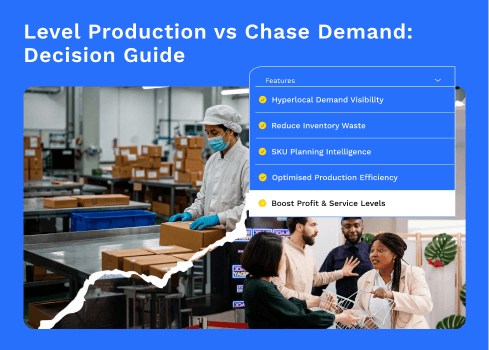
Level Production vs Chase Demand are two key production planning strategies in supply chain management. Level Production maintains a constant output using inventory buffers to meet fluctuating demand, while Chase Demand adjusts production to actual demand, reducing inventory but requiring a flexible workforce.
In today’s fast-paced retail, FMCG, and distribution-driven industries, supply chain leaders face a critical question: should production be level or should it chase demand? Level Production vs Chase Demand decisions affect inventory, workforce stability, and overall profitability. Choosing the right approach requires understanding Level Production and Chase Demand at SKU and territory levels.
Traditional planning relies on historical sales, averages, and ERP reports, which often fail to capture real-time demand from distributors and stockists. Without this visibility, overproduction, stockouts, and wasted capital are common. In this blog, we explain how Level Production and Chase Demand with real-time demand visibility can optimize supply chains and boost profitability.
What Is Level Production?
Level Production is a production planning strategy where output is kept constant using inventory buffers to absorb demand fluctuations. Across industries, Level Production and Chase Demand decisions are critical, as level production stabilizes the workforce, reduces frequent production changes, and ensures predictable schedules. It works best for products with steady demand or high setup costs, but without real-time demand visibility, it can lead to excess inventory, higher holding costs, and reduced supply chain efficiency.
What Is Chase Demand?
Chase Demand is a production planning strategy where output is adjusted to match actual demand, minimizing inventory while requiring a flexible workforce. Across industries, Level Production and Chase Demand decisions help balance costs, service levels, and operational efficiency. Chase demand works best for products with highly variable or seasonal demand, but frequent production adjustments can increase workforce complexity, overtime costs, and equipment strain if real-time demand visibility is lacking.

Key Differences Between Level Production and Chase Demand
Understanding the differences between Level Production and Chase Demand is essential for supply chain leaders. While both strategies aim to meet demand efficiently, their approaches to production, inventory, and workforce management are very different. Choosing the right strategy or a hybrid of both can significantly impact costs, service levels, and operational performance.
Comparison Table: Level Production vs Chase Demand
Feature | Level Production | Chase Demand |
| Production Rate | Constant output | Matches actual demand |
| Inventory Level | High, acts as buffer | Minimal, just-in-time |
| Workforce | Stable, predictable | Flexible, variable |
| Primary Costs | Inventory holding | Overtime, hiring, firing |
| Flexibility | Low | High, adjusts to demand |
| Best For | Products with stable demand or high setup costs | Products with seasonal or highly variable demand |
Many organizations adopt a hybrid approach, combining Level Production for stable products and Chase Demand for products with variable demand. This balances workforce stability, reduces holding costs, and ensures products are available where they are needed. Real-time demand visibility is critical for executing a hybrid strategy successfully, enabling smarter SKU-level and territory-level decisions.
What Are the Blind Spots in Traditional Planning Systems?

Many organizations still make production decisions based on historical sales data, city-wide averages, or ERP reports. These approaches provide only lagging indicators and fail to capture real-time demand fluctuations. As a result, supply chains often react to past trends rather than anticipating actual customer needs.
Traditional systems also miss hyperlocal demand signals such as SKU movement by sector, distributor turnover rates, pin code-level consumption, and early customer intent. Without this detailed visibility, production and inventory planning is based on averages rather than real performance, which can lead to overstock, idle inventory, stockouts, and lost sales opportunities.
This is where Sekel Tech comes in. Sekel’s platform captures real-time distributor and SKU-level data, revealing exactly where demand is rising or slowing. Retailers can track which products are moving fast in specific areas, identify slow-moving stock before it ties up working capital, and adjust production or distribution accordingly. By providing hyperlocal demand intelligence, Sekel enables retailers to make informed Level Production and Chase Demand decisions, reducing waste, improving service levels, and maximizing profitability.
Watch the video to see how unified visibility across listings, orders, and customer interactions helps businesses detect demand gaps early and plan production more accurately. "Manage Listings, Content, Reviews & Sales - All in One Place"
How Hyperlocal Demand Intelligence Transforms Level and Chase Decisions
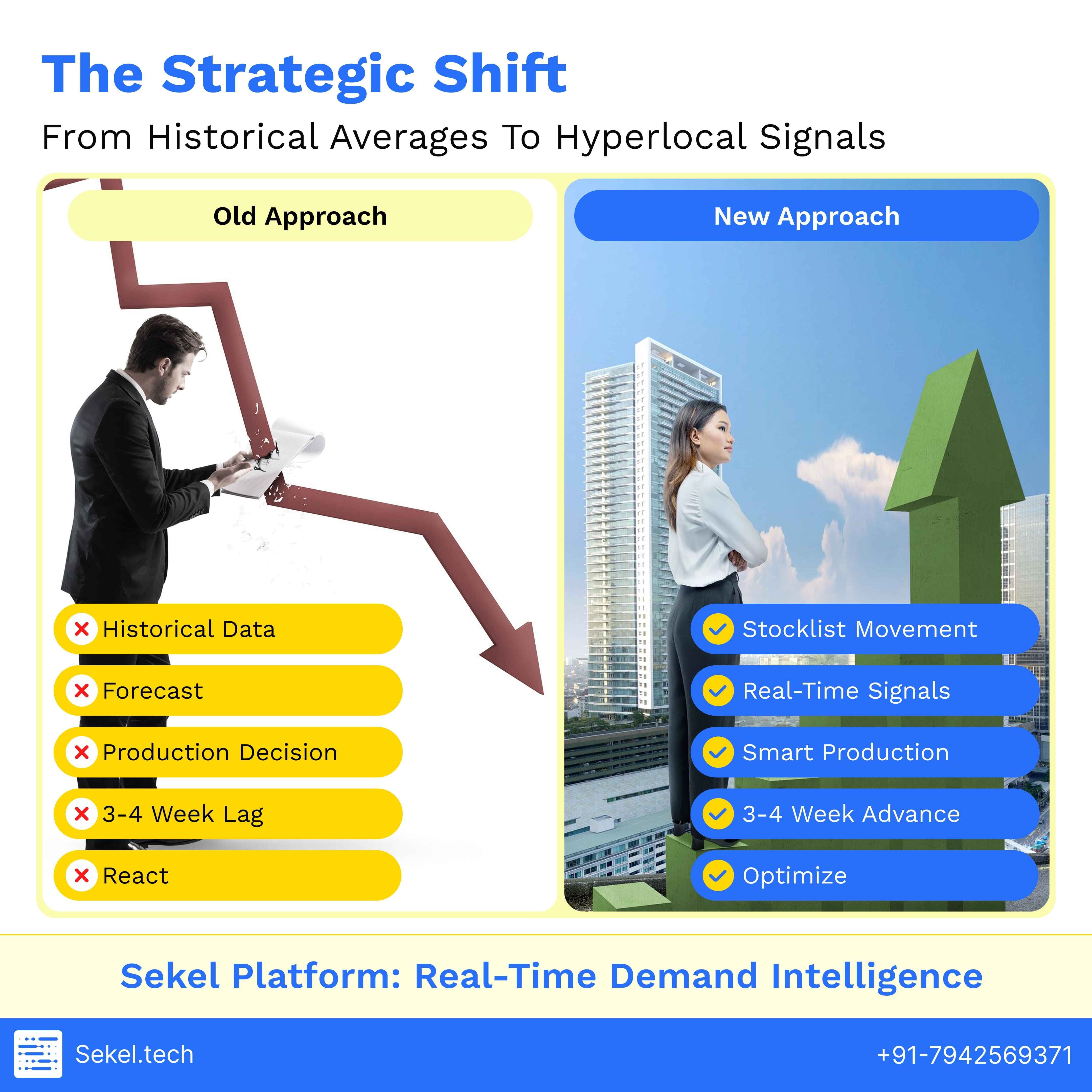
Choosing the right production strategy works only when based on accurate, timely demand data. Traditional systems often provide aggregated or delayed signals, which can result in overproduction, stockouts, and wasted resources.
Hyperlocal demand intelligence allows retailers to see exactly where products are moving fast and where inventory is idle. This makes it possible to build inventory buffers only where demand is stable and adjust production quickly for high-demand SKUs or regions.
Sekel Tech helps businesses capture real-time distributor and SKU-level insights, including order patterns and pin code demand. Retailers can optimize inventory allocation, improve workforce planning, reduce excess stock, and increase product availability. With Sekel, companies can make data-driven production decisions that maximize efficiency, minimize waste, and improve profitability.
Sekel Tech Hyperlocal Tech Stack: Transforming Level and Chase Decisions
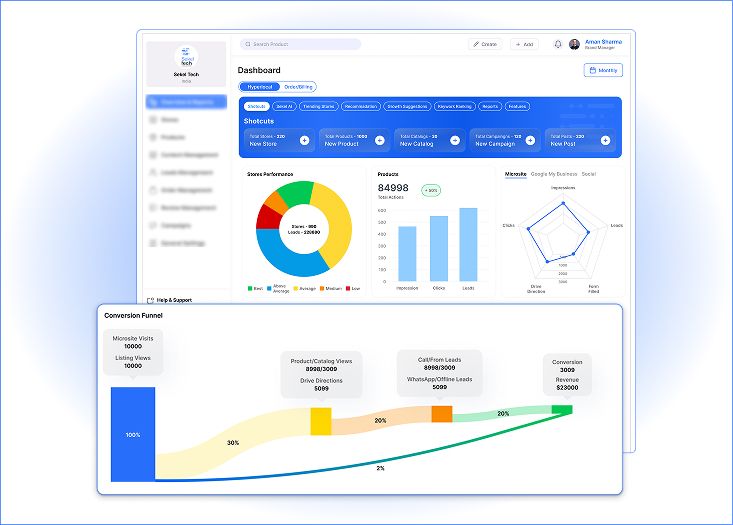
To execute Level Production and Chase Demand strategies effectively, retailers need visibility into real-time demand, inventory, and distributor activity. Sekel Tech’s Hyperlocal Tech Stack provides an integrated solution that empowers businesses to make data-driven production and inventory decisions.
1. Hyperlocal Discovery
Understand SKU-level demand across regions and pin codes. Identify where products are selling fast, where stock is idle, and which customer segments drive real demand. This visibility allows smarter allocation of inventory and targeted production adjustments.
2. Order-to-Cash (Billing System)
Streamline order processing, invoicing, and payment tracking. By connecting real-time order data with production planning, retailers can see exactly what is selling, when, and where, reducing delays and preventing stock imbalances.
3. Geo Task Manager
Optimize distributor and field operations. Track deliveries, returns, and distributor performance in real time. This ensures the right products reach the right locations quickly, supporting both level production for stable demand and chase production for variable demand.
By combining these tools, Sekel Tech allows retailers to bridge the gap between field data and financial performance, reduce working capital tied in idle inventory, and improve service levels across all regions. Hyperlocal demand intelligence becomes actionable, enabling smarter Level Production and Chase Demand decisions that drive efficiency and profitability.
Watch the video to understand how Sekel Tech connects hyperlocal demand data with operational decision-making across the supply chain. "What is Sekel Tech and How Does It Empower Brands & Retailers?"
Performance Improvements With Real-Time Demand Intelligence
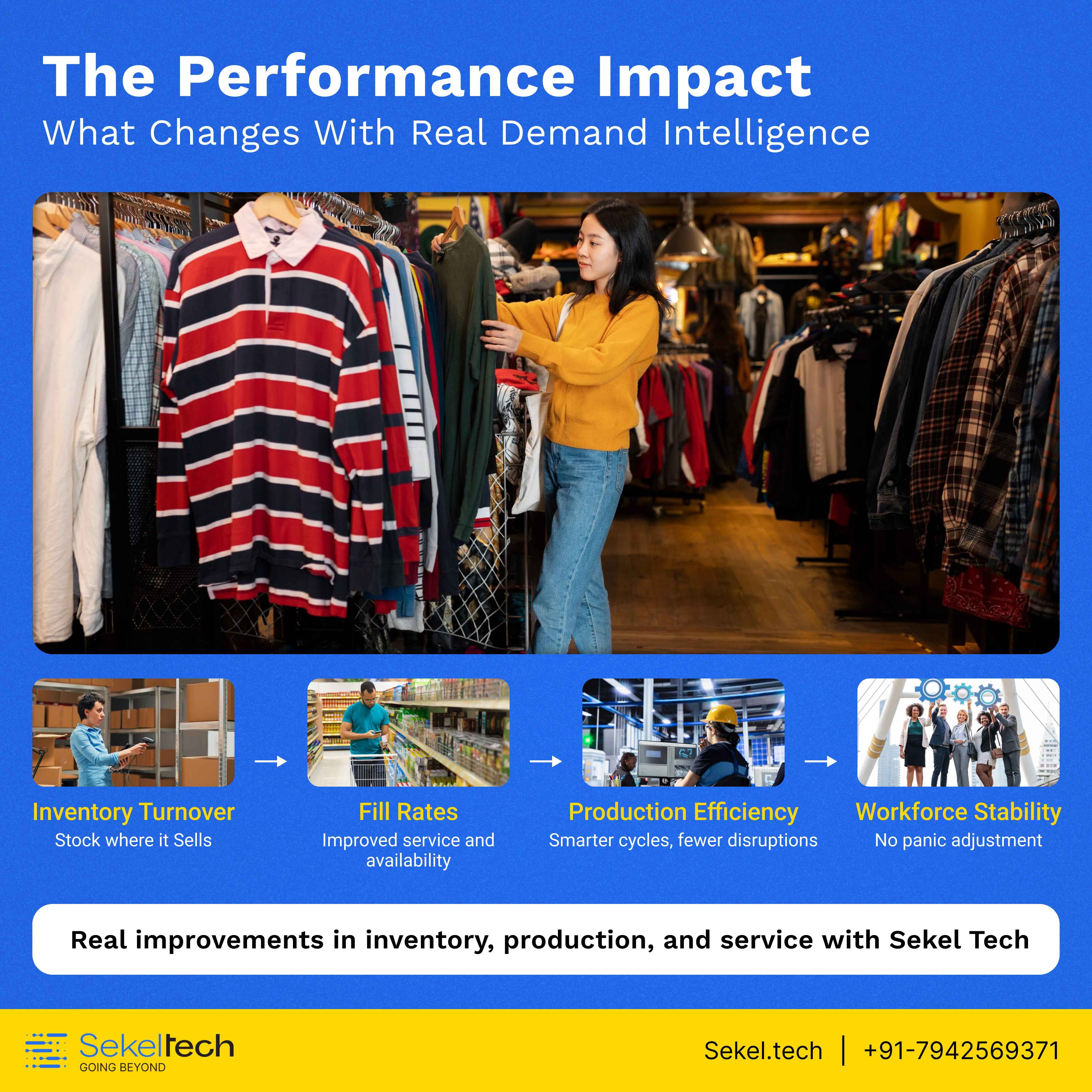
When production decisions are guided by real-time demand intelligence, supply chain performance improves across every critical metric. Instead of reacting to outdated reports, retailers can align production, inventory, and distribution with actual market demand.
- Inventory turnover improves because stock is positioned where it sells. Businesses can reduce excess inventory in slow-moving regions and redirect products to high-demand areas, freeing up working capital and lowering holding costs.
- Fill rates increase as demand is identified earlier and more accurately. Retailers are better equipped to meet customer demand without overstocking, resulting in higher service levels and fewer lost sales due to stockouts.
- Production efficiency rises through smarter planning cycles. With clearer demand signals, production schedules become more stable, changeovers are reduced, and disruptions caused by last-minute adjustments are minimized.
- Workforce stability improves as teams avoid emergency overtime, rushed hiring, and sudden production shifts. Predictable demand visibility supports balanced workloads and consistent operational performance.
Overall, real-time demand intelligence enables retailers to move from reactive planning to proactive execution, delivering measurable gains in efficiency, service levels, and profitability.
Frequently Asked Questions (FAQs)
1. Is real-time demand intelligence useful for both manufacturers and retailers?
Absolutely. Manufacturers benefit from better production planning, while retailers gain improved inventory allocation, faster replenishment, and higher service levels at the store level.
2. Which strategy is better for modern supply chains?
There is no one-size-fits-all answer. Most businesses use a hybrid approach. The right strategy depends on demand volatility, inventory costs, labor flexibility, and most importantly, access to real-time demand data.
3. Why do traditional planning systems fail in production planning?
Traditional systems rely on historical sales, aggregated reports, and delayed data. This limits visibility into current SKU movement, local demand patterns, and distributor performance, causing poor planning decisions.
4. How does real-time demand intelligence improve planning accuracy?
Real-time demand intelligence reveals where products are selling, where stock is stuck, and which locations need replenishment. This allows production and supply teams to align output with actual market demand.
5. How does Sekel Tech support better production planning decisions?
Sekel Tech connects hyperlocal discovery, order-to-cash visibility, and on-ground execution through Geo Task Manager. This helps businesses plan smarter, reduce inventory risk, improve fill rates, and execute supply decisions faster.
Conclusion
Choosing between Level Production and Chase Demand is no longer just an operational decision. Across industries, the real challenge lies in understanding where demand is actually forming and how fast it is shifting. Traditional planning systems rely on lagging indicators that hide local demand signals, leading to excess inventory, missed sales, and inefficient execution.
This is where real-time, hyperlocal demand intelligence changes the game. By combining hyperlocal discovery, order-to-cash visibility, and execution through Geo Task Manager, Sekel Tech enables businesses to plan production and inventory based on actual market movement, not assumptions. Demand becomes visible at the pin-code level, execution becomes measurable, and decisions become faster and more accurate.
In today’s dynamic markets, winning supply chains are not built on static models. They are built on visibility, agility, and precision.
If you want to turn demand signals into smarter decisions and predictable growth, Sekel Tech helps you make every unit count.
Read More Blogs
1. SKU Planning and Optimisation: Why Cost-to-Serve Wins FMCG
2. #1 Hyperlocal Intelligence Platform for Retail Teh Growth
3. Omnilocal Inventory Management Platform for Smarter Retail
Share


Similar Blogs
Loved this content?
Sign up for our newsletter and get the latest tips & updates directly in your inbox.
There’s more where that came from!
 Connect with us