
Online and Offline
Online to Offline Retail Conversion: What Top Brands Do in 2026
Wed, 27 May 2026 18:30:00 GMT
Speak to our Hyperlocal Expert
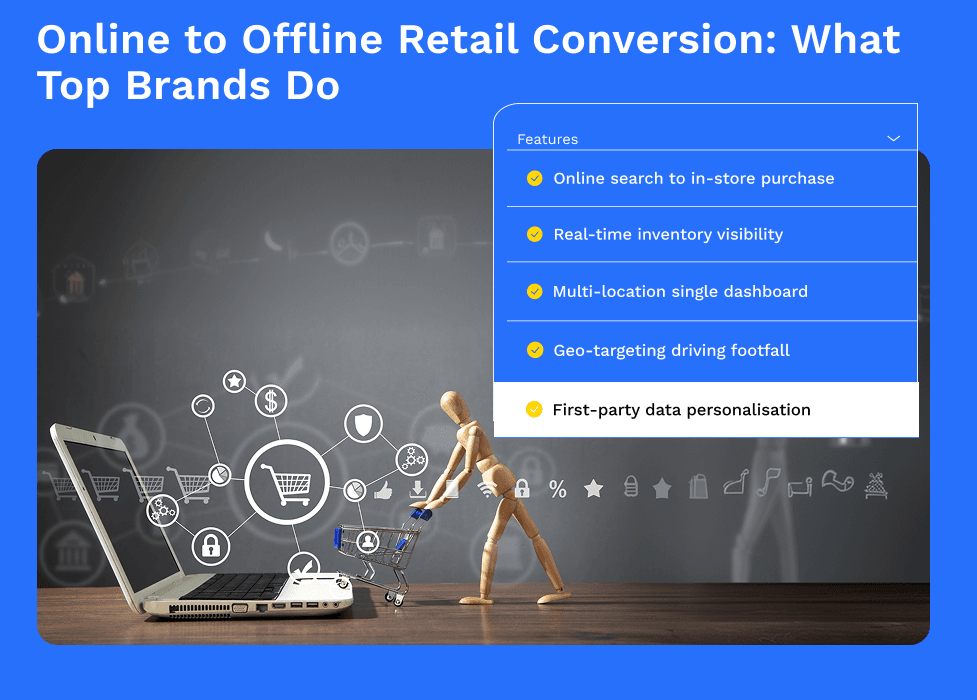
Half of all Google searches carry local intent, and a significant portion of them end in an offline purchase within 24 hours. That is not a side opportunity in retail strategy that is the main event, and brands that have learned to connect their online presence to physical stores are consistently pulling ahead in both revenue and retention.
Most brands are still operating with tools built for a different era, where online and offline were separate channels with separate data and separate teams. In 2026, that separation is the single biggest reason brands lose customers they already had in their funnel.
This guide covers what online to offline retail conversion looks like when it actually works, why most brands still struggle despite heavy digital investment, and what the best online to offline retail integration strategies have in common across industries and business sizes.
What Is Online to Offline Retail and Why It Matters in 2026
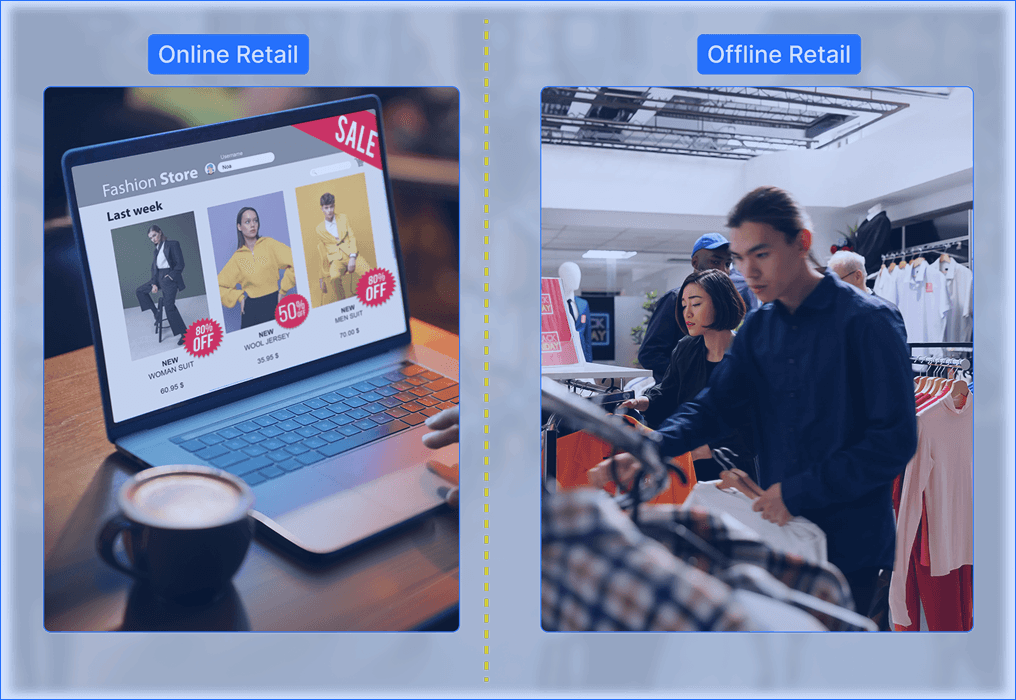
Online to offline retail, commonly called O2O, is the strategy of using digital channels to drive customers into physical stores or toward real-world transactions. It is not simply having a website and a store. It is building a connected system where everything a customer sees, searches, or clicks online moves them deliberately toward an offline conversion, whether that is a store visit, a same-day pickup, or a service appointment.
In 2026, this matters because the two worlds are no longer separate in the customer's mind. They open Google, check your reviews, confirm your stock, and walk in expecting the experience to match what they saw on screen. When it does, conversion happens. When it does not, they leave and rarely return. For multi-location brands, one store with outdated listing data or unanswered reviews does not just lose that customer. It quietly damages the perception every other location is working to build.
How the Retail Journey Has Changed in 2026
The traditional retail journey followed a predictable linear path: awareness, store visit, purchase, and occasionally a repeat. That model no longer reflects how people actually shop. Today's retail journey is a continuous loop where online discovery, in-store experience, post-purchase sharing, and retargeting all feed into each other without a clear start or end point.
Consumers now research online before visiting, expect real-time local inventory, demand personalised offers based on location and behaviour, and share their experience immediately after purchase, feeding social proof back into the discovery phase for the next customer. Brands designing their online to offline retail strategy around this looped behaviour consistently outperform those still optimising for a straight line from awareness to purchase.
Read Also - How Online to Offline Commerce Transforms Retail in 2026
Why Most Brands Struggle With Online to Offline Retail Conversion
The problem is rarely the product or the store. It is everything in between. Here is where most brands break the O2O retail conversion journey:
- Fragmented online presence
Store listings are inconsistent across Google, Maps, and Meta, so customers find conflicting information and lose confidence before they arrive
- No real-time inventory visibility
Customer sees a product online, visits the store, finds it out of stock. That is a broken promise and a lost customer
- Poor local discoverability
Brands invest in national campaigns but neglect the hyperlocal signals, store microsites, GMB optimisation, and near me search, that actually drive footfall
- Third-party cookie dependency
Privacy shifts including Google's IP Protection and India's DPDP Act are forcing brands off the tracking infrastructure they relied on, leaving gaps in retargeting and personalisation
- Weak online to offline retail strategy
Most brands track clicks and impressions but have no system connecting digital engagement to actual store visits or offline conversions
- Inconsistent post-visit experience
No retargeting, no follow-up, no re-entry into the loop. The customer buys once and the brand has no mechanism to bring them back
The brands winning O2O in 2026 have solved all six of these simultaneously, not one at a time through separate tools.
Read Also - Online and Offline Marketing: The Power of a Unified Approach
What Top Brands Do Differently in Online to Offline Retail Integration
The brands with the strongest online to offline retail integration share one thing in common: they treat O2O not as a marketing tactic but as a core business architecture decision. Here is what that looks like in practice:
1. Unified and accurate store data everywhere
Every location has consistent, real-time updated information across Google Business Profile, Apple Maps, Meta, and brand microsites. Not last quarter's hours. Not a phone number that rings out. According to Moz's Local Search Ranking Factors, citation consistency remains one of the strongest local ranking signals available to multi-location brands
2. Real-time inventory connected to digital discovery
A customer searching for a specific product near them should see live stock availability before they make the trip. Brands like Nike and Zara have built this expectation into the market. Every retailer now competes against it
3. Hyperlocal landing pages for every location
Generic national pages do not convert local intent. Each store location needs its own rich, optimised microsite or landing page reflecting local offers, reviews, and inventory
4. Seamless EPOS and digital integration
The point of sale system and the digital marketing stack must share data in real time. What sells offline should inform what gets promoted online the next morning
5. Closed-loop conversion tracking
Brands need to know which digital touchpoint drove which store visit. Without this, marketing budget allocation is largely guesswork. Google's store visit measurement tools offer one layer of this, but first-party data systems go significantly deeper
6. Post-visit re-engagement built into the system
The visit is not the end of the loop. A customer who bought in-store should re-enter a digital engagement sequence within 24 hours, through WhatsApp, email, or retargeting, keeping the brand present until the next purchase cycle begins
The best online to offline retail integration is not a feature. It is an architecture decision that touches every team, every tool, and every customer interaction the brand has.
Watch the below video to see how top retailers are already bridging online discovery and offline sales to drive real footfall and rankings.
The Role of First-Party Data in Online to Offline Retail Strategy

Third-party cookies are gone for good. Google's IP Protection, Apple's App Tracking Transparency, and India's DPDP Act have collectively closed the era of passive tracking. Brands still dependent on third-party data are not just facing a technical problem. They are facing a trust problem, and customers notice the difference.
The brands leading online to offline retail conversion in 2026 have made first-party data the foundation of everything:
- Consent-based data collection: In-store sign-ups, loyalty programmes, WhatsApp opt-ins, and QR interactions that customers willingly engage with because the value exchange is honest and clear
- Unified customer profiles: A customer who browses online and buys in-store should exist as one profile, not two disconnected data points. This single view is what makes personalisation feel relevant rather than intrusive
- Localised retargeting without third-party dependency: First-party behavioural data enables hyperlocal campaigns that reach the right customer in the right geography without tracking infrastructure that no longer exists
- Predictive demand signals: Aggregated purchase data tells brands what specific locations need on the shelf before stockouts happen, connecting digital demand to physical retail reality
Brands that get this right do not just improve conversion. They build the kind of trust that compounds into long-term customer loyalty no paid campaign can manufacture.
How Hyperlocal Marketing Drives Online to Offline Retail Sales
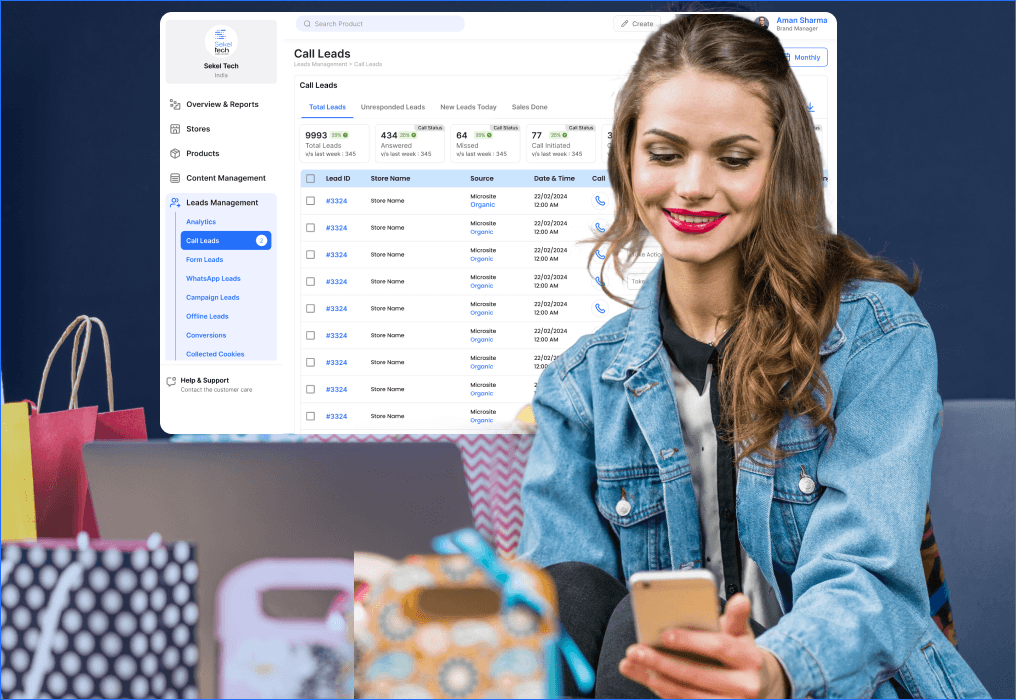
Hyperlocal retail marketing is the practice of targeting customers based on their precise geographic location, serving them relevant offers, inventory availability, and store information at the exact moment they are searching nearby. It is the most direct bridge between online discovery and offline purchase available to retail brands today, and it is the layer of online to offline retail strategy that most brands either underinvest in or execute inconsistently across locations.
The mechanics are straightforward but the execution requires precision. When a customer searches "sports shoes near me" or "furniture store open now," Google surfaces results based on listing accuracy, review signals, proximity, and localised content relevance. Brands that have invested in hyperlocal infrastructure, including optimised Google Business Profiles, location-specific microsites, real-time product catalogues, and geo-targeted campaigns, appear at the top of those results and capture the customer at peak purchase intent.
What hyperlocal marketing does for O2O retail conversion specifically:
- Connects "near me" search intent directly to the nearest store location with accurate information
- Serves location-based offers and promotions that drive immediate footfall rather than general brand awareness
- Ensures local inventory visibility so customers know what is available before making the trip
- Uses geofencing and proximity targeting to re-engage customers who are physically near a store location
- Builds location-level review signals that improve both local ranking and customer trust simultaneously
Sekel Tech's hyperlocal platform is built specifically around this infrastructure, giving multi-location brands the ability to manage localised listings, microsites, product catalogues, and geo-targeted campaigns from a single dashboard rather than stitching together five separate tools to achieve the same result.
How Sekel Tech Delivers the Best Online to Offline Retail Integration

Most retail brands trying to solve their online to offline retail conversion problem end up with a collection of disconnected tools: one platform for listings, another for ads, a separate system for in-store data, and an agency managing the gaps between all of them. The integration never quite works, the data never quite connects, and the customer experience reflects that fragmentation at every touchpoint.
Sekel Tech is built to replace that fragmented approach with a single integrated hyperlocal tech stack that covers every stage of the O2O retail journey from one platform.
What the Sekel Tech platform covers:
- Unified Discovery: AI-powered listing management, store microsites, and product catalogues optimised for "near me" searches across Google, Maps, and Meta, so every location gets a rich, localised presence rather than a generic landing page
- Real-Time O2O Bridge: EPOS integration, smart catalogues, same-day hyperlocal delivery options, and conversion analytics that track the full journey from online click to in-store counter
- Privacy-First Data Engine: First-party data collection, consent & compliance management, and a unified CDP and CRM that builds detailed customer profiles without relying on third-party cookies or invasive tracking
- Demand Generation and Automation: Hyperlocal campaigns, retargeting, AI-powered review management, and WhatsApp catalogue feeds managed centrally but executed at the local level across every store or dealer location
The core differentiator is that Sekel Tech does not just drive traffic or generate leads. It is built to guarantee sales conversions by closing every gap in the online to offline retail integration chain, from the moment a customer discovers a store online to the moment they complete a purchase in person and re-enter the engagement loop through retargeting and community signals.
For multi-location brands and dealer networks managing online to offline retail conversion at scale, that level of end-to-end integration is not a luxury. It is what separates brands that own the customer journey from those that lose customers somewhere in the middle of it.
Watch how Sekel Tech brings listings, content, reviews, and sales into one unified platform for multi-location brands.
Frequently Asked Questions About Online to Offline Retail Conversion
1. What is online to offline retailing?
Online to offline retailing is a business strategy that uses digital channels to drive customers into physical stores. It focuses on creating a seamless experience across every stage of the journey, from online discovery through email, ads, and social media, all the way through to the in-store purchase and post-sale engagement.
2. What is the difference between online and offline retail?
Online retail offers convenience, global product variety, and home delivery, while offline retail gives customers the ability to physically inspect products, receive personalised service, and walk away with an immediate purchase. The strongest retail brands in 2026 do not choose between the two - they connect both into a single seamless experience.
3. What is the O2O online to offline model?
The O2O model uses digital touchpoints including websites, mobile apps, social media, and targeted campaigns to motivate customers to visit a physical store, collect an order locally, or attend an in-person brand experience. It treats online and offline not as competing channels but as two stages of the same customer journey.
4. What is an online to offline retail strategy?
An online to offline strategy uses digital incentives, personalised offers, localised content, and real-time inventory visibility to drive measurable footfall into physical stores. Unlike pure e-commerce, it treats the physical store as a primary brand touchpoint for product experience, fulfilment, and customer relationship building.
5. What does offline retail mean?
Offline retail refers to the traditional model of selling products directly to consumers in a physical environment, covering everything from local grocery stores and supermarkets to standalone boutiques and large format malls. In the context of O2O retail conversion, offline retail is where the digital journey is designed to end and where brand loyalty is most durably built.
Conclusion
Online to offline retail conversion in 2026 is the foundational architecture that determines whether a retail brand grows or stagnates as consumer behaviour continues shifting toward connected, location-driven shopping journeys. The brands pulling ahead are not doing more, they are doing it in a more connected way, with unified data, hyperlocal precision, and a platform that closes every gap between the moment a customer searches online and the moment they complete a purchase in store. If your current online to offline retail strategy still leaves parts of that journey disconnected, that is precisely where customers are slipping through. Sekel Tech's unified hyperlocal commerce platform is built to close that gap completely, and if you are ready to see what that looks like for your brand, book a demo with the team today.
Share


Similar Blogs
Loved this content?
Sign up for our newsletter and get the latest tips & updates directly in your inbox.
There’s more where that came from!
 Connect with us